

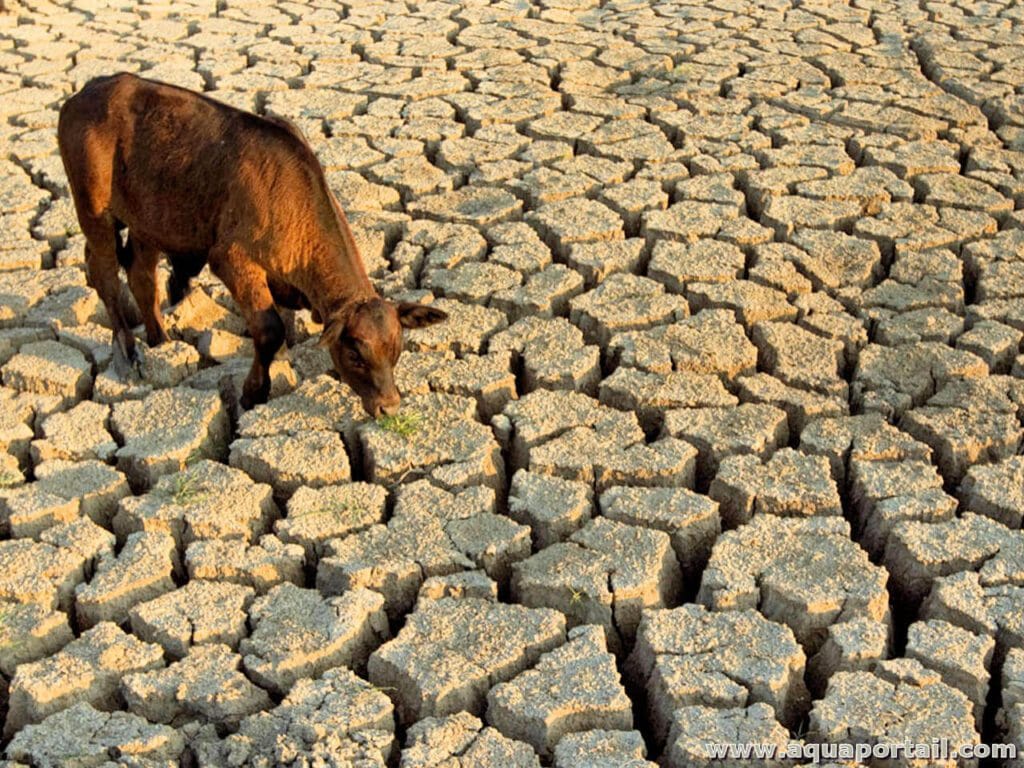
### Morocco Faces an Unprecedented Water Crisis
Morocco is experiencing an unprecedented water crisis, marked by accelerated depletion of water resources and increasing pressure on vital economic sectors. Several recent studies, notably those from the **Center for Strategic Studies in Africa** and the **African Center for Strategic Studies and Digitalization**, are sounding the alarm about the critical situation in the country. For its part, the **World Bank** urges Morocco to invest heavily in its water infrastructure to avoid major economic and social repercussions.
### A Worrying Depletion of Water Resources
Morocco has shifted from a state of water scarcity to a situation of extreme tension. According to projections, the country could lose **30% of its water resources by 2050**, while the current availability per capita is around **606 cubic meters per year**, a figure that is expected to drop below **500 cubic meters by 2030**.
The consequences of this crisis are visible at several levels:
– A significant decline in groundwater levels due to overexploitation that exceeds renewal capacities.
– A degradation of water quality, exacerbated by the massive discharge of untreated wastewater.
– Siltation of dams reducing annual storage capacity by **65 million cubic meters**.
– Increased pressure on agriculture and industry, strategic sectors of the Moroccan economy.
The World Bank reminds us that this situation directly threatens the country’s **food security** and undermines its economic development.
### Questionable Water Governance
Experts point to an unbalanced management model that favors large export crops and industrial activities at the expense of small farmers and rural areas. The issue of inter-basin transfers, particularly the project to divert water from the Sebou to Casablanca and Rabat, also raises questions about its long-term viability.
### Technological and Financial Solutions for a Sustainable Future
In the face of this crisis, several avenues are proposed:
– **Establishment of a regional water equity program**, aiming for a more balanced distribution of water resources according to local needs.
– **Use of smart technologies**: connected meters, artificial intelligence to optimize distribution, mobile apps for monitoring consumption.
– **Creation of a National Center for Artificial Intelligence for Water Management**, to anticipate crises and improve water resilience.
– **Utilization of waqf (Islamic foundation) and blockchain** to finance sustainable projects.
The **World Bank**, for its part, emphasizes the urgency of accelerating investments in water infrastructure, particularly through **desalination and optimized irrigation projects**. It also calls for strengthening regional cooperation to promote technology transfer and improve water resource management.
### A Challenge at the Intersection of Economy and Environment
In a context where regional economic growth remains fragile, the depletion of water represents a major vulnerability factor for Morocco. Between adapting to climate change, modernizing infrastructure, and governance reforms, the country must undertake a rapid and strategic transformation to ensure its **water security and sustainable long-term development**.