




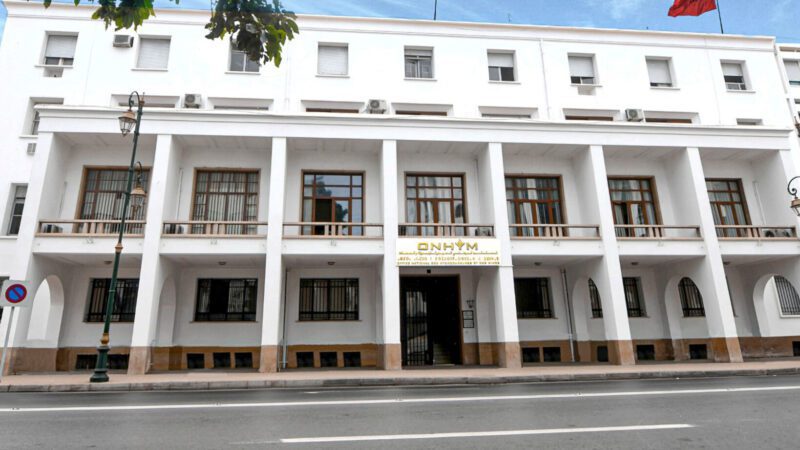
The decision to transform the National Office of Hydrocarbons and Mines (ONHYM) into a public limited company continues to provoke strong reactions, reviving an old debate about Morocco’s energy sovereignty and the role of the state in managing strategic sectors. While the government defends the reform as a lever for modernization and improved governance, union and political voices are warning of the risks of a gradual shift towards privatization.
Among the firmest critics is El Houssine El Yamani, Secretary General of the National Union of Oil and Gas. He believes that converting ONHYM into a public limited company could represent “a first step towards privatization” of the last public tools capable of ensuring state control over the energy sector. According to him, the official discourse on energy sovereignty cannot be credible as long as the state does not maintain effective control over strategic assets.
### A Sovereignty Already Considered Weak
El Yamani emphasizes that the majority of key energy segments are now beyond public ownership. More than 70% of electricity production today would be provided by private operators, both in fossil fuels and renewable energy. He recalls that the oil sector has followed the same trajectory following the privatization of the SAMIR refinery and Cherifian Petroleum Company (SCP).
In this context, the union leader advocates for a minimal principle of sovereignty: the state’s ownership of a sufficient share of capital that ensures effective representation on the boards of directors. Otherwise, the legal transformation of ONHYM could, according to him, lay the groundwork for a gradual dilution of public control.
### The Government Defends a “Strategic” Reform
In response to these criticisms, the Minister of Energy Transition and Sustainable Development, Leïla Benali, defended the bill 56.24 before the Commission on Infrastructure, Energy, Mines, Environment, and Sustainable Development in the House of Representatives. She assured that transforming ONHYM into a public limited company does not constitute a disengagement of the state, but rather aims to equip the institution with more efficient and flexible management tools.
According to the minister, this reform is part of a broader structural project intended to adapt public establishments to the demands of an increasingly competitive global energy environment. She reminded that Morocco remains highly dependent on energy imports, a vulnerability highlighted during the gas flow halt in 2021, in an international context marked by the war in Ukraine and significant market volatility.
### Energy Security and Industrial Continuity
Leïla Benali stressed the vital nature of energy security for the national economy. The interruption of natural gas supplies, she pointed out, directly threatened thousands of jobs and the continuity of several strategic industrial units. This situation would have prompted the state to accelerate the enhancement and conversion of national infrastructures to preserve economic activity continuity.
In this light, the minister believes that the new legal status of ONHYM will enhance responsiveness, governance, and the capacity to compete with major international players, particularly in the mining sector, which has become a field of geostrategic competition among states.
### A Politically Divisive Reform
The project also divides the political class. Parliamentary groups in the ruling coalition, notably the National Rally of Independents (RNI) and the Authenticity and Modernity Party (PAM), see it as an opportunity for a controlled opening of capital, potentially improving the valuation of public assets and investment returns.
Conversely, the opposition, particularly the Justice and Development Party (PJD) and the Progress and Socialism Party (PPS), denounces what they call “disguised privatization.” MP Fatima Zahra Batta thus warned against a general direction of the government aimed at accelerating the transformation of public establishments into public limited companies, at the risk of altering their strategic and social role.
She reminded that ONHYM remains a historical institution playing a central role in managing non-renewable natural resources. As such, any structural reform should, according to her, be accompanied by legal guarantees and strict control mechanisms to prevent the weakening of public control.
### A Debate Expected to Endure
Beyond political divergences, the transformation of ONHYM crystallizes a fundamental question: how to reconcile economic performance, market openness, and the preservation of energy sovereignty? The debate, far from being closed, illustrates the inherent tensions involved in modernizing public establishments in a sector where economic, social, and geopolitical stakes remain closely intertwined.