


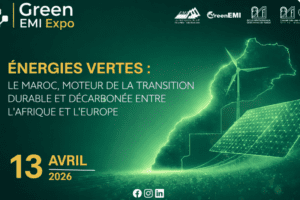




Morocco is gradually strengthening its positioning in the global energy transition, particularly in the maritime transport sector. Thanks to its strategic geographic location, renewable energy resources, and low-cost green hydrogen production potential, the Kingdom could play a key role in the decarbonization of international maritime transport.
According to an analysis from the World Bank, reported by L’Economiste, Moroccan port infrastructures have significant advantages to become platforms for the production, storage, and distribution of green fuels for vessels.
Ports such as Tangier Med, Mohammedia, Jorf Lasfar, and Tan-Tan could thus evolve into logistical hubs for supplying maritime fleets with fuels derived from green hydrogen.
Projections indicate that vessels calling at Moroccan ports could consume approximately 0.2 million tons of hydrogen fuel equivalent by 2030, a volume that could reach 2.83 million tons by 2050.
The produced green hydrogen could be converted into ammonia or methanol, two fuels seen as promising alternatives to fossil fuels in maritime transport. This transition aligns with the overall objective of the maritime sector to significantly reduce its carbon emissions while continuing to meet a growing global transport demand.
Morocco’s potential extends beyond maritime transport. Green hydrogen production could also transform various industrial sectors. The port of Jorf Lasfar already illustrates this dynamic: it currently handles nearly two million tons of ammonia annually, making it a strategic site for integrating green hydrogen derivatives into industrial processes, particularly for fertilizer production.
Additionally, projects related to green hydrogen could help improve access to electricity and drinking water in certain regions through the use of renewable energy generated by these facilities.
Moroccan potential is also attracting increasing interest in Europe. As part of its REPowerEU program, the European Union plans to import over 10 million tons of green hydrogen per year by 2030. Morocco’s geographic proximity to Europe and its capacity to produce hydrogen at scale could position the Kingdom as a strategic partner in this new energy chain.
Beyond climate challenges, the development of this sector also represents a significant economic opportunity. According to the World Bank, the rise of green hydrogen could generate investments, create jobs, and enhance the country’s energy independence.
With its natural resources, port infrastructures, and renewable energy-oriented strategy, Morocco appears well-positioned to establish itself as a major player in the future global green hydrogen economy.
With L’Economiste


