






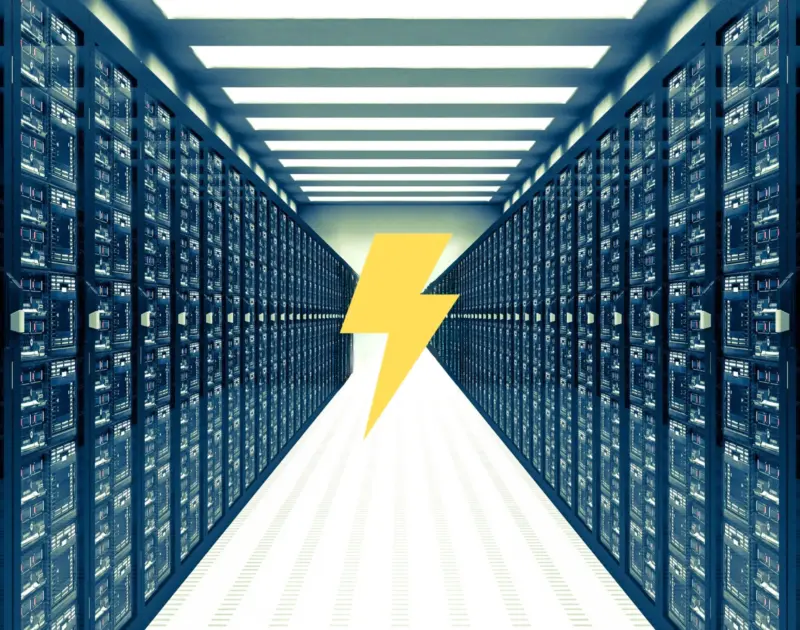
The Morocco Digital 2030 program places IT infrastructure at the heart of the transformation of the economy and public services. The government is promoting a strategy focused on creating data centers powered by solar and wind energy, particularly from the parks in Dakhla and Ouarzazate. The announced facilities will integrate outdoor air cooling systems, heat recovery solutions, and extensive water recycling, with a clear goal: to achieve carbon neutrality for all data centers by 2035 and establish the country as a reference for sustainable digital practices in Africa.
Global tech giants are gradually aligning with this direction. Oracle is preparing a dedicated cloud computing platform for big data and artificial intelligence in the Casablanca-Settat region, designed to accommodate nearly a thousand engineers and researchers. AWS, in partnership with Orange Morocco, is establishing the continent’s first Wavelength zone to offer ultra-low latency communications. Google Cloud is developing a local operational region in Rabat, relying on energy-efficient cooling techniques.
Other international players are strengthening this momentum. Naver, in collaboration with Nvidia, is building a 500-megawatt computing center in Tangier equipped with GB200 processors to ensure service continuity between Europe, Africa, and the Middle East. In Tetouan, the American Iozera.ai is deploying a 386-megawatt computing set, accompanied by a training hub targeting young project leaders.
To support this escalation, the authorities are announcing training programs for 100,000 specialists—network engineers, cybersecurity experts, data scientists—alongside the expansion of fiber optics, the rollout of 5G in major cities, and the rise of Hyperscale, Edge, and AI architectures.
This infrastructure is also supported by a strengthened regulatory framework. Morocco is promoting a modernized legal environment, direct links via undersea cables with Europe and Africa, as well as incentives like exemptions from digital taxation and subsidies dedicated to cybersecurity. The free zones of Casablanca Finance City and Tangier Tech-Zone also facilitate business establishment through simplified customs procedures and targeted financial support.
Data regulation remains at the core of the framework. The CNDP ensures the application of Law 09-08 and compliance with international standards, particularly European ones. National operators—INWI, Maroc Telecom, N+One Datacenters, and Maroc Cloud—are enriching the ecosystem with hosting, colocation, or cloud services, often developed in partnership with foreign players.
The innovation ecosystem is strengthening at the same pace. Technopark Morocco, Fez Innov’Lab, the Azur Innovation Fund, and the Digital Morocco Center—in collaboration with GIZ—support startups through mentoring, access to workspaces, funding, and the provision of technical infrastructure.
The demand for digital services is increasing across all sectors. Banks and insurers rely on cloud-hosted credit models, telecom operators are generalizing network virtualization, the industry is adopting IIoT solutions and digital twins, and education is utilizing interactive learning platforms. The public administration continues to dematerialize fiscal services, social benefits, and public procurement.
Finally, the country is consolidating its international connections through new undersea cables—Europe-India Gateway, Arab-Atlantic Cable System—and points of presence opened in Madrid, Marseille, and Lagos. The ANRT is preparing a network operations center dedicated to traffic monitoring and incident management to stabilize transmissions and secure critical uses such as telemedicine and real-time logistics.