

At a time when global agriculture is facing an increasingly complex equation—feeding nearly 10 billion people by 2050 while drastically reducing its carbon footprint—Morocco is positioning itself as a key player in the transition of agricultural systems and fertilizers. Balancing food security, industrial decarbonization, and energy innovation, Morocco’s experience, recently analyzed by the World Economic Forum (WEF), outlines an emerging model that reconciles productivity with climate action.
Responsible for about one-third of global greenhouse gas emissions, the global food system is now at the heart of climate strategies. Agriculture is no longer merely a sector to transform, but a potential lever for resilience and emission reduction, provided there is a profound change in practices, inputs, and value chains.
An African Paradox at the Heart of Global Issues
The African continent sharply illustrates this tension. It holds nearly 65% of the world’s uncultivated arable land, yet remains largely dependent on food imports. This paradox highlights a structural challenge: to unleash considerable agricultural potential without replicating intensive models that are high emitters, water-intensive, and vulnerable to climate shocks.
It is precisely in this strategic space that Morocco positions itself. As a regional agricultural power, a global phosphate giant, and an African pioneer in renewable energies, the Kingdom possesses rare assets to articulate food security and climate transition. It alone holds nearly 70% of global phosphate reserves, a critical resource for soil fertility and the stability of global food systems.
Sustainable Fertilizers and Climate Responsibility
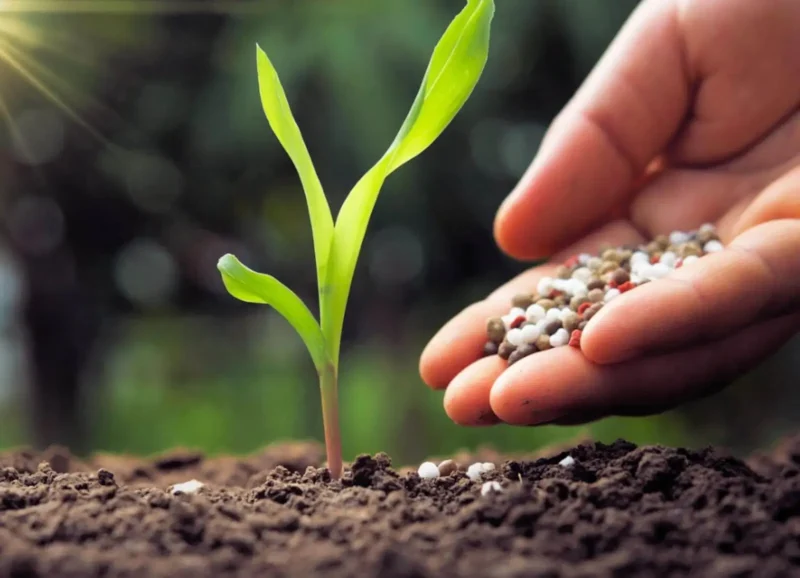
The WEF study emphasizes that next-generation phosphate fertilizers play a much broader role than simply providing nutrients. By enhancing nutrient efficiency and soil health, they contribute to strengthening the resilience of agriculture to climate stresses, while limiting emissions associated with inputs.
Morocco stands out for its ability to develop and produce low-carbon fertilizers, exemplifying a convergence long deemed difficult between yield imperatives and climate goals. This dynamic is aligned with national climate commitments: the Kingdom aims for an unconditional reduction of 21.6% of its emissions by 2035, potentially reaching 53% with international support compared to 2010 levels. The phosphate sector alone accounts for 9% of the national mitigation effort, confirming its strategic role in a low-carbon trajectory.
Producing More, Emitting Less: An Acknowledged Industrial Dilemma
However, the growing global demand for fertilizers increases tensions. The phosphate industry belongs to the so-called “hard-to-abate” sectors, where decarbonization margins remain costly and technologically complex. OCP Group, a world leader in phosphate fertilizers, plans to increase its production from 12 million tons in 2024 to 20 million by 2027, while setting an objective of carbon neutrality across all three scopes by 2040.
This industrial bet faces major obstacles: high costs of carbon capture technologies, volatile energy prices, water stress, and disparities in access to innovations, particularly marked in developing countries. In this context, diversifying decarbonization pathways appears as a strategic necessity.
An Integrated and Systemic Green Transition
For more than a decade, Morocco has been undertaking a structural energy transition. In 2023, renewable energies accounted for 22% of national electricity production, with a target of 52% by 2030. This dynamic now permeates the industrial fabric. OCP Green Energy is deploying over 1.2 GW of renewable capacity to power all the group’s mining and industrial activities with clean electricity by 2027.
The water issue is integral to this strategy. OCP Green Water aims to cover 100% of industrial water needs through desalination and reuse, illustrating a systemic approach that links clean energy, industry, and water security. Simultaneously, the development of green hydrogen and ammonia positions Morocco among the best-equipped countries to produce competitively low-carbon fertilizers on an international scale.
The Farmer at the Heart of the Transition
Beyond the industry, the social dimension is a crucial pillar of this transformation. Programs like Al Moutmir and Tourba promote regenerative and carbon-efficient agricultural practices based on close support for farmers. The reported outcomes are significant: up to 23% yield gains, over 50% improvement in profitability, and a carbon sequestration capacity reaching 1.4 tons per hectare.
These initiatives foster collective learning among farmers, researchers, and agronomists, outlining reproducible models at the African level that can reconcile social inclusion, economic performance, and climate action.
A Decisive Political and Financial Framework
The World Economic Forum’s analysis finally emphasizes a key point: technology alone is not enough. The agricultural transition will sustainably enhance food security only if it remains accessible, affordable, and inclusive. Risk-sharing mechanisms, international standards for low-carbon fertilizers, and systems redistributing a substantial share of carbon credit revenues to farmers emerge as essential levers.
Through this integrated approach, Morocco positions itself not only as a strategic supplier of fertilizers but as a laboratory for global agricultural transition, where producing more and emitting less ceases to be a contradiction and becomes a structuring goal.