

Close Menu
Greentimes
    Qoui de neuf

    Solar Energy: The Chinese Group Lanke High-Tech Prepares to Establish Operations in Morocco and Develops a 100 MW Thermal Storage Project

    12 March 2026

    Morocco is accelerating desalination with four new stations and aims for 1.7 billion cubic meters of water per year by 2030.

    12 March 2026

    Green Hydrogen: Moroccan Ports Could Become a Strategic Hub for Decarbonized Maritime Transport

    12 March 2026
    Facebook X (Twitter) Instagram
    GreentimesGreentimes
    • Home
    • CSR
    • Energy Transition and Renewables
    • Sustainability
    • Climate Change
    • Analyses and Opinions
    • Datas
    • Dates & events
    • Last news
    • FR
    Thursday 12 March 2026
    Facebook X (Twitter) Instagram
    Greentimes
    Home » Coal: Why Global Consumption Remains High Despite the Rise of Renewables
    Energy Transition and Renewables

    Coal: Why Global Consumption Remains High Despite the Rise of Renewables

    18 December 2025No Comments2 Mins Read
    Facebook Twitter Pinterest LinkedIn Tumblr Reddit WhatsApp Email
    Share
    Facebook Twitter LinkedIn Pinterest WhatsApp Email

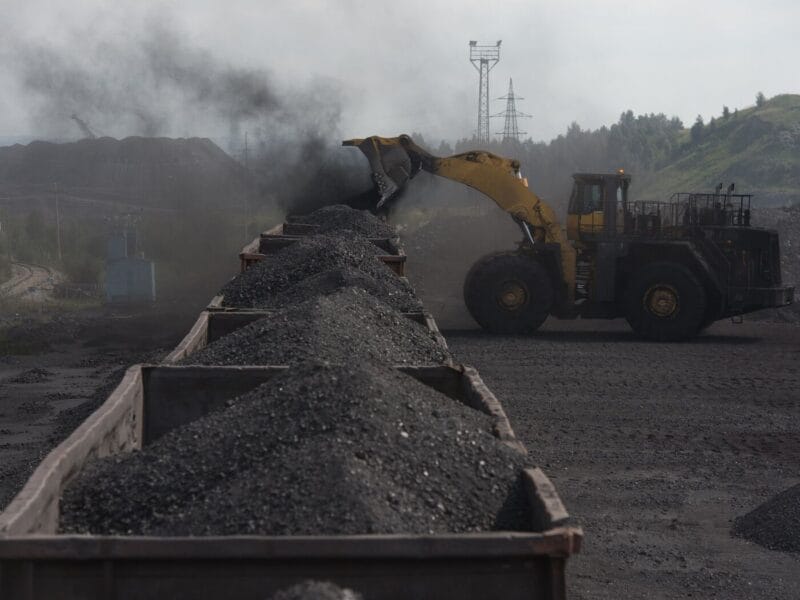
    As 2025 draws to a close, the global energy landscape remains mixed. According to the report Coal 2025 published by the International Energy Agency (IEA), global coal consumption has once again reached a record high, despite significant advancements in renewable energies.

    In 2025, global demand for coal increased by 0.5%, settling at 8.85 billion tons, following an already historic year in 2024. While the IEA estimates that this demand may have plateaued, a substantial decline is not expected before the end of the decade.

    China, a Central Player in the Market

    As the world’s largest consumer, China alone accounts for 56% of global demand. Although its consumption did not increase in 2025, the country remains a cornerstone of the global coal market. This position is largely due to the ongoing commissioning of new power plants, despite parallel records in solar and wind energy deployment.

    Paradoxically, installed renewable energy capacity in China now exceeds that of thermal power plants. However, the rapid growth in electricity demand and energy security imperatives maintain a high reliance on coal.

    Mixed Developments Across Regions

    In India, the second-largest market, demand fell by 3% in 2025. This decrease is temporary, attributed to lower electricity consumption and exceptional hydroelectric production due to abundant monsoons.

    In the United States, the trend has reversed. After more than fifteen years of decline, coal consumption is rising again, notably supported by a political climate favorable to plants at risk of closure.

    In the European Union, the drop in demand was limited to 3%, compared to an average of 18% over the 2023-2024 period. This deceleration is mainly explained by hydroelectric and wind production falling short of expectations.

    A Still Fragile Transition

    According to the IEA, global coal demand is expected to stabilize in the short term before a slight decline by 2030, driven by the rise of renewable energies, nuclear power, and liquefied natural gas. Nevertheless, this trajectory remains uncertain.

    Future developments will largely depend on China, as well as several key factors: economic growth, policy choices regarding energy security, climatic conditions, and the capacity of grids to integrate renewables. A faster-than-expected increase in global electricity demand or a slowdown in the deployment of clean energies could prolong dependence on coal, with direct implications for climate and global energy markets.

    China climate coal Electricity Energy European Union global demand India: renewable energy United States
    Previous ArticleUrban Renewal: An International Conference Lays the Foundations for Sustainable Transformation of Territories
    Next Article Margines: The Oum Er-Rbia Basin Agency Enhances Vigilance to Protect Water Resources

    Related Posts

    Solar Energy: The Chinese Group Lanke High-Tech Prepares to Establish Operations in Morocco and Develops a 100 MW Thermal Storage Project

    12 March 2026

    Morocco is accelerating desalination with four new stations and aims for 1.7 billion cubic meters of water per year by 2030.

    12 March 2026

    Green Hydrogen: Moroccan Ports Could Become a Strategic Hub for Decarbonized Maritime Transport

    12 March 2026
    Leave A Reply Cancel Reply

    Ne ratez pas
    Energy Transition and Renewables

    Solar Energy: The Chinese Group Lanke High-Tech Prepares to Establish Operations in Morocco and Develops a 100 MW Thermal Storage Project

    12 March 20260

    Chinese company Lanke High-Tech, specializing in energy equipment and solar thermal storage technologies, has announced…

    Morocco is accelerating desalination with four new stations and aims for 1.7 billion cubic meters of water per year by 2030.

    12 March 2026

    Green Hydrogen: Moroccan Ports Could Become a Strategic Hub for Decarbonized Maritime Transport

    12 March 2026

    Energy Transition: Morocco, “a Strategic Partner” for the European Industry (IEG)

    12 March 2026
    Restez connecté
    • Facebook
    • Twitter
    • Pinterest
    • Instagram
    • YouTube
    • Vimeo
    Nos vidéos

    The circular economy at the heart of LabelVie group’s initiatives.

    10 July 2025

    Mounir El Bari: “Our great ecological challenge is access to the resource!”

    10 July 2025

    Driss Nahya: “Control must be strengthened to access the waste deposit.”

    10 July 2025

    Reda Boukallal: “Priority to the valorization of household waste”

    10 July 2025
    Facebook X (Twitter) Instagram Pinterest
     
    © 2026 Green Times.

    Type above and press Enter to search. Press Esc to cancel.