

Close Menu
Greentimes
    Qoui de neuf

    Child Protection: ONDE Evaluates Its 2025 Performance and Strengthens Its Partnership Network

    31 March 2026

    Human Development: Rabat Highlights Morocco’s Progress and Measurement Challenges

    31 March 2026

    Green EMI Expo 2026: Rabat at the Forefront of Sustainable Innovation

    30 March 2026
    Facebook X (Twitter) Instagram
    GreentimesGreentimes
    • Home
    • CSR
    • Energy Transition and Renewables
    • Sustainability
    • Climate Change
    • Analyses and Opinions
    • Datas
    • Dates & events
    • Last news
    • FR
    Sunday 9 August 2026
    Facebook X (Twitter) Instagram
    Greentimes
    Home » Coal production and consumption at a historically low level in Europe.
    Energy Transition and Renewables

    Coal production and consumption at a historically low level in Europe.

    11 July 2025No Comments2 Mins Read
    Facebook Twitter Pinterest LinkedIn Tumblr Reddit WhatsApp Email
    Share
    Facebook Twitter LinkedIn Pinterest WhatsApp Email

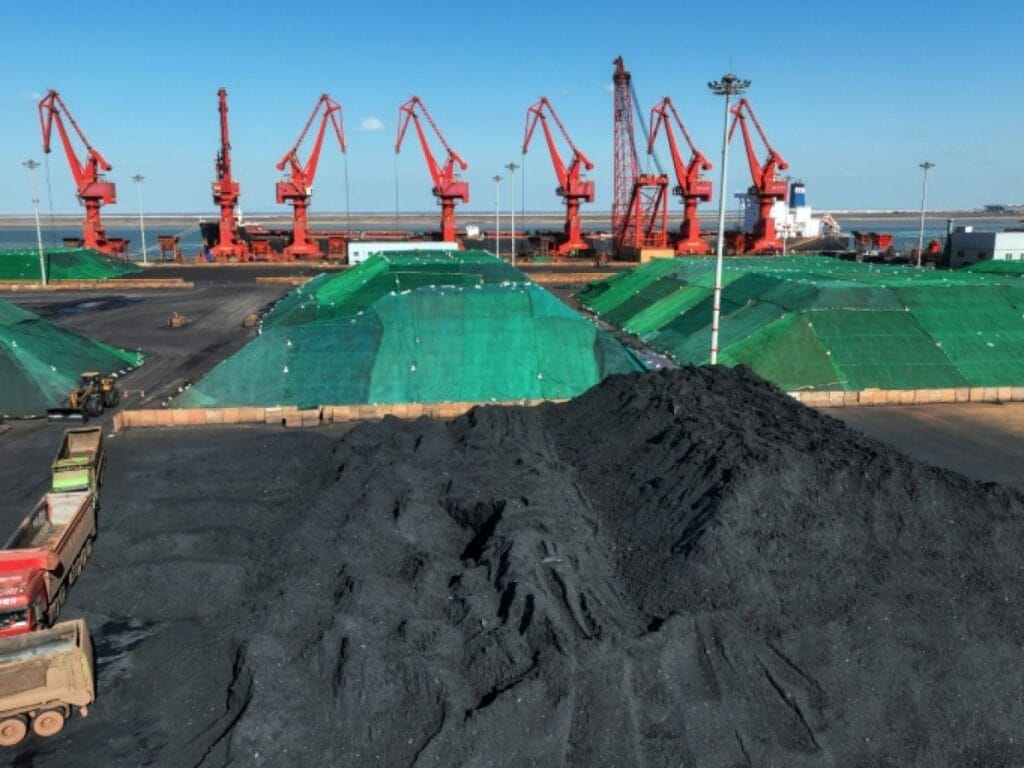
    According to Eurostat, coal production in the European Union reached a historic low in 2024, with only 242 million tons extracted, a decrease of 12% compared to 2023, confirming a downward trend that has been ongoing for several years. Consumption follows the same trajectory, with just over 306 million tons used.

    While the majority of member countries have gradually phased out coal, some continue to extract and burn lignite, a particularly polluting and inefficient type of coal. These include Germany, Poland, Bulgaria, Greece, Hungary, Romania, and Slovenia. This type of coal requires significantly more combustion than hard coal to produce the same amount of electricity, thus contributing heavily to CO2 emissions.

    Germany remains the largest consumer of lignite in Europe, emitting 92 million tons of CO2 in 2024, a volume greater than that of all other EU countries as well as most neighboring countries. Lignite consumption is currently about twice as high as that of hard coal, with nearly 200 million tons burned compared to about 110 million tons.

    Several European countries have already announced deadlines to exit coal. Germany plans to phase out hard coal by 2036 and lignite by 2038. Poland, on the other hand, intends to continue its use until 2049. Other countries like the Czech Republic, Bulgaria, or Romania are considering an exit in the 2030s, although they have not yet formalized binding decisions. France, Italy, and Spain could also end this energy source by 2030. Greece aims to eliminate coal as early as 2028, supported by European funds and the World Bank to assist in the transition of the affected regions.

    Finally, the war in Ukraine has profoundly altered coal trade flows in Europe. Imports of Russian coal have dropped by 98% between 2021 and 2023 due to the European embargo. Today, 90% of the coal imported into the EU comes mainly from five countries: Australia, the United States, Colombia, South Africa, and Kazakhstan. About 67% of the hard coal used in the Union is imported.

    coal consumption historically Level production
    Previous ArticleRenault 4 e-Tech: don’t trust the displayed consumption figures!
    Next Article Carbon assessment in Morocco: tool of transparency or a decoy?

    Related Posts

    Energy: Moroccan Electricity Production Shows Slight Increase at the Beginning of 2026

    27 March 2026

    Green Finance: KfW Injects 31 Million Euros to Decarbonize Moroccan SMEs

    27 March 2026

    Maritime Transport: OCP and British Quadrise Test a “Green” Fuel

    25 March 2026
    Leave A Reply Cancel Reply

    Ne ratez pas
    CSR

    Child Protection: ONDE Evaluates Its 2025 Performance and Strengthens Its Partnership Network

    31 March 20260

    The National Observatory for Children’s Rights (ONDE) held its annual meeting in Rabat, presided over…

    Human Development: Rabat Highlights Morocco’s Progress and Measurement Challenges

    31 March 2026

    Green EMI Expo 2026: Rabat at the Forefront of Sustainable Innovation

    30 March 2026

    Sustainable Irrigation: The World Bank Establishes the “Moroccan Model” as a Global Reference

    27 March 2026
    Restez connecté
    • Facebook
    • Twitter
    • Pinterest
    • Instagram
    • YouTube
    • Vimeo
    Nos vidéos

    The circular economy at the heart of LabelVie group’s initiatives.

    10 July 2025

    Mounir El Bari: “Our great ecological challenge is access to the resource!”

    10 July 2025

    Driss Nahya: “Control must be strengthened to access the waste deposit.”

    10 July 2025

    Reda Boukallal: “Priority to the valorization of household waste”

    10 July 2025
    Facebook X (Twitter) Instagram Pinterest
     
    © 2026 Green Times.

    Type above and press Enter to search. Press Esc to cancel.