

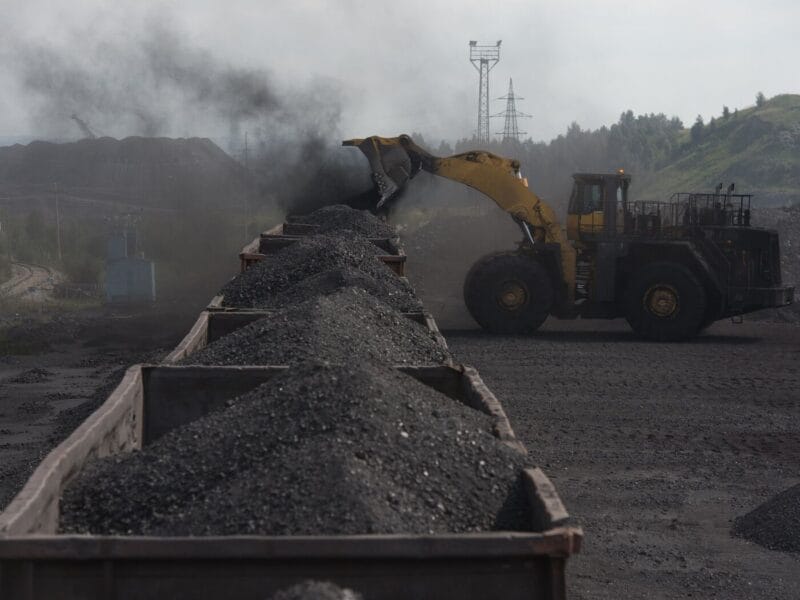
As 2025 draws to a close, the global energy landscape remains mixed. According to the report Coal 2025 published by the International Energy Agency (IEA), global coal consumption has once again reached a record high, despite significant advancements in renewable energies.
In 2025, global demand for coal increased by 0.5%, settling at 8.85 billion tons, following an already historic year in 2024. While the IEA estimates that this demand may have plateaued, a substantial decline is not expected before the end of the decade.
China, a Central Player in the Market
As the world’s largest consumer, China alone accounts for 56% of global demand. Although its consumption did not increase in 2025, the country remains a cornerstone of the global coal market. This position is largely due to the ongoing commissioning of new power plants, despite parallel records in solar and wind energy deployment.
Paradoxically, installed renewable energy capacity in China now exceeds that of thermal power plants. However, the rapid growth in electricity demand and energy security imperatives maintain a high reliance on coal.
Mixed Developments Across Regions
In India, the second-largest market, demand fell by 3% in 2025. This decrease is temporary, attributed to lower electricity consumption and exceptional hydroelectric production due to abundant monsoons.
In the United States, the trend has reversed. After more than fifteen years of decline, coal consumption is rising again, notably supported by a political climate favorable to plants at risk of closure.
In the European Union, the drop in demand was limited to 3%, compared to an average of 18% over the 2023-2024 period. This deceleration is mainly explained by hydroelectric and wind production falling short of expectations.
A Still Fragile Transition
According to the IEA, global coal demand is expected to stabilize in the short term before a slight decline by 2030, driven by the rise of renewable energies, nuclear power, and liquefied natural gas. Nevertheless, this trajectory remains uncertain.
Future developments will largely depend on China, as well as several key factors: economic growth, policy choices regarding energy security, climatic conditions, and the capacity of grids to integrate renewables. A faster-than-expected increase in global electricity demand or a slowdown in the deployment of clean energies could prolong dependence on coal, with direct implications for climate and global energy markets.