

Close Menu
Greentimes
    Qoui de neuf

    Child Protection: ONDE Evaluates Its 2025 Performance and Strengthens Its Partnership Network

    31 March 2026

    Human Development: Rabat Highlights Morocco’s Progress and Measurement Challenges

    31 March 2026

    Green EMI Expo 2026: Rabat at the Forefront of Sustainable Innovation

    30 March 2026
    Facebook X (Twitter) Instagram
    GreentimesGreentimes
    • Home
    • CSR
    • Energy Transition and Renewables
    • Sustainability
    • Climate Change
    • Analyses and Opinions
    • Datas
    • Dates & events
    • Last news
    • FR
    Friday 11 September 2026
    Facebook X (Twitter) Instagram
    Greentimes
    Home » Water stress: desalination will only slightly save Moroccan agriculture (Cabinet)
    Sustainability

    Water stress: desalination will only slightly save Moroccan agriculture (Cabinet)

    5 September 2024No Comments2 Mins Read
    Facebook Twitter Pinterest LinkedIn Tumblr Reddit WhatsApp Email
    Share
    Facebook Twitter LinkedIn Pinterest WhatsApp Email

    According to a research note from the international firm BMI, a subsidiary of Fitch Solutions, Moroccan agriculture, despite its vulnerability to water stress, will gain little benefit from seawater desalination. Nearly 80% of agricultural land in Morocco is dedicated to rain-fed agriculture, which limits the direct impact of this technology on the majority of the country’s crops.

    Desalination, although presented as a solution to water scarcity, will therefore prove insufficient to resolve the difficulties in the agricultural sector. For BMI, Morocco will need to invest more in its hydraulic infrastructure so that irrigated agriculture, which generates more than 50% of agricultural added value, can fully benefit from this resource. These investments would aim to reduce competition between irrigation and drinking water needs, exacerbated by recent droughts.

    Indeed, the dependence of Moroccan agriculture on precipitation makes the country particularly vulnerable to climatic hazards. The last drought drastically reduced wheat production, dropping from 7.5 million tons in 2021-2022 to only 2.7 million tons in 2022-2023, causing the self-sufficiency rate to fall from 71.8% to 27.1%.

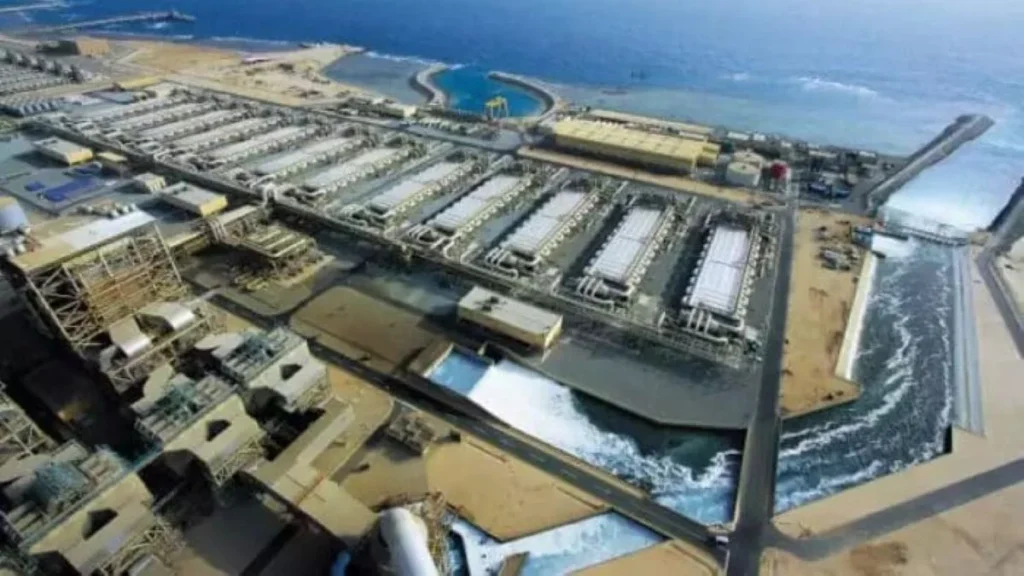
    While agriculture will benefit only slightly from this technology, desalination seems to have a more pronounced impact on other sectors, particularly tourism. In Agadir, for example, the desalination plant, in operation since 2021, has helped avoid water cuts, which are essential for preserving tourism activities, a key economic pillar of the region. The tourism sector, which accounts for about 7% of Morocco’s GDP, faces water restrictions, particularly in high season, in areas like Casablanca and Rabat.

    Morocco, despite promising initiatives, lags behind other countries in the region in terms of the volume of desalinated water per capita, BMI points out. However, recent contracts signed with the American company Energy Recovery for 270 million dirhams demonstrate the country’s willingness to accelerate the development of this technology. Nevertheless, the country remains less exposed than its neighbors to the risk of widespread shortages, according to data from the FAO and the World Bank.

    Desalination, despite its growing importance, will therefore not be able to solve the water crisis in Morocco on its own. Complementary solutions will be necessary to mitigate the effects of climate change on agriculture and meet the needs of a growing population, while supporting key economic sectors such as tourism.

    desalination only stress: Water will
    Previous ArticleAppointment of Mr. Khalid QALAM as President of Gotion Power Morocco SA.
    Next Article The Orange Foundation Morocco is strengthening its digital schools program with 55 new schools for the 2024-2025 school year.

    Related Posts

    Green EMI Expo 2026: Rabat at the Forefront of Sustainable Innovation

    30 March 2026

    Sustainable Irrigation: The World Bank Establishes the “Moroccan Model” as a Global Reference

    27 March 2026

    Energy: Moroccan Electricity Production Shows Slight Increase at the Beginning of 2026

    27 March 2026
    Leave A Reply Cancel Reply

    Ne ratez pas
    CSR

    Child Protection: ONDE Evaluates Its 2025 Performance and Strengthens Its Partnership Network

    31 March 20260

    The National Observatory for Children’s Rights (ONDE) held its annual meeting in Rabat, presided over…

    Human Development: Rabat Highlights Morocco’s Progress and Measurement Challenges

    31 March 2026

    Green EMI Expo 2026: Rabat at the Forefront of Sustainable Innovation

    30 March 2026

    Sustainable Irrigation: The World Bank Establishes the “Moroccan Model” as a Global Reference

    27 March 2026
    Restez connecté
    • Facebook
    • Twitter
    • Pinterest
    • Instagram
    • YouTube
    • Vimeo
    Nos vidéos

    The circular economy at the heart of LabelVie group’s initiatives.

    10 July 2025

    Mounir El Bari: “Our great ecological challenge is access to the resource!”

    10 July 2025

    Driss Nahya: “Control must be strengthened to access the waste deposit.”

    10 July 2025

    Reda Boukallal: “Priority to the valorization of household waste”

    10 July 2025
    Facebook X (Twitter) Instagram Pinterest
     
    © 2026 Green Times.

    Type above and press Enter to search. Press Esc to cancel.