

Water contributions reached 4.07 billion cubic meters (m³) between September and January 20, with 3.6 billion m³ recorded in the last forty days, as reported by the Minister of Equipment and Water, Nizar Baraka, on Tuesday.
Responding to oral questions in the Chamber of Advisors about the impact of recent rainfall on reservoir levels, Mr. Baraka specified that the rainfall recorded since September totaled 121.5 mm, an increase of 114% compared to the same period last year.
He highlighted that this figure is also 24% higher than the average observed between 1990 and 2020, calling these indicators “very positive.”
Snow-covered areas reached a record of 55,195 km² before receding to 22,600 km² currently, a level not seen since 2018. He noted that the reservoir filling rate increased from 28% to 48%.
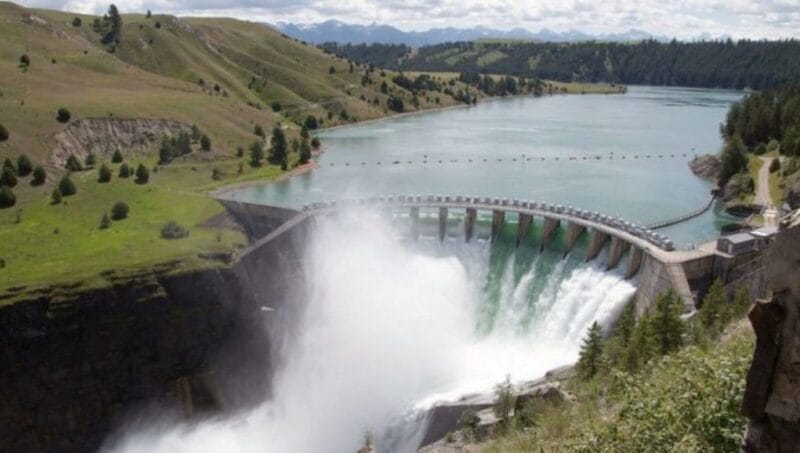
Furthermore, Mr. Baraka reported a rise in the filling rate of the Sebou basin from 36% to 57% (3.167 billion m³) and the release of excess water from four major dams that exceeded their storage capacity: Bab Louta, Bouhouda, El Manaa Sebou, and Allal Al Fassi.
Regarding the Oum Er-Rbia basin, the minister indicated that storage increased from 250 million m³ last year to 1.178 billion m³ currently, rising from 5% to 24%, with several dams exceeding their storage capacity, including Aït Messaoud, Dourat, Sidi Driss, Imfout, Sidi Saïd Maâchou, and Moulay Youssef, in addition to several smaller dams.
The filling rate of the Bouregreg basin and the Chaouia rose from 37% to 95.5%, with a total storage of 1.033 billion m³, accompanied by the release of excess water from multiple dams, particularly Mohammed Ben Abdellah and Kouachia.
In the Loukkos basin, the filling rate reached 64.30%, up from 45.25% last year, equivalent to 1.2 billion m³, with four dams exceeding 100% of their capacity: Chefchaouen, Charif Al Idrissi, Ibn Battouta, and Oued El Makhazine.
In the Souss-Massa basin, storage jumped from 120 million m³ to 382 million m³, achieving a filling rate of 52%, which has secured a year of drinking water supply and two years for the Aït Baha region. Several dams exceeded their storage capacity, including Ahl Souss, Aoulouz, Moulay Abdellah, and Dkhila.
The Tensift basin saw its filling rate increase from 46% to 75.7%, reaching the same level as July 2017, with excess water releases from the Moulay Abderrahmane, Mohamed Ben Slimane El Jazouli, and Abou Al Abbas Sebti dams.
In the Guir Ziz Rheris basin, the filling rate rose from 53% to 57%, while the Hassan Addakhil dam reached 72% of its capacity, ensuring water supply for the Errachidia system for more than two years.
As for the Drâa-Oued Noun basin, the rate remained stable at 31%, down from 32% last year, extending the water supply linked to the El Mansour Eddahbi dam by two years. The Moulouya basin, on the other hand, remained around 39%, with excesses recorded at the Oued Za and Machraa Hammadi dams.
The minister emphasized that these figures have allowed the country to gain an average of an additional year of drinking water, though disparities between the basins range from one to three years.
He stressed the necessity of continuing efforts, in line with the Royal High Guidelines, to expedite the construction of dams, noting that the time required to complete the Tamri dam has been reduced by three years, with work expected to finish and filling to start by next June.
Mr. Baraka also reported the execution of 4,221 exploratory boreholes, yielding over 8,800 liters per second, benefitting 5.8 million rural residents, along with the establishment of 244 large cisterns and 41 rainwater collection projects on building rooftops.
Regarding basin interconnection, he recalled the completion of the phase for transporting water from the Sebou to the Bouregreg, with 953 million m³ already transferred, and the launch this year of the second phase linking the Sebou basin to the Bouregreg and Oum Er-Rbia basins up to the Al Massira dam.
Concerning seawater desalination, the minister indicated that current production reaches 350 million m³, aiming for 1.7 billion m³ by 2030. He specified that four stations are currently being built with an annual capacity of 567 million m³, in addition to the launching of stations in Nador and Tangier and plans for those in Guelmim, Tan-Tan, and Souss-Massa in Tiznit.
Finally, he announced the continuation of wastewater treatment efforts to increase from 40 million m³ to 100 million m³ by 2027, alongside programs to supply urban and rural areas with drinking water, benefiting 22,000 douars and 767 rural centers, as part of the National Water Plan by 2050.