

Close Menu
Greentimes
    Qoui de neuf

    Child Protection: ONDE Evaluates Its 2025 Performance and Strengthens Its Partnership Network

    31 March 2026

    Human Development: Rabat Highlights Morocco’s Progress and Measurement Challenges

    31 March 2026

    Green EMI Expo 2026: Rabat at the Forefront of Sustainable Innovation

    30 March 2026
    Facebook X (Twitter) Instagram
    GreentimesGreentimes
    • Home
    • CSR
    • Energy Transition and Renewables
    • Sustainability
    • Climate Change
    • Analyses and Opinions
    • Datas
    • Dates & events
    • Last news
    • FR
    Thursday 6 August 2026
    Facebook X (Twitter) Instagram
    Greentimes
    Home » The Moroccan automotive industry embraces the ecological transition.
    Sustainability

    The Moroccan automotive industry embraces the ecological transition.

    16 May 2024No Comments2 Mins Read
    Facebook Twitter Pinterest LinkedIn Tumblr Reddit WhatsApp Email
    Share
    Facebook Twitter LinkedIn Pinterest WhatsApp Email

    Thousands of brand new vehicles are waiting in the large parking lot of the Renault factory in Tangier, ready to be shipped to Europe. This spectacle illustrates the vitality of the Moroccan automotive industry, which continues to break records in terms of production and exportation.

    According to Ryad Mezzour, Moroccan Minister of Trade and Industry, “Morocco is the most competitive platform for automotive construction, and the most decarbonized in the world.” Thanks to strategic investments and a proactive industrial policy, Morocco plans to have a production capacity of one million vehicles per year by 2025, whereas it exported no cars fifteen years ago.

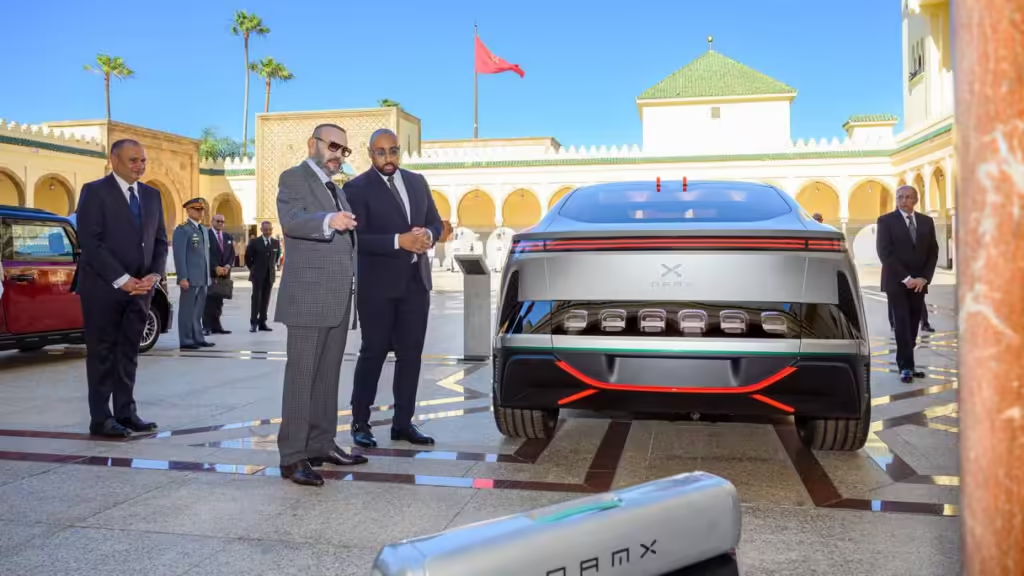
    Morocco hosts more than 250 companies manufacturing cars and automotive components. Renault, the largest private employer in the country, produces flagship models such as the Dacia Sandero. Moroccan authorities continue their ambition to maintain the country as a leader in automotive production, with a particular focus on electric vehicles.

    The Moroccan government has implemented subsidies of up to 35% to encourage manufacturers to set up in industrial zones. These incentives, combined with rapid development of port infrastructure, free trade zones, and highways, have made Morocco a preferred destination for the automotive industry.

    With Europe transitioning towards a gradual phase-out of combustion engines, manufacturers like Renault are adapting their Moroccan facilities to produce electric vehicles. Mohamed Bachiri, operations director of the Renault group in Morocco, emphasizes the strategic importance of Morocco in this transition, with annual production forecasts of 500,000 vehicles by 2025, destined for more than seventy countries.

    Morocco’s favorable conditions – skilled and competitive labor, stable environment, new investment charters – attract investments from major global players like BYD, the world’s largest electric vehicle manufacturer. Li Changlin, Chinese ambassador to Morocco, states that the country offers significant advantages for Chinese investors.

    However, international competition for electric vehicle production is intensifying. Protectionist policies in Western countries, such as tax credits and incentives for locally manufactured vehicles, complicate global supply chains. Morocco, despite its commitment to free trade, must navigate this new business environment.

    Ryad Mezzour concludes: “We are living in instability in terms of trade rules that makes things more difficult for countries like Morocco that have invested heavily in open, free, and fair trade.”

    Morocco’s success in the automotive industry, marked by a transition towards decarbonization and increased integration into global value chains, underscores its role as a leader in industrial transformation in Africa.

    With africanews.com

    automotive ecological embraces industry Moroccan
    Previous ArticleGreen Finance: Morocco Takes on the Role of Continental Leader
    Next Article Energy audit: your energy consumption in the mirror

    Related Posts

    Green EMI Expo 2026: Rabat at the Forefront of Sustainable Innovation

    30 March 2026

    Sustainable Irrigation: The World Bank Establishes the “Moroccan Model” as a Global Reference

    27 March 2026

    Energy: Moroccan Electricity Production Shows Slight Increase at the Beginning of 2026

    27 March 2026
    Leave A Reply Cancel Reply

    Ne ratez pas
    CSR

    Child Protection: ONDE Evaluates Its 2025 Performance and Strengthens Its Partnership Network

    31 March 20260

    The National Observatory for Children’s Rights (ONDE) held its annual meeting in Rabat, presided over…

    Human Development: Rabat Highlights Morocco’s Progress and Measurement Challenges

    31 March 2026

    Green EMI Expo 2026: Rabat at the Forefront of Sustainable Innovation

    30 March 2026

    Sustainable Irrigation: The World Bank Establishes the “Moroccan Model” as a Global Reference

    27 March 2026
    Restez connecté
    • Facebook
    • Twitter
    • Pinterest
    • Instagram
    • YouTube
    • Vimeo
    Nos vidéos

    The circular economy at the heart of LabelVie group’s initiatives.

    10 July 2025

    Mounir El Bari: “Our great ecological challenge is access to the resource!”

    10 July 2025

    Driss Nahya: “Control must be strengthened to access the waste deposit.”

    10 July 2025

    Reda Boukallal: “Priority to the valorization of household waste”

    10 July 2025
    Facebook X (Twitter) Instagram Pinterest
     
    © 2026 Green Times.

    Type above and press Enter to search. Press Esc to cancel.