





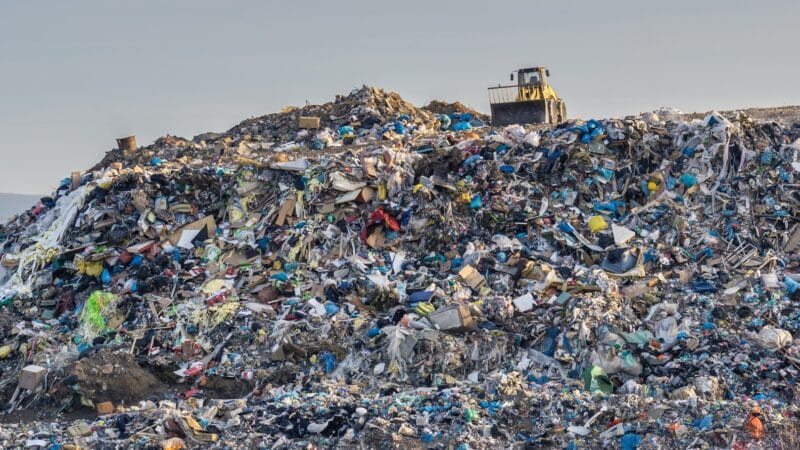
The Casablanca-Settat Regional Council organized, on Tuesday at the region’s headquarters, a final restitution workshop regarding the Regional Master Plan for the management of non-hazardous industrial, medical, and pharmaceutical waste, as well as ultimate, agricultural, and inert waste. This strategic document aims to strengthen environmental governance and the sustainable management of waste at the regional level.
Chaired by Abdellatif Maâzouz, president of the Casablanca-Settat Regional Council, the meeting was attended by the Secretary General for Regional Affairs of the Casablanca-Settat Prefecture, local elected officials, and representatives from civil society.
During the event, waste management expert Zakaria Driss presented the main axes of the plan, stating that it was developed in accordance with the provisions of Law 28-00, amended by Law 23-12, as well as the decrees related to waste classification, management, and technical standards for incineration disposal.
He explained that this document serves as a structuring tool that defines the targeted waste categories, namely non-hazardous industrial waste, non-infectious medical and pharmaceutical waste, inert waste from construction sites and quarries, organic agricultural waste, and ultimate waste devoid of potential for recovery under current technical conditions.
According to Mr. Driss, the approach adopted was based on a thorough diagnosis that assessed the regional waste generation, identified operational constraints, recognized opportunities for recovery, and projected the quantitative evolution of waste over 5- and 10-year horizons. He added that the plan includes a complete inventory of existing facilities, including recycling units, energy recovery platforms, sorting centers, storage facilities, and treatment stations.
The expert subsequently detailed the main recovery scenarios included in the plan, which addressed multiple waste streams identified at the regional level.
He proposed composting poultry waste and the methanization of waste from slaughterhouses, in addition to recovering waste generated by wholesale markets and olive residues from crushing units. He noted that the plan also considers the recycling of various industrial residues, including ash from thermal power plants and steelworks waste, as well as the recovery of sugar refining residues.
Regarding construction and demolition waste, Mr. Driss indicated that it could be recycled and integrated into the production of clinker, emphasizing a circular economy approach to reduce the environmental impact of the construction sector. As for inert waste, the expert clarified that the plan proposes their reuse and recovery within identified abandoned quarries in the regional territory.
Institutionally, he recommended a contractual governance model based on the creation of a Local Development Company responsible for managing calls for expression of interest and public-private partnerships.
In a statement to MAP, Mr. Maâzouz asserted that this meeting allowed for the presentation of results from a three-year effort dedicated to quantifying, localizing, and treating inert waste and non-hazardous medical waste.
He emphasized that the objective was to prioritize a model of recovery and reuse of these wastes, avoiding chaotic management situations, and to prepare a call for expressions of interest aimed at involving the private sector, similar to the new Mediona landfill. He also highlighted that Morocco had been ranked among “the top five countries in the world” for environmental efforts, a distinction recognized during COP30.
MAP