

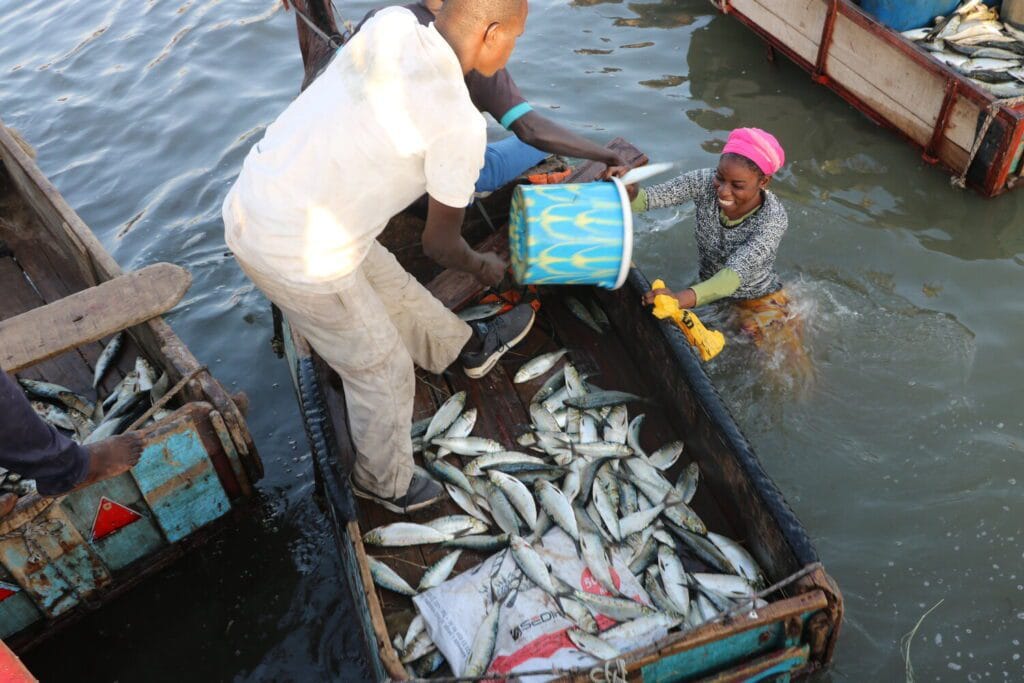
The blue economy is asserting itself as a key driver of essential transformation for Africa, with unmatched potential to promote sustainability and inclusion. During the African forum on the fishing and aquaculture industry Seafood 4 Africa 2024, held in Dakhla, Hassan Sentissi El Idrissi, president of the National Federation of Fish Processing and Valorization Industries (FENIP), emphasized the importance of this economic approach to address current challenges while preserving marine ecosystems.
Towards a sustainable and inclusive blue economy
Mr. Sentissi El Idrissi advocated for an ambitious blue economy capable of ensuring the resilience of coastal communities while guaranteeing sustainable exploitation of marine resources. He stressed the need to strengthen partnerships and attract private investments to develop environmentally friendly infrastructures and integrate innovative technologies.
Sustainable fishing and agro-industry play a central role in this vision, contributing to addressing the challenges of food sovereignty in Africa. According to him, the exploitation of marine resources must be done in respect of ecosystems, developing alternatives such as aquaculture, which offers economic prospects while reducing pressure on fish stocks.
Concrete initiatives for sustainable impact
Among the key proposals is the creation of an African fisheries exchange to structure trade, set quality standards, and maximize the added value of seafood products. The president of FENIP also recommended the establishment of a continental maritime fund to support SMEs and start-ups, and to finance innovative projects related to ecological transition.
Furthermore, he called for the establishment of an African center for training and research in the blue economy, aimed at developing local skills, encouraging innovation, and supporting maritime industries in their modernization.
Strengthened African cooperation
In a South-South partnership logic, Mr. Sentissi El Idrissi reiterated Morocco’s willingness to share its expertise with its African neighbors, in order to build a common future focused on sustainability and prosperity. The development of a local processing industry for seafood products, as well as investment in modern and ecological shipyards, have been identified as priorities to ensure African industrial sovereignty and address climate challenges.
A commitment to sustainability
Organized by FENIP in collaboration with several Moroccan ministries, the forum Seafood 4 Africa 2024 brought together representatives from African countries and regional institutions such as ECOWAS and ECCAS. This event aims to promote sustainable economic growth, focusing on innovation, responsible governance, the valorization of marine products, and the decarbonization of the sector.
Scientific conferences, B2B meetings, and an exhibition on the value chain of fishing and aquaculture products complemented the program. This forum embodies a strategic platform to realize African ambitions in the blue economy and sustainable development.
Ultimately, the blue economy represents a unique opportunity for Africa to combine the preservation of natural resources, the creation of economic value, and the strengthening of local communities, while actively participating in the fight against climate change.
With MAP