

Close Menu
Greentimes
    Qoui de neuf

    Child Protection: ONDE Evaluates Its 2025 Performance and Strengthens Its Partnership Network

    31 March 2026

    Human Development: Rabat Highlights Morocco’s Progress and Measurement Challenges

    31 March 2026

    Green EMI Expo 2026: Rabat at the Forefront of Sustainable Innovation

    30 March 2026
    Facebook X (Twitter) Instagram
    GreentimesGreentimes
    • Home
    • CSR
    • Energy Transition and Renewables
    • Sustainability
    • Climate Change
    • Analyses and Opinions
    • Datas
    • Dates & events
    • Last news
    • FR
    Friday 14 August 2026
    Facebook X (Twitter) Instagram
    Greentimes
    Home » Siltation of Dams: A Partnership to Preserve Water Capacity
    Sustainability

    Siltation of Dams: A Partnership to Preserve Water Capacity

    18 March 2026No Comments2 Mins Read
    Facebook Twitter Pinterest LinkedIn Tumblr Reddit WhatsApp Email
    Share
    Facebook Twitter LinkedIn Pinterest WhatsApp Email

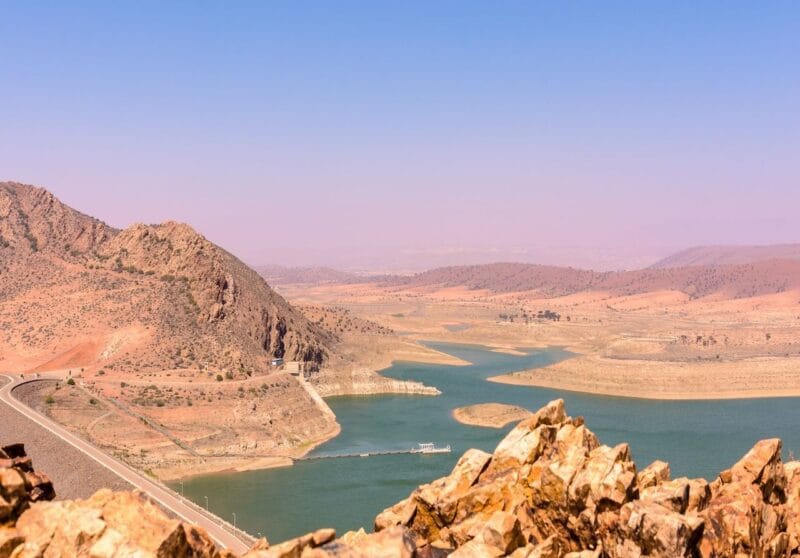
    In response to a phenomenon that significantly weakens the storage capacity of dams, the Ministry of Equipment and Water and the National Agency for Water and Forests have signed a framework partnership agreement in Rabat aimed at combating sedimentation, now a central issue in managing the Kingdom’s water resources.

    Signed by Nizar Baraka and Abderrahim Houmy, this agreement reflects a desire for enhanced coordination between the two institutions, focusing on an integrated approach centered on the development and management of watersheds located upstream of hydraulic infrastructure. The stated objective is to reduce sediment inputs responsible for the gradual accumulation of deposits in reservoirs, a phenomenon that decreases the effective capacity of dams year after year.

    In this context, the authorities intend to prioritize a preventive logic by intervening upstream on the structural causes of sedimentation, notably soil erosion and ecosystem degradation. This direction aligns with a broader vision of integrated water management, combining the preservation of natural resources, protection of infrastructure, and consideration of the socio-economic dimensions of the affected territories.

    The partnership also includes the establishment of joint programs that combine soil conservation actions, reforestation, hydraulic development, and technical monitoring of watersheds. The exchange of data and expertise between the two institutions is another key lever aimed at improving knowledge of risk areas and refining interventions.

    Beyond the issue of sedimentation, this cooperation is set against a backdrop of increasing water challenges, where pressure on water resources intensifies due to the combined effects of climate change and precipitation variability. Watersheds, often fragile, play a decisive role in regulating water flows and protecting infrastructure, but remain exposed to erosion dynamics that compromise their function.

    The stakes are particularly strategic as dams hold a central place in the Moroccan hydraulic model, ensuring the supply of drinking water, supporting irrigated agriculture, and producing energy. The reduction of their storage capacity thus poses a direct risk to the country’s water security.

    Through this agreement, public authorities aim to act across the entire hydrological chain, both upstream and downstream, in order to sustainably preserve available resources and anticipate the impacts of an increasingly restrictive climatic environment.

    climate change ecosystem protection erosion hydraulic infrastructures joint programs resource conservation sedimentation sustainable development water management watershed management
    Previous ArticleRabat: Signing of an Agreement for the Implementation of the Global Program for Eco-Industrial Parks in Morocco
    Next Article Desalination: Morocco Attracts International Interests, with Australia on the Prowl

    Related Posts

    Green EMI Expo 2026: Rabat at the Forefront of Sustainable Innovation

    30 March 2026

    Sustainable Irrigation: The World Bank Establishes the “Moroccan Model” as a Global Reference

    27 March 2026

    Energy: Moroccan Electricity Production Shows Slight Increase at the Beginning of 2026

    27 March 2026
    Leave A Reply Cancel Reply

    Ne ratez pas
    CSR

    Child Protection: ONDE Evaluates Its 2025 Performance and Strengthens Its Partnership Network

    31 March 20260

    The National Observatory for Children’s Rights (ONDE) held its annual meeting in Rabat, presided over…

    Human Development: Rabat Highlights Morocco’s Progress and Measurement Challenges

    31 March 2026

    Green EMI Expo 2026: Rabat at the Forefront of Sustainable Innovation

    30 March 2026

    Sustainable Irrigation: The World Bank Establishes the “Moroccan Model” as a Global Reference

    27 March 2026
    Restez connecté
    • Facebook
    • Twitter
    • Pinterest
    • Instagram
    • YouTube
    • Vimeo
    Nos vidéos

    The circular economy at the heart of LabelVie group’s initiatives.

    10 July 2025

    Mounir El Bari: “Our great ecological challenge is access to the resource!”

    10 July 2025

    Driss Nahya: “Control must be strengthened to access the waste deposit.”

    10 July 2025

    Reda Boukallal: “Priority to the valorization of household waste”

    10 July 2025
    Facebook X (Twitter) Instagram Pinterest
     
    © 2026 Green Times.

    Type above and press Enter to search. Press Esc to cancel.