

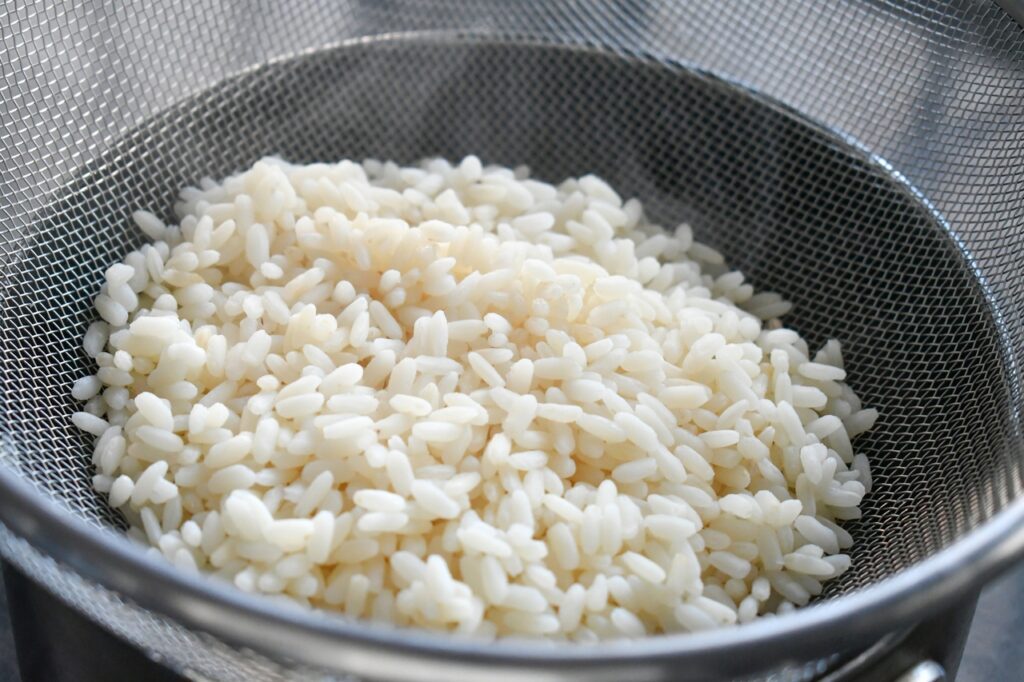
Invisible to the naked eye, tasteless and odorless, arsenic is nonetheless present in rice. Its concentration could become problematic. A recent study published in The Lancet Planetary Health warns: climate change could promote the accumulation of this toxic substance in rice crops, with worrying consequences for human health.
A natural presence, but amplified by human activities
The presence of arsenic in rice is not unusual in itself. This metal is naturally found in the Earth’s crust. However, rice grows in flooded fields, an oxygen-poor environment that transforms arsenic into a more toxic form that is easily absorbed by the plant. As Karlien Cheyns, an expert from the Belgian institute Sciensano, points out, these conditions make rice particularly vulnerable.
But beyond its natural origin, arsenic from human activity is much more concerning. Used in fertilizers, pesticides, dyes, or released by mining industries, this inorganic arsenic, which is much more toxic, has infiltrated the groundwater of many countries, from Asia to the Americas. And since rice paddies are irrigated with this contaminated water, the transfer to our food is direct.
A silent danger to health
In the long term, chronic exposure even to low doses of inorganic arsenic can lead to serious health issues: cancers, cardiovascular diseases, type 2 diabetes, cognitive disorders, and developmental abnormalities. According to the UN, it is even the main chemical contaminant of drinking water worldwide.
Climate change, an accelerator
The study conducted by Columbia University brings a new warning. It shows that warming above 2 °C, coupled with an increase in CO₂ levels, intensifies the absorption of inorganic arsenic by rice. Rising temperatures alter soil chemistry and create conditions conducive to this accumulation.
With rice being massively consumed in Asia and other regions of the world, the increase in arsenic could lead to a surge in cases of diseases related to this substance. A global public health issue.
Can we still consume rice without fear?
Despite the concerns, health authorities aim to reassure. In Belgium, the Federal Agency for the Safety of the Food Chain (Afsca) conducts about fifty analyses per year on rice. “For the past three years, all measured values have remained within legal standards,” assures its spokesperson Aline Van Den Broeck.
To limit exposure, a few simple actions can be adopted: rinse rice before cooking, cook it in a large amount of water (like pasta), and then drain it. This process could reduce the presence of arsenic by 40 to 60%, although it also decreases some essential nutrients.
Diversifying the diet, a simple and effective strategy
Eating rice in moderation and varying cereal sources is a recommended precaution. Millet, quinoa, buckwheat, spelt, or bulgur are all interesting alternatives. This diversity limits arsenic accumulation in the body while enriching the diet.
Rethinking rice cultivation in the long term
To sustainably address the threat, researchers are calling for a transformation of agricultural practices. Improving rice varieties to limit arsenic absorption, optimizing soil management, implementing stricter processing practices, and raising consumer awareness are all urgent levers to be activated.
An omnipresent contaminant
It is important to remember that rice is not the only source of arsenic. Drinking water, dairy products, meats, fish, and seafood can also contain this substance, especially if their preparation involved contaminated water.
In Wallonia, a biomonitoring campaign conducted among adolescents in 2020 revealed that 21% of participants had arsenic levels above the safety limit. Other European studies report similar concerning levels in 15 to 52% of tested youth.
With rtbf.be