




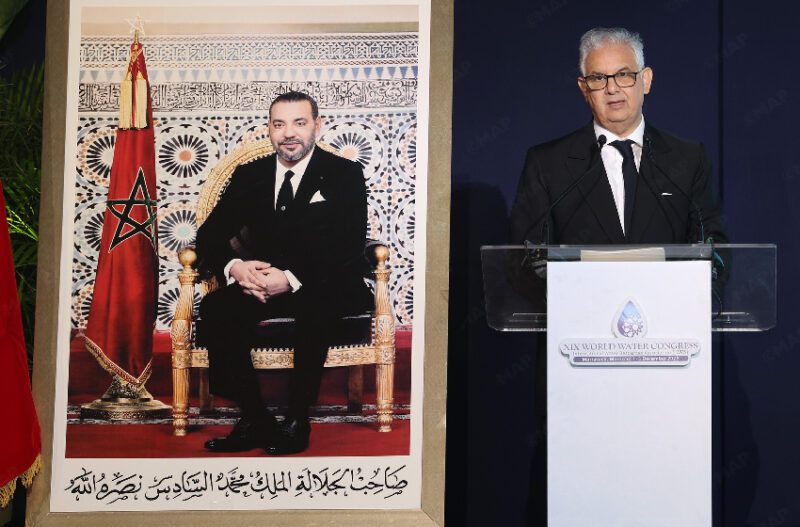
During a ministerial meeting held as part of the 19th World Water Congress, Mr. Baraka emphasized that the Kingdom has chosen a proactive approach based on innovation, long-term planning, and structural transformation of water production.
The minister recalled that Morocco has embarked on a profound shift in its water policy by implementing integrated water basin master plans (PDAIRE) for the year 2050, which precisely map the resources of each basin, their needs, vulnerabilities, and priority projects.
These plans, he continued, now feed into the National Water Plan, a true roadmap for all stakeholders.
Furthermore, Mr. Baraka highlighted the emergence of a new water architecture based on a mix that combines desalination, large dams, treated wastewater reuse, artificial groundwater recharge, as well as the digitization of networks and sustainable groundwater management contracts.
“Our goal is clear: to move from just being a ‘manager of scarcity’ to a water-producing country,” he insisted, recalling that Morocco already operates 17 desalination plants, with several ongoing projects aimed at reaching a capacity of 1.7 billion cubic meters per year by 2030, largely powered by renewable energies to reduce costs and ensure service sustainability.
The minister also mentioned a series of innovative initiatives undertaken at a national level, including the use of floating solar panels to reduce evaporation in dams and the expansion of the cloud seeding program, in addition to the first experimental units producing water from atmospheric humidity intended for schools and remote rural centers.
For his part, the Minister of Water Resources of the People’s Republic of China, Li Guoying, praised Morocco’s dynamic efforts, emphasizing the strategic convergences between the two countries in sustainable water management.
He noted that China is also facing increased pressure related to population growth and urban expansion, which has prompted it to invest in demand management, network optimization, and the integration of advanced technologies to enhance water resilience.
In this context, the Chinese minister stressed the need for countries facing similar challenges to pool expertise, particularly in meteorological monitoring, basin management, and rationalizing agricultural uses.
Meanwhile, Turkey’s Deputy Minister of Agriculture and Forestry, Ebubekir Gizligider, underscored the importance of adopting policies that combine climate foresight, robust infrastructures, and shared governance, noting that the increasingly frequent episodes of flooding and drought in the region necessitate enhanced cooperation and ongoing exchange of experiences.
Held under the High Patronage of His Majesty King Mohammed VI, the World Water Congress, co-organized until December 5 by the Ministry of Equipment and Water and the International Water Resources Association (IWRA), aims to explore innovative solutions, strategies, and adaptive approaches to water resources in a constantly changing world.
The agenda for this 19th edition includes a ministerial roundtable, four high-level panels, more than 140 technical sessions led by international experts, parallel events to delve into specialized themes, and a vast exhibition space dedicated to showcasing innovative water technologies and projects.
The proceedings of this significant event will culminate in the “Marrakech Declaration,” a collective appeal bringing together decision-makers, scientists, and practitioners to strengthen the link between science, policy, and action, and to accelerate global mobilization for water preservation.
MAP