
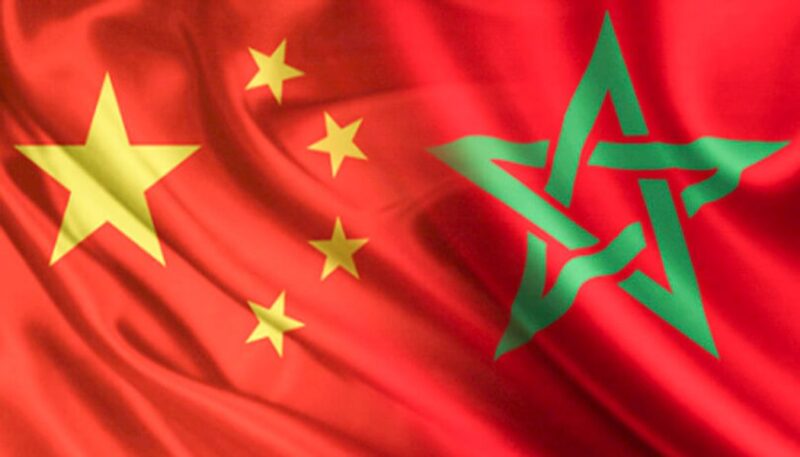
Morocco is establishing itself as a strategic hub for low-carbon technologies, attracting massive Chinese investments in clean energy, electric mobility, and battery components. According to a report from the Net Zero Policy Lab and the GDP Center, the Kingdom ranks second globally in the total value of green manufacturing projects financed by Beijing.
The global energy transition is reshaping investment flows, and Morocco is capitalizing on its geographic position, strategic mineral resources, and an industrial policy focused on decarbonization. The report “China’s Green Leap Outward,” published in September 2025, highlights that Chinese industries have committed $227 billion to green projects internationally since 2011, with nearly 88% of that amount invested after 2022, marking an unprecedented acceleration.
Morocco stands out due to a rare alignment of economic and geopolitical factors: its phosphate reserves, essential for battery manufacturing, a stable regulatory framework, and privileged access to the European market. With these assets, the Kingdom is becoming a central player in the global low-carbon industry, structuring its industrial zones and leveraging its logistical proximity to Europe.
The mapping of green manufacturing projects led by Chinese companies identifies 461 initiatives from 2011 to mid-2025. Outside Southeast Asia, Morocco appears as a “center of excellence” for battery materials, notably cathodes and precursors, as well as for green hydrogen. Groups such as Gotion High-Tech, CNGR Advanced Material, and Huayou Cobalt have invested in the production of cathode precursors and electrolysis units for hydrogen.
This dynamic fits within a broader strategy by Chinese industries to secure their access to international markets in light of trade restrictions and to produce locally or regionally. For Morocco, this translates into a strategic alignment combining natural resources, efficient port infrastructures (Tanger Med), competitive solar and wind energy, and free trade agreements with Europe.
Green hydrogen and battery projects could generate up to $15 billion in cumulative investments by 2035. The Kingdom is leveraging its Low Carbon Strategy (2021) and its roadmap for green hydrogen (2023) to become a regional producer and exporter of green hydrogen and ammonia.
However, the report highlights several challenges: stringent environmental oversight, the training of a skilled workforce, and equitable sharing of economic benefits. The growing reliance on Chinese capital also presents a strategic issue in the context of commercial rivalries among Beijing, Washington, and Brussels.
Once viewed as a peripheral player, Sino-Moroccan cooperation is now evolving into a green industrial partnership, making Morocco a key destination for global investments in low-carbon technologies.