






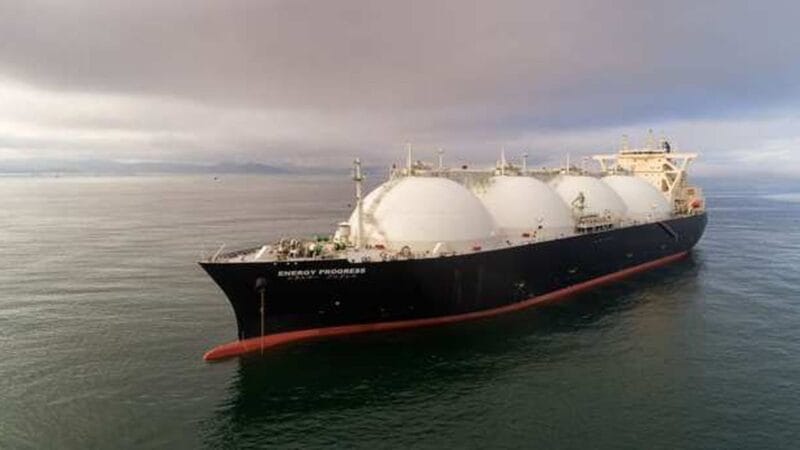
As the global liquefied natural gas (LNG) market prepares to enter a phase of abundance by the end of the decade, Morocco is focusing on a gradual strengthening of its gas infrastructure to position itself as a key player in regional energy balances. This strategy aims to anticipate the expected increase in global supply while securing national supply and supporting the energy transition.
According to Bloomberg projections, global LNG supply could reach nearly 594 million tonnes by 2030, a rise of over 40% compared to 2024, driven by the start-up of new projects, primarily in the United States and Qatar. This momentum could create a structural surplus in international markets, barring geopolitical disruptions or industrial delays.
In this context, Morocco appears to be one of the African countries best positioned to take advantage of this restructuring. The Kingdom has launched a series of port and energy projects aimed at integrating LNG into its energy mix and strengthening its role as a regional platform.
Strategic Ports for LNG Reception
On the Mediterranean coast, the Nador West Med port, scheduled to be operational in the second half of 2026, is a key element of this strategy. Designed as an integrated industrial hub, it will feature Morocco’s first LNG infrastructure in the form of a floating storage and regasification unit. Connected by pipeline to the northwestern industrial zones, this installation will facilitate the import of gas intended for electricity generation and industrial use.
By 2028, a second major project will emerge on the Atlantic coast with the commissioning of the Dakhla port. With a depth of 23 meters, the deepest in the country, this complex is intended to host heavy industries and serve as an entry point for trade with Sahel countries. The port will be surrounded by extensive industrial and agricultural zones supported by desalination infrastructure and will include docks dedicated to future green hydrogen exports.
Moroccan authorities are also exploring the creation of a port at Tan-Tan, linked to projects related to green hydrogen, to complement this logistical and energy framework.
Regional Positioning in a Changing African Market
At the continental level, the geography of gas production is set to evolve. While North Africa currently holds a significant portion of the supply, its contribution is expected to decline in favor of sub-Saharan Africa, where LNG production could quadruple by 2050. At the same time, Africa’s demand for gas is anticipated to grow significantly, driven by needs for electricity and industrialization.
However, the development of domestic uses remains hindered by inadequate transport and processing infrastructure. In this context, LNG emerges as a preferred solution, supported by proven financial arrangements and international contracts, sometimes to the detriment of more expensive domestic gas networks.
It is within this delicate balance between export and regional consumption that Morocco seeks to position itself. Its LNG terminal projects are among those explicitly mentioned as potential levers to improve access to gas at both national and regional levels, alongside similar initiatives in Southern Africa.
Gas, Electricity, and Major Transcontinental Projects
Beyond the terminals, Morocco holds a strategic position in major African energy projects. The Nigeria-Morocco pipeline, estimated at nearly $25 billion, is set to connect Nigerian reserves to the North African Atlantic coast by traversing thirteen West African countries. This project aims to establish a major energy corridor, complementing port infrastructure and regasification capacities.
Converting gas into electricity forms another pillar of this dynamic. According to the African Energy Chamber, natural gas could account for nearly 45% of the continent’s electricity production by 2050. Several African countries have already incorporated this direction into their national strategies to ensure more reliable electricity and support their industrial development.
Situated at the crossroads of African, Atlantic, and European flows, Morocco thus appears to be a potential pivot for this energy restructuring. By gradually commissioning its LNG projects, the Kingdom aims to combine supply security, industrial attractiveness, and regional integration in a global gas market that is becoming increasingly competitive as 2030 approaches.


