

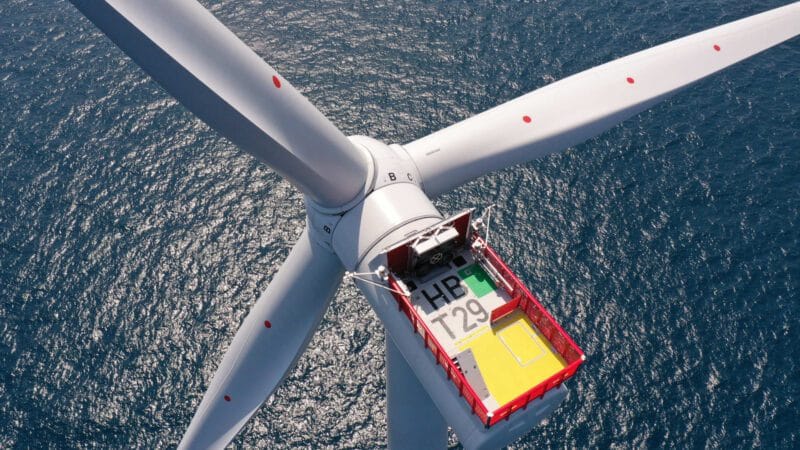
The Khalladi wind farm, located in northern Morocco, stands out as a model of success for the private sector in renewable energy. As the first private-to-private project in the Kingdom, it has received a solid rating from the Climate Investment Funds (CIF), confirming the robustness of the model outlined in Law 13-09 on private electricity generation and its role as a demonstrator for market liberalization.
With 40 turbines of 3 MW each, reaching a total capacity of 120 MW, Khalladi has produced 397 GWh, exceeding its initial targets and avoiding 180,238 tons of CO₂, beyond the projected 177,060 tons. Its innovative financial structure, entirely in dirhams, has secured the project against currency risks and inspired new approaches to local financing for renewable energy.
The wind farm was designed from the outset to test Law 13-09. It aimed to demonstrate that a private producer could sell electricity directly to high and very high voltage industrial clients without going through the ONEE. Even before it became operational in 2018, Khalladi had secured three long-term purchase agreements covering 80% of its production with Holcim Morocco, Asment, and Cimat. The surplus is sold through short-term contracts that are flexible and more lucrative, making Khalladi the first “merchant” producer in the country.
The path was not easy. Law 13-09 contained flaws, particularly regarding network costs, connections, and the risk of double payments. Integration into the national grid required stabilization tools such as Statcom, and the regulation lacked clarity. The project necessitated several years of technical and financial negotiations with the EBRD, ONEE, and private partners. The establishment of the ANRE in 2016, the adoption of the national grid code in 2021, and the reform of Law 40-19 in 2023 were crucial in securing the regulatory framework and reviving the dynamics of renewable IPPs.
Khalladi also marked a financial revolution by introducing the first financing for a renewable project of this size in dirhams, reducing currency risks and validating the feasibility of locally financed private projects.
Today, the wind farm operates at full capacity. It provides renewable electricity that is cheaper than the national mix, supports market needs, and serves as a benchmark for modernizing regulation and enhancing the credibility of the Moroccan energy market. Beyond its industrial performance, Khalladi has inspired similar reforms in Tunisia and Egypt, validating the national strategy for promoting renewable energy and energy efficiency.
In summary, Khalladi is not just a wind farm. It has become the pilot project that demonstrated that a flexible and competitive private model could succeed in Morocco, paving the way for energy transition and contributing to a more transparent, sustainable, and attractive electricity market for investors.