

Close Menu
Greentimes
    Qoui de neuf

    Siemens Healthineers and SOS Children’s Villages: A Partnership in Support of Vulnerable Children’s Health

    11 December 2025

    Unprecedented Mentorship to Propel Moroccan Female Students into Tech Careers

    11 December 2025

    Tendrara Starts Gas Flow: First Injection and Countdown to Moroccan LNG

    10 December 2025
    Facebook X (Twitter) Instagram
    GreentimesGreentimes
    • Home
    • CSR
    • Energy Transition and Renewables
    • Sustainability
    • Climate Change
    • Analyses and Opinions
    • Datas
    • Dates & events
    • Last news
    • FR
    Thursday 11 December 2025
    Facebook X (Twitter) Instagram
    Greentimes
    Home » In Tunisia, aromatic plant gatherers face the challenge of climate change.
    Climate Change

    In Tunisia, aromatic plant gatherers face the challenge of climate change.

    27 December 2024No Comments2 Mins Read
    Facebook Twitter Pinterest LinkedIn Tumblr Reddit WhatsApp Email
    Share
    Facebook Twitter LinkedIn Pinterest WhatsApp Email

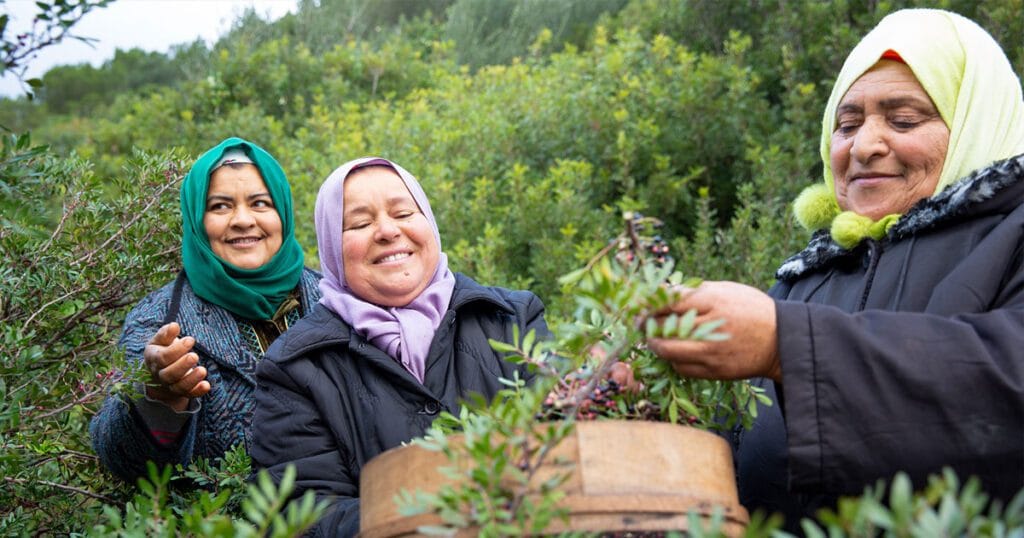
    In the village of Tbainia, northwest of Tunisia, climate change seriously threatens the activities of women who gather medicinal and aromatic herbs. These workers, mostly organized within the cooperative “Al Baraka,” are seeing their harvests decrease as droughts intensify and water sources dry up.

    **A precarious income**

    Mabrouka Athimni, director of the cooperative, sadly observes the impact of these climate upheavals: “We earn half, sometimes only a third, of our previous income.” The lack of rain reduces the quantities of available herbs, compromising the production of essential oils from plants like rosemary, mastic, or eucalyptus.

    **An exacerbated climate crisis**

    Tunisia is experiencing its sixth consecutive year of drought. The dams, essential for the northwest of the country, are only 20% full. In this region, where the poverty rate reaches 26%, well above the national average, these droughts amplify inequalities.

    **Challenging working conditions**

    The gatherers, who represent 70% of the Tunisian agricultural workforce, suffer from extreme temperatures that can exceed 50 °C in summer. Mongia Soudani, a mother of three, worries about the future: “We used to harvest three or four bags of herbs. Today, it’s an achievement to fill just one.”

    **Insufficient solutions**

    In the face of these challenges, the gatherers have received training from international organizations, such as the FAO, to preserve forest resources. However, Mabrouka Athimni admits that this is not enough: the harvests remain insufficient, and the cooperative is losing clients.

    **An uncertain future**

    Despite Tunisia’s adherence to climate agreements like the Paris Agreement, their implementation remains limited, particularly for vulnerable populations like these women. Some are seeking to diversify their activities to no longer rely solely on natural resources, but solutions are lacking.

    In the fields, Bochra Ben Salah summarizes the general sentiment: “We have no choice but to rely on God’s mercy.” With an almost empty basket in hand, she illustrates the daily struggle of women facing the impacts of climate change on their lives and livelihoods.

    aromatic face gatherers plant Tunisia,
    Previous Article2024: The key figures of a record climate year
    Next Article POINT OF VIEW: Mobility and climate change, irreconcilable?

    Related Posts

    Water in Morocco: Scarcity Becomes Reality and Puts a Whole Model Under Pressure

    10 December 2025

    Desalination expected to provide 60% of drinking water by 2030

    5 December 2025

    USA: Trump Eases Standards on Vehicle Consumption and Emissions

    5 December 2025
    Leave A Reply Cancel Reply

    Ne ratez pas
    CSR

    Siemens Healthineers and SOS Children’s Villages: A Partnership in Support of Vulnerable Children’s Health

    11 December 20250

    Giving children without family support concrete access to care and well-being is the goal of…

    Unprecedented Mentorship to Propel Moroccan Female Students into Tech Careers

    11 December 2025

    Tendrara Starts Gas Flow: First Injection and Countdown to Moroccan LNG

    10 December 2025

    Morocco: Towards New Standards to Limit Industrial Discharges and Protect Health

    10 December 2025
    Restez connecté
    • Facebook
    • Twitter
    • Pinterest
    • Instagram
    • YouTube
    • Vimeo
    Nos vidéos

    The circular economy at the heart of LabelVie group’s initiatives.

    10 July 2025

    Mounir El Bari: “Our great ecological challenge is access to the resource!”

    10 July 2025

    Driss Nahya: “Control must be strengthened to access the waste deposit.”

    10 July 2025

    Reda Boukallal: “Priority to the valorization of household waste”

    10 July 2025
    Facebook X (Twitter) Instagram Pinterest
     
    © 2025 Green Times.

    Type above and press Enter to search. Press Esc to cancel.