

Close Menu
Greentimes
    Qoui de neuf

    MOGA Festival 2025: A study estimates over 51.5 million MAD in economic benefits for Essaouira

    28 January 2026

    FM6SS and Nareva Services Strengthen Their Partnership with a 1.2 MW Solar Power Plant in Dakhla

    28 January 2026

    Rural Development: Morocco Strengthens Its Role as a Strategic Partner of IFAD

    28 January 2026
    Facebook X (Twitter) Instagram
    GreentimesGreentimes
    • Home
    • CSR
    • Energy Transition and Renewables
    • Sustainability
    • Climate Change
    • Analyses and Opinions
    • Datas
    • Dates & events
    • Last news
    • FR
    Wednesday 28 January 2026
    Facebook X (Twitter) Instagram
    Greentimes
    Home » Green train: ONCF reduces its CO₂ emissions by 26% in 2024.
    Sustainability

    Green train: ONCF reduces its CO₂ emissions by 26% in 2024.

    22 May 2025No Comments2 Mins Read
    Facebook Twitter Pinterest LinkedIn Tumblr Reddit WhatsApp Email
    Share
    Facebook Twitter LinkedIn Pinterest WhatsApp Email

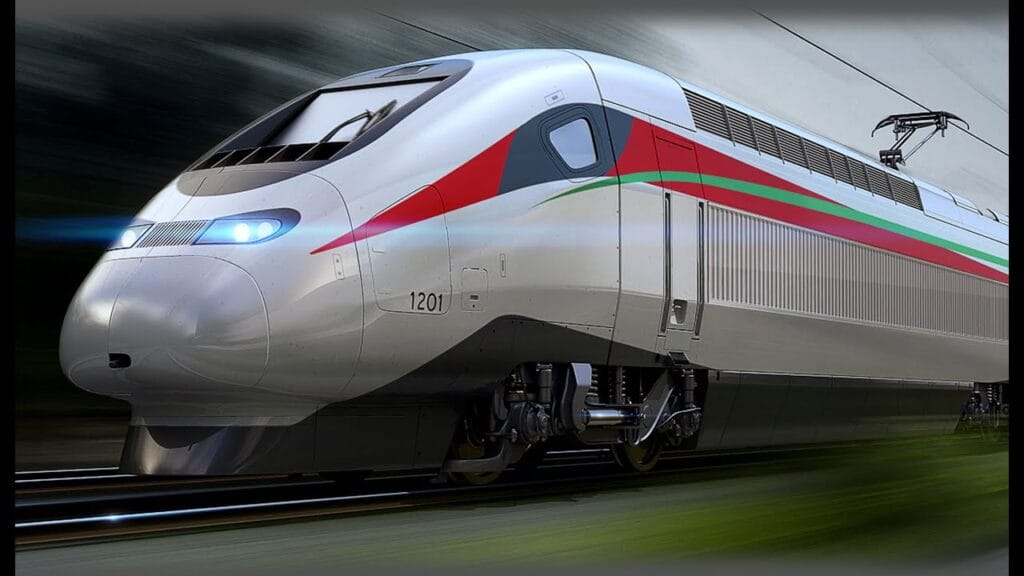
    Moroccan rail confirms its position as a leader in sustainable mobility. In 2024, the National Office of Railways (ONCF) succeeded in reducing its carbon footprint by 26%, a performance revealed in its latest ESG (Environmental, Social, and Governance) report.

    While it accounts for only 0.43% of national greenhouse gas emissions and 1.9% of those from the transport sector, the train is establishing itself as a key player in the ecological transition. This low contribution results from a strategic shift initiated several years ago and pursued rigorously.

    A well-established green strategy

    The ONCF has converted 90% of its electric trains to green energy. This change is part of a comprehensive plan aimed at achieving carbon neutrality by 2035. Beyond greening its fleet, the Office is acting on several levers: eco-driving practices, eco-responsible design of railway equipment, solar power for stations, optimized waste management, and the integration of circular economy principles.

    The efforts of the ONCF have been recognized internationally, notably through the attainment of ISO 14001 (environmental management) and ISO 50001 (energy efficiency) standards.

    Concrete and measurable results

    In one year, the Office’s emissions decreased from 297,000 tons of CO₂ to 219,000 tons. The carbon intensity of passenger transport also fell: 5.71 grams of CO₂ per kilometer, compared to 7.31 grams in 2023.

    For freight, the reduction is even more pronounced: 13.02 grams of CO₂ per ton/km, down from 23.37 grams a year earlier. In absolute terms, 77,830 tons of CO₂ were avoided, equivalent to the annual emissions of 20,250 cars traveling daily on the Casablanca-Rabat highway, or the heating consumption of 10,900 households. This performance is comparable to the action of 2.1 million trees planted.

    A strategic lever for decarbonization

    With over 55 million passengers transported in 2024, the ONCF continues to establish itself as the preferred choice for Moroccans for their travel, while fully aligning with national emission reduction goals.

    The Office plans to maintain its course through several large-scale projects: strengthening regional services, smart intermodality, digitalization… The goal is to make the train an essential pillar of low-carbon transport, capable of combining mobility growth with environmental respect.

    emissions Green ONCF reduces train:
    Previous ArticleClimOliveMed: an essential dialogue for the adaptation of Moroccan olive growing to climate challenges.
    Next Article Green hydrogen: the Swedish company Metacon enters the Moroccan market with its first pilot project.

    Related Posts

    Rural Development: Morocco Strengthens Its Role as a Strategic Partner of IFAD

    28 January 2026

    OCP: Washington Reopens the Issue of Taxes on Moroccan Fertilizers

    27 January 2026

    Climate Justice: Parliament and Civil Society Call for More Inclusive Governance

    26 January 2026
    Leave A Reply Cancel Reply

    Ne ratez pas
    CSR

    MOGA Festival 2025: A study estimates over 51.5 million MAD in economic benefits for Essaouira

    28 January 20260

    The MOGA Festival has published the results of a study focused on the socio-economic impact…

    FM6SS and Nareva Services Strengthen Their Partnership with a 1.2 MW Solar Power Plant in Dakhla

    28 January 2026

    Rural Development: Morocco Strengthens Its Role as a Strategic Partner of IFAD

    28 January 2026

    Natural Gas: How Morocco is Redrawing its Energy Map After the End of Algerian Flows

    28 January 2026
    Restez connecté
    • Facebook
    • Twitter
    • Pinterest
    • Instagram
    • YouTube
    • Vimeo
    Nos vidéos

    The circular economy at the heart of LabelVie group’s initiatives.

    10 July 2025

    Mounir El Bari: “Our great ecological challenge is access to the resource!”

    10 July 2025

    Driss Nahya: “Control must be strengthened to access the waste deposit.”

    10 July 2025

    Reda Boukallal: “Priority to the valorization of household waste”

    10 July 2025
    Facebook X (Twitter) Instagram Pinterest
     
    © 2026 Green Times.

    Type above and press Enter to search. Press Esc to cancel.