

Close Menu
Greentimes
    Qoui de neuf

    Child Protection: ONDE Evaluates Its 2025 Performance and Strengthens Its Partnership Network

    31 March 2026

    Human Development: Rabat Highlights Morocco’s Progress and Measurement Challenges

    31 March 2026

    Green EMI Expo 2026: Rabat at the Forefront of Sustainable Innovation

    30 March 2026
    Facebook X (Twitter) Instagram
    GreentimesGreentimes
    • Home
    • CSR
    • Energy Transition and Renewables
    • Sustainability
    • Climate Change
    • Analyses and Opinions
    • Datas
    • Dates & events
    • Last news
    • FR
    Wednesday 22 July 2026
    Facebook X (Twitter) Instagram
    Greentimes
    Home » Glaciers around the world are declining, with the Alps and the Pyrenees being the most affected (study).
    Climate Change

    Glaciers around the world are declining, with the Alps and the Pyrenees being the most affected (study).

    20 February 2025No Comments2 Mins Read
    Facebook Twitter Pinterest LinkedIn Tumblr Reddit WhatsApp Email
    Share
    Facebook Twitter LinkedIn Pinterest WhatsApp Email

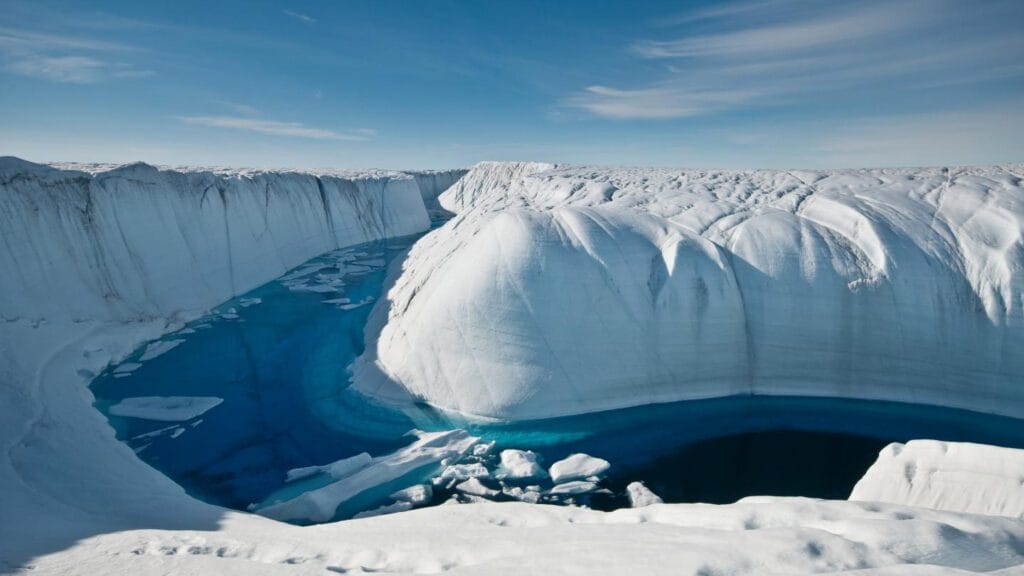
    The decline of glaciers is accelerating on a global scale, scientists warned in a new study that cites the Alps and the Pyrenees as the most affected areas.

    According to this international study, the findings of which were published Wednesday in the specialized journal Nature, since the year 2000, the world’s glaciers have lost 5% of their initial volume, and 273 billion tons of ice disappear each year, “equivalent to 3 Olympic swimming pools per second.”

    The scientists, who also observed a record loss of glacial mass in 2022 and 2023, reveal that the Alps and the Pyrenees have lost about 40% of their volume in less than a quarter of a century, making them the regions of the globe with the highest relative loss of ice, according to a statement from the French National Center for Scientific Research (CNRS) summarizing the results of their work.

    Conducted by the international consortium Glambie, composed of 35 research teams including scientists from the CNRS, this unprecedented study analyzes the global evolution of glaciers (excluding the polar ice caps in Antarctica and Greenland) over the period 2000-2023, based for the first time on a combination of different field measurement methods and satellite observations.

    According to the French research center, the diversity and complementarity of the methods used “are sources of particularly reliable data, allowing scientists to now conduct increased and more regular monitoring of glacier melting.”

    It also added that these updated results will inform the next report of the Intergovernmental Panel on Climate Change (IPCC), scheduled for 2029.

    around declining, Glaciers with World
    Previous ArticleEU: Progress towards achieving “largely limited” climate goals (Report)
    Next Article Vivo Energy Morocco and Royal Air Maroc inaugurate the first Morocco-Europe flight powered by sustainable fuel.

    Related Posts

    Biodiversity: a report warns of the risk of losing 22% of Morocco’s natural heritage by 2050

    19 March 2026

    Climate: Morocco Shows a Negative Net Carbon Pricing Rate

    4 March 2026

    Climate Shocks: Towards a National Strategy to Strengthen Morocco’s Economic Sovereignty

    20 February 2026
    Leave A Reply Cancel Reply

    Ne ratez pas
    CSR

    Child Protection: ONDE Evaluates Its 2025 Performance and Strengthens Its Partnership Network

    31 March 20260

    The National Observatory for Children’s Rights (ONDE) held its annual meeting in Rabat, presided over…

    Human Development: Rabat Highlights Morocco’s Progress and Measurement Challenges

    31 March 2026

    Green EMI Expo 2026: Rabat at the Forefront of Sustainable Innovation

    30 March 2026

    Sustainable Irrigation: The World Bank Establishes the “Moroccan Model” as a Global Reference

    27 March 2026
    Restez connecté
    • Facebook
    • Twitter
    • Pinterest
    • Instagram
    • YouTube
    • Vimeo
    Nos vidéos

    The circular economy at the heart of LabelVie group’s initiatives.

    10 July 2025

    Mounir El Bari: “Our great ecological challenge is access to the resource!”

    10 July 2025

    Driss Nahya: “Control must be strengthened to access the waste deposit.”

    10 July 2025

    Reda Boukallal: “Priority to the valorization of household waste”

    10 July 2025
    Facebook X (Twitter) Instagram Pinterest
     
    © 2026 Green Times.

    Type above and press Enter to search. Press Esc to cancel.