

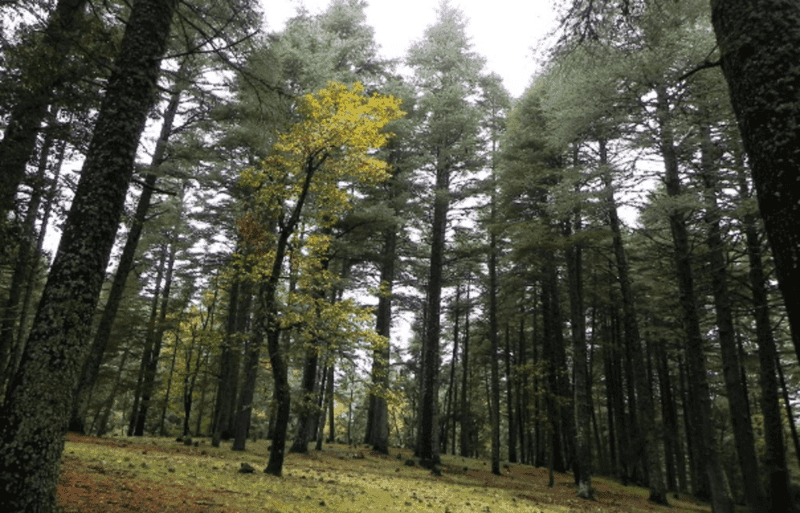
This year’s theme, “Forests and Economies,” highlights the crucial contribution of forest resources to economic prosperity, while providing an opportunity to value the wealth and diversity of forest ecosystems and raise awareness of their ecological, economic, and social functions.
In Morocco, the forestry sector is emerging as a strategic lever. Covering nearly 12% of the national territory, forests provide both timber and non-timber products and deliver essential ecosystem services, including soil protection, water resource regulation, carbon sequestration, and biodiversity preservation.
According to figures from the National Agency for Water and Forests (ANEF), the sector contributes nearly 1.5% of the national GDP and up to 10% of agricultural GDP, with a direct market value estimated at around 17 billion dirhams per year.
However, this contribution reflects only a portion of the forest’s true value. ANEF Director General Abderrahim Houmy stated in an interview with MAP that “the contribution of the forestry sector goes far beyond just the market dimension. It also integrates a social value through the income, jobs, and livelihoods it provides to millions of citizens.”
He also emphasized its environmental value, linked to the essential ecosystem services it offers for free to the community, particularly in terms of water regulation, combating erosion, carbon storage, and biodiversity preservation.
In this regard, he indicated that forests should be regarded as a genuine strategic natural capital, whose overall value far exceeds merely measurable economic flows. To translate this vision into reality, the official reminded that ANEF’s actions are grounded in a balance between economic valorization and ecosystem preservation, in line with the “Morocco Forests 2020-2030” strategy.
Thus, the Agency’s priorities include structuring supply chains, developing local transformation to create more added value in the regions, strengthening participatory management with local communities, restoring forest ecosystems, and modernizing sector governance, particularly through digitalization.
Several achievements illustrate this dynamic, including significantly enhanced participatory management, with over 320 cooperatives and economic interest groups comprising nearly 19,000 members, as well as partnerships developed with these structures, which have generated a turnover of approximately 92 million dirhams in 2024, contributing to improved incomes for local populations.
For Mr. Houmy, the “Morocco Forests 2020-2030” strategy serves as a reference framework to modernize the forestry sector and strengthen its economic, social, and environmental impact. It aims to make forests a driver for value and job creation while ensuring resource sustainability.
Among its objectives are increasing the reforestation rate to reach 100,000 hectares per year, creating thousands of jobs in forestry and ecotourism sectors, and doubling the market value of Moroccan forests, which is expected to reach nearly 5 billion dirhams by 2030.
To achieve this, the strategy relies on several structural levers, including developing value chains around forest products, promoting local transformation, enhancing local community participation, and establishing productive forest concessions over a potential area of 120,000 hectares, he asserted.
The strategy also includes a deep modernization of the sector, through the digitalization of management processes and strengthening the traceability of forest products.
In summary, the Moroccan model for managing forest resources is based on an integrated and ambitious vision: to make forests a productive, inclusive, and sustainable space, serving economic development, social cohesion, and the preservation of the national natural heritage.
MAP