

Close Menu
Greentimes
    Qoui de neuf

    Child Protection: ONDE Evaluates Its 2025 Performance and Strengthens Its Partnership Network

    31 March 2026

    Human Development: Rabat Highlights Morocco’s Progress and Measurement Challenges

    31 March 2026

    Green EMI Expo 2026: Rabat at the Forefront of Sustainable Innovation

    30 March 2026
    Facebook X (Twitter) Instagram
    GreentimesGreentimes
    • Home
    • CSR
    • Energy Transition and Renewables
    • Sustainability
    • Climate Change
    • Analyses and Opinions
    • Datas
    • Dates & events
    • Last news
    • FR
    Wednesday 22 July 2026
    Facebook X (Twitter) Instagram
    Greentimes
    Home » Europe consumes less energy than ever: the 2023 figures mark a turning point.
    Energy Transition and Renewables

    Europe consumes less energy than ever: the 2023 figures mark a turning point.

    29 May 2025No Comments2 Mins Read
    Facebook Twitter Pinterest LinkedIn Tumblr Reddit WhatsApp Email
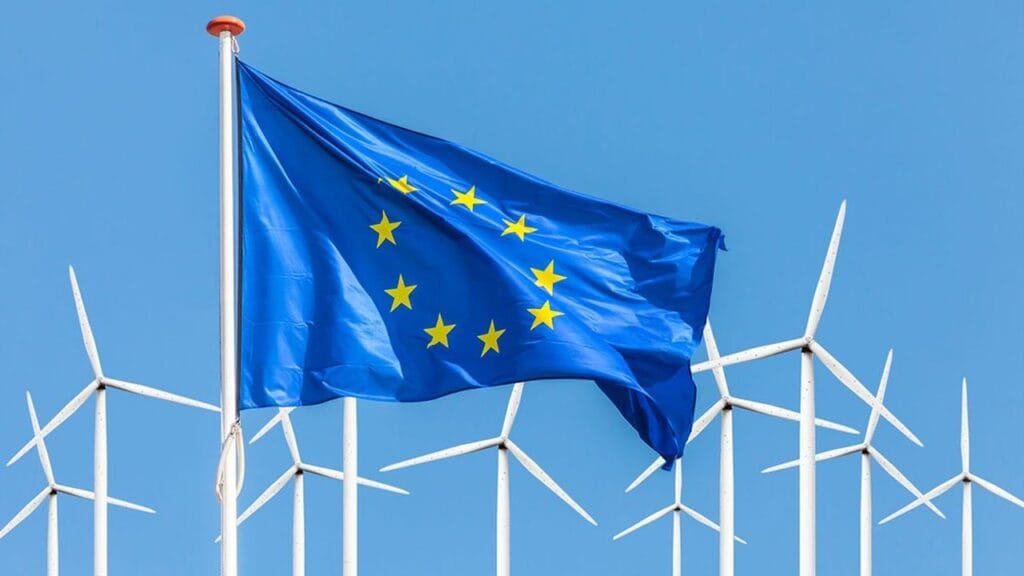
    Official flag of the European Union in front of a large windpark with wind turbines
    Share
    Facebook Twitter LinkedIn Pinterest WhatsApp Email

    Energy consumption in Europe experienced an unprecedented drop in 2023. According to data published by Eurostat, the European Union recorded a decrease of 4.1% in its available gross energy — equivalent to about 380 million barrels of oil. This historic decline reflects deep transformations in the continent’s energy habits.

    Several factors contribute to this evolution: more rigorous energy efficiency policies, milder winter temperatures, and a collective response to the price surge caused by the war in Ukraine. Less waste, more rationalization: the EU seems to be succeeding in maintaining its activity with reduced energy volumes.

    Although fossil fuels continue to dominate the energy mix with a 67% share, renewable energies are gaining ground. They now account for 19.5% of total consumption, a 31% increase over a decade. Natural gas maintains a slight lead, with a share of 20.5%. Some member states, particularly in Northern Europe, are going further: Sweden, Denmark, and Finland have crossed the threshold of 40 to 50% green energy in their mix.

    In other regions of the continent, the transition is progressing more slowly. Poland and the Czech Republic, for example, remain heavily dependent on coal, which still represents about one-third of their energy consumption.

    Another significant challenge for the Union is its dependence on imports. In 2023, only 40% of the energy consumed was produced locally, a figure that has been continuously declining since 2013. Almost all oil (95%) and gas (90%) continues to be imported, mainly from Norway, the United States, Algeria, Qatar, and still a bit from Russia.

    In terms of usage, transport remains the largest energy consumer, accounting for 32% of European demand. Households follow with 26.3%, ahead of industry (24.6%), services and agriculture combined (9.1%), and non-energy uses (8%), including raw materials and lubricants.

    The intensification of road traffic and the development of air transport partly explain this predominance. While the demand for road fuels has risen between 2021 and 2023, it remains below its record level of 2019. As for international aviation, it has not yet regained its pre-pandemic performance, still showing a decline of 8%.

    The year 2023 could thus mark a strategic milestone for Europe, which seems to be embarking on a profound transformation towards a more frugal and sustainable use of its energy resources, while still facing its structural vulnerabilities, particularly regarding external supply.

    consumes Energy Europe less than
    Previous ArticleA first in North Africa: the wind turbine blade factory of Ailong soon operational in Nador.
    Next Article Solar modules: China intensifies its deliveries to Africa, Morocco on the radar.

    Related Posts

    Energy: Moroccan Electricity Production Shows Slight Increase at the Beginning of 2026

    27 March 2026

    Green Finance: KfW Injects 31 Million Euros to Decarbonize Moroccan SMEs

    27 March 2026

    Maritime Transport: OCP and British Quadrise Test a “Green” Fuel

    25 March 2026
    Leave A Reply Cancel Reply

    Ne ratez pas
    CSR

    Child Protection: ONDE Evaluates Its 2025 Performance and Strengthens Its Partnership Network

    31 March 20260

    The National Observatory for Children’s Rights (ONDE) held its annual meeting in Rabat, presided over…

    Human Development: Rabat Highlights Morocco’s Progress and Measurement Challenges

    31 March 2026

    Green EMI Expo 2026: Rabat at the Forefront of Sustainable Innovation

    30 March 2026

    Sustainable Irrigation: The World Bank Establishes the “Moroccan Model” as a Global Reference

    27 March 2026
    Restez connecté
    • Facebook
    • Twitter
    • Pinterest
    • Instagram
    • YouTube
    • Vimeo
    Nos vidéos

    The circular economy at the heart of LabelVie group’s initiatives.

    10 July 2025

    Mounir El Bari: “Our great ecological challenge is access to the resource!”

    10 July 2025

    Driss Nahya: “Control must be strengthened to access the waste deposit.”

    10 July 2025

    Reda Boukallal: “Priority to the valorization of household waste”

    10 July 2025
    Facebook X (Twitter) Instagram Pinterest
     
    © 2026 Green Times.

    Type above and press Enter to search. Press Esc to cancel.