





The Moroccan industrial group ENOSIS, specializing in hygiene and maintenance products, welcomed a delegation from Columbia Business School during a visit to its industrial facilities. This meeting was part of the Executive Program EC Africa, spearheaded by the Chazen Institute.
The visit continues the exchanges initiated three years ago between ENOSIS and the American university, following the participation of the Moroccan group in this training program aimed at high-potential African companies.
A new cohort of African leaders and executives, representing 18 nationalities, participated in this immersion. The goal was to present ENOSIS as a case study illustrating a trajectory of strategic transformation and a strengthened positioning in the Moroccan hygiene market.
On this occasion, Anwar Radi, Chairman and founder of ENOSIS, stated: “This visit reflects the recognition of a journey built with method, rigor, and fidelity to our local roots. ENOSIS is proof that an African company can build sustainable leadership by combining strategic vision, industrial excellence, and a nuanced understanding of real practices.”
For her part, Zina Sockwell from the Chazen Institute – Columbia Business School, emphasized that the participants were “particularly inspired by ENOSIS’s journey, the clarity of its transformation path, and its ability to build industrial leadership from a strong local grounding.” She also highlighted the group’s corporate culture, based on “demanding standards, team commitment, and a long-term vision.”
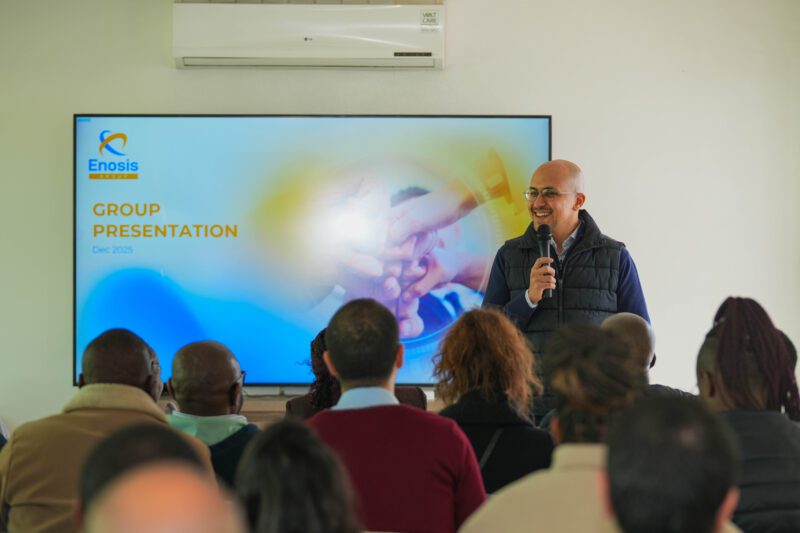
The event began with a strategic presentation, followed by a discussion with participants about the choices made by ENOSIS in recent years regarding governance, integrated industrial models, user-oriented innovation, and the development of brands rooted in local realities.
The meeting continued with a visit to the group’s industrial units. Participants had the opportunity to observe the organization of the production tool, industrial processes, and the investments made to enhance performance, quality, and operational efficiency.
Through this visit, Columbia Business School aimed to spotlight an African success story based on a long-term vision and rigorous execution. For ENOSIS, this meeting with the international academic community confirms the relevance of its model and strengthens its ambition to contribute to the development of a competitive and responsible African industrial fabric.