






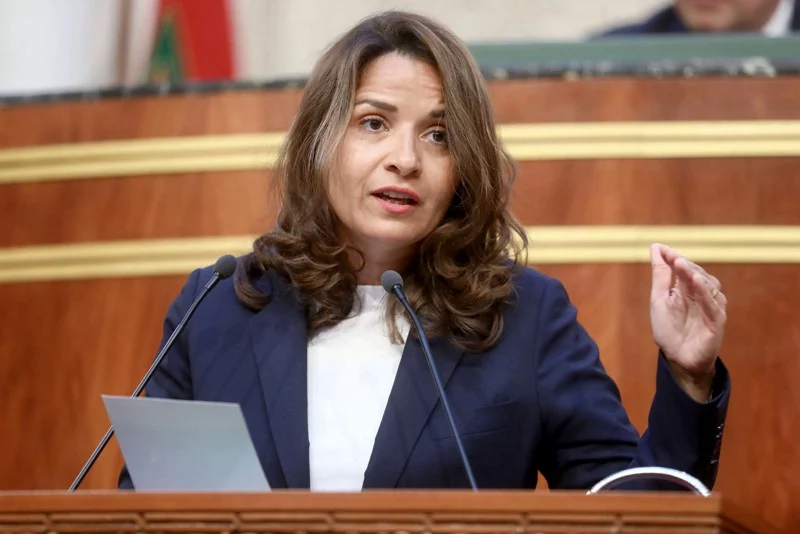
On the occasion of presenting her department’s budget as part of the 2026 finance bill, Leila Benali, Minister of Energy Transition and Sustainable Development, outlined Morocco’s major priorities for the coming year: accelerating the Morocco Green Hydrogen Initiative, strengthening national energy storage capacities, and continuing oil exploration to ensure the country’s energy security.
Green Hydrogen, a Pillar of Energy Transition
The Morocco Green Hydrogen Initiative is at the forefront of this strategy. Designed to position the Kingdom among future major exporters of clean energy, it plans to establish 20 gigawatts of renewable capacity, 10 gigawatts of electrolyzers, and the potential production of 8 million tons of green hydrogen derivatives. These figures, currently theoretical, still depend on final validation from investors and the state.
The minister emphasized that the work of the steering committee has established investor evaluation criteria and produced a preliminary list of selected candidates. The first land reservation contracts are expected to be signed soon for six national and international groups, while the preliminary phase of the Chbika 1 project has just been completed. A second wave of investors is also in preparation.
Expected Regional and Economic Benefits
The Morocco Initiative is not limited to energy transition. It promises significant economic and social benefits, particularly for the six involved regions, including Drâa-Tafilalet, the Oriental region, and Tangier-Tétouan-Al Hoceïma. Job creation, local infrastructure, and knowledge transfer are among the direct benefits of these massive investments.
Energy Storage, a Strategic Lever
Regarding storage, Morocco recorded a 30% increase in its capacities between 2021 and 2025, reaching over one million cubic meters with a total investment of 2.8 billion dirhams. For 2026, the ministry plans to add 449,000 m³, aiming for an additional approximately 455,000 m³ by 2030, with total investments exceeding 2.3 billion dirhams.
National reserves of petroleum products have now surpassed 3 million cubic meters, including 2.3 million for liquid products and 799,000 m³ for liquefied petroleum gases, mostly linked to ports. These capacities allow Morocco to cover between 55 and 100 days of consumption, depending on the product type, well above the legal threshold of 60 days set by regulations.
Oil Exploration: An Ongoing Sector
Finally, Leila Benali provided an update on the work carried out by the National Office of Hydrocarbons and Mines (ONHYM) and its partners. By 2025, 13 oil companies will be operating in 13 research projects, both onshore and offshore. The cumulative investments amount to 192 million dirhams as of the end of June. The current portfolio comprises 9 production concessions, 45 research permits, and 3 exploration permits, covering several hundred thousand square kilometers.
An Integrated Vision for 2026
Through these initiatives, Morocco confirms its ambition to become a major player in the global energy transition, while preserving its strategic autonomy. With green hydrogen, storage infrastructure, and the valorization of oil potential, the country is banking on a diversified, resilient energy mix focused on the future.
With L’Économiste.


