

Close Menu
Greentimes
    Qoui de neuf

    COP30: Morocco Highlights a Territorial Climate Transition and Reformed Global Financing

    14 November 2025

    Tan-Tan: ONEE Completes the Expansion of the Demineralization Station to Ensure Safe Drinking Water

    14 November 2025

    Smart Grid: Morocco Launches Its First African Platform to Modernize Its Electrical System

    14 November 2025
    Facebook X (Twitter) Instagram
    GreentimesGreentimes
    • Home
    • CSR
    • Energy Transition and Renewables
    • Sustainability
    • Climate Change
    • Analyses and Opinions
    • Datas
    • Dates & events
    • Last news
    • FR
    Saturday 15 November 2025
    Facebook X (Twitter) Instagram
    Greentimes
    Home » Desalination: The Water of the Future, But at What Cost?
    Sustainability

    Desalination: The Water of the Future, But at What Cost?

    12 October 2025No Comments2 Mins Read
    Facebook Twitter Pinterest LinkedIn Tumblr Reddit WhatsApp Email
    Share
    Facebook Twitter LinkedIn Pinterest WhatsApp Email

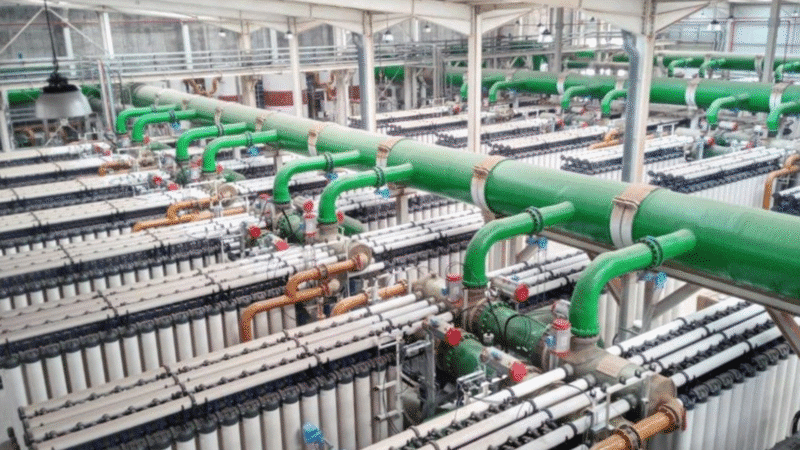
    Morocco is resolutely betting on seawater desalination to address the water crisis. Seventeen plants are already operational, thirteen more are under construction, and the largest in Africa will soon be built in Casablanca. The goal: to produce 1.7 billion cubic meters by 2033. However, this scaling up comes at a cost.

    According to the Renub Research firm, the Moroccan desalination market will reach $850 million by 2033, nearly double the current level. This growth reflects the Kingdom’s ambition to sustainably secure its resources amid chronic drought and extreme water stress.

    Major stations in Agadir, Dakhla, and Laayoune already demonstrate this momentum. Some even operate at 100% on renewable energy, like the one in Dakhla, powered by wind. Desalination consumes between 4 and 6 kWh of electricity per cubic meter, a challenge that Morocco is trying to meet by combining water and green energy.

    However, despite this strategy, the cost per cubic meter remains high—between 7 and 10 dirhams, compared to 3 to 4 for water from dams. Without public support or appropriate pricing, this discrepancy could burden municipalities and agriculture, especially in southern regions.

    Additionally, there are environmental challenges related to the discharge of brine, these ultra-salty waters that threaten marine ecosystems. There are potential avenues for mineral recovery, but industrial applications are slow to emerge.

    Finally, the governance of the sector remains fragmented. Ministries, agencies, and local authorities share responsibilities, which risks slowing down projects. The idea of a national water regulatory authority is gaining traction to ensure consistency and long-term planning.

    In summary, Morocco is making swift and positive strides in desalination, but the focus is no longer just on producing water: it is now about producing it sustainably and at controlled costs. This delicate balance between urgent water needs, economic viability, and environmental respect is crucial.

    aquatic ecosystems desalination economic viability environmental challenges governance public policy renewable energy seawater: sustainable development water crisis
    Previous ArticleSustainable Water Management: The EBRD, the EU, and the Ministry of Agriculture Announce an Integrated Project in the Fès-Meknès Plain
    Next Article SAR Princess Lalla Hasnaa Represents Morocco at the World Nature Congress in Abu Dhabi

    Related Posts

    COP30: Morocco Highlights a Territorial Climate Transition and Reformed Global Financing

    14 November 2025

    Tan-Tan: ONEE Completes the Expansion of the Demineralization Station to Ensure Safe Drinking Water

    14 November 2025

    Smart Grid: Morocco Launches Its First African Platform to Modernize Its Electrical System

    14 November 2025
    Leave A Reply Cancel Reply

    Ne ratez pas
    Climate Change

    COP30: Morocco Highlights a Territorial Climate Transition and Reformed Global Financing

    14 November 20250

    In Belém, where COP30 is taking place amid significant pressure to fulfill climate commitments, Morocco…

    Tan-Tan: ONEE Completes the Expansion of the Demineralization Station to Ensure Safe Drinking Water

    14 November 2025

    Smart Grid: Morocco Launches Its First African Platform to Modernize Its Electrical System

    14 November 2025

    COP30: Morocco, a model to follow in many respects

    13 November 2025
    Restez connecté
    • Facebook
    • Twitter
    • Pinterest
    • Instagram
    • YouTube
    • Vimeo
    Nos vidéos

    The circular economy at the heart of LabelVie group’s initiatives.

    10 July 2025

    Mounir El Bari: “Our great ecological challenge is access to the resource!”

    10 July 2025

    Driss Nahya: “Control must be strengthened to access the waste deposit.”

    10 July 2025

    Reda Boukallal: “Priority to the valorization of household waste”

    10 July 2025
    Facebook X (Twitter) Instagram Pinterest
     
    © 2025 Green Times.

    Type above and press Enter to search. Press Esc to cancel.