

Close Menu
Greentimes
    Qoui de neuf

    Desalination expected to provide 60% of drinking water by 2030

    5 December 2025

    USA: Trump Eases Standards on Vehicle Consumption and Emissions

    5 December 2025

    Salé: A Forest Threatened by Rising Pollution

    5 December 2025
    Facebook X (Twitter) Instagram
    GreentimesGreentimes
    • Home
    • CSR
    • Energy Transition and Renewables
    • Sustainability
    • Climate Change
    • Analyses and Opinions
    • Datas
    • Dates & events
    • Last news
    • FR
    Saturday 6 December 2025
    Facebook X (Twitter) Instagram
    Greentimes
    Home » Desalination of seawater: Morocco plans to invest $850 million by 2033
    Sustainability

    Desalination of seawater: Morocco plans to invest $850 million by 2033

    17 November 2025No Comments2 Mins Read
    Facebook Twitter Pinterest LinkedIn Tumblr Reddit WhatsApp Email
    Share
    Facebook Twitter LinkedIn Pinterest WhatsApp Email

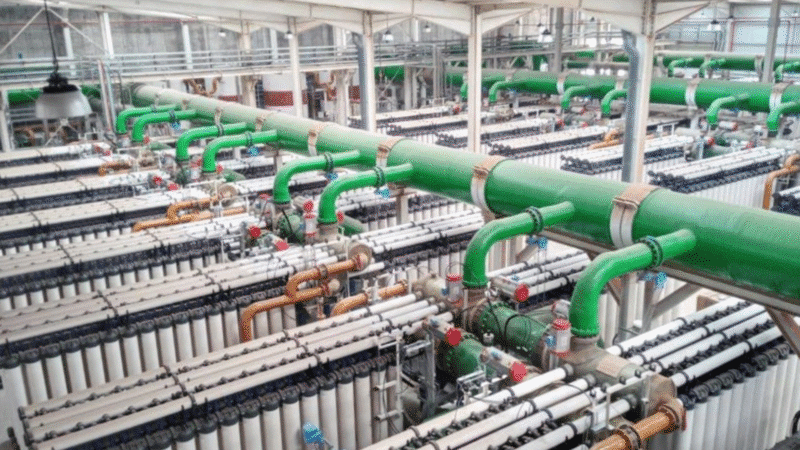
    To address the water crisis and demographic pressures, Morocco is making seawater desalination a central focus of its strategy. According to Renub Research, the national desalination market is expected to grow from $400 million in 2024 to $850 million by 2033, marking a 112% increase with an average annual growth rate of 8.74%. This development underscores the priority given to water security in the context of prolonged droughts, declining groundwater levels, and rising demands for potable water for cities and agriculture.

    Desalination is integrated into the National Drinking Water Supply and Irrigation Program (2020-2027), featuring several key projects. By 2030, Morocco aims for a total capacity of 1.7 billion cubic meters of desalinated water per year. Among the major initiatives, the future Casablanca-Settat station is expected to produce up to 300 million cubic meters annually for nearly 7.5 million residents. The Nador unit in the Oriental region will provide 250 million cubic meters per year, while the Safi station will reach a daily capacity of 86,400 cubic meters.

    Reverse osmosis remains the key technology, with innovations aimed at reducing energy consumption and optimizing membrane performance. The integration of renewable energy sources, both solar and wind, is also among the strategic priorities to minimize costs and align production with climate commitments. The Agadir station is frequently cited as an example of sustainable large-scale desalination.

    Despite these advances, challenges remain: high infrastructure costs, technical complexity, and the need for equitable distribution across the territory. Public-private partnerships are considered essential to fund these megaprojects.

    By investing in advanced and sustainable technologies, Morocco is reinforcing its position as a leading African nation in desalination, ensuring access to water for future generations while enhancing resilience against climate risks.

    climate resilience desalination infrastructure: investment irrigation: public-private partnership renewable energy reverse osmosis water crisis water supply
    Previous ArticleLaayoune launches the first Diabetes Village: prevention, screening, and education at the heart of the region.
    Next Article Clean Mobility: 78 Billion Dirhams Mobilized in Morocco by 2029

    Related Posts

    Desalination expected to provide 60% of drinking water by 2030

    5 December 2025

    Salé: A Forest Threatened by Rising Pollution

    5 December 2025

    Circular Economy: Between 121 and 142 Million Workers Worldwide

    5 December 2025
    Leave A Reply Cancel Reply

    Ne ratez pas
    Climate Change

    Desalination expected to provide 60% of drinking water by 2030

    5 December 20250

    Morocco is preparing to take a new step in its water strategy. According to Nizar…

    USA: Trump Eases Standards on Vehicle Consumption and Emissions

    5 December 2025

    Salé: A Forest Threatened by Rising Pollution

    5 December 2025

    Circular Economy: Between 121 and 142 Million Workers Worldwide

    5 December 2025
    Restez connecté
    • Facebook
    • Twitter
    • Pinterest
    • Instagram
    • YouTube
    • Vimeo
    Nos vidéos

    The circular economy at the heart of LabelVie group’s initiatives.

    10 July 2025

    Mounir El Bari: “Our great ecological challenge is access to the resource!”

    10 July 2025

    Driss Nahya: “Control must be strengthened to access the waste deposit.”

    10 July 2025

    Reda Boukallal: “Priority to the valorization of household waste”

    10 July 2025
    Facebook X (Twitter) Instagram Pinterest
     
    © 2025 Green Times.

    Type above and press Enter to search. Press Esc to cancel.