

Close Menu
Greentimes
    Qoui de neuf

    Child Protection: ONDE Evaluates Its 2025 Performance and Strengthens Its Partnership Network

    31 March 2026

    Human Development: Rabat Highlights Morocco’s Progress and Measurement Challenges

    31 March 2026

    Green EMI Expo 2026: Rabat at the Forefront of Sustainable Innovation

    30 March 2026
    Facebook X (Twitter) Instagram
    GreentimesGreentimes
    • Home
    • CSR
    • Energy Transition and Renewables
    • Sustainability
    • Climate Change
    • Analyses and Opinions
    • Datas
    • Dates & events
    • Last news
    • FR
    Friday 31 July 2026
    Facebook X (Twitter) Instagram
    Greentimes
    Home » Desalination: Morocco bets on the sea to secure its water future.
    Sustainability

    Desalination: Morocco bets on the sea to secure its water future.

    13 May 2025No Comments2 Mins Read
    Facebook Twitter Pinterest LinkedIn Tumblr Reddit WhatsApp Email
    Share
    Facebook Twitter LinkedIn Pinterest WhatsApp Email

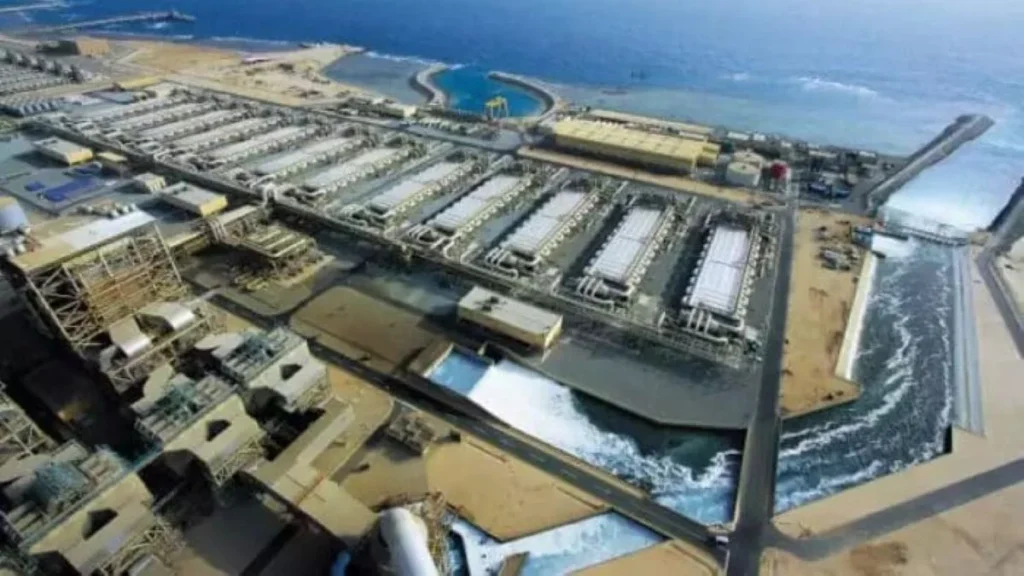
    Faced with the scarcity of freshwater resources and the worsening effects of climate change, Morocco is accelerating its seawater desalination strategy. The stated objective is to increase its production eightfold by 2040, rising from 277 million to 2.3 billion cubic meters per year. This marks a structural turning point for national supply, relying on a combination of ambitious infrastructure and technological innovations.

    It is in the Southern provinces that the Kingdom first deployed this alternative solution to address the chronic lack of conventional resources. Today, the initiative has expanded across the entire territory. The country already has 16 operational stations. Five more are under construction, and thirteen new projects are in the programming phase, according to data provided by Younes Laabdi, an official at the General Directorate of Water.

    The flagship project remains that of Casablanca-Settat, which is set to become the largest desalination station in Africa. Its commissioning is expected to add 300 million m³ to the country’s annual capacity, of which 250 million will be dedicated to drinking water and 50 million to irrigation. Launched in June 2024 in the presence of Crown Prince Moulay El Hassan, this project illustrates the priority given to national water security.

    The objective is also economic and industrial. Morocco aims to structure an ecosystem around desalination, integrating companies, expertise, and technologies throughout the value chain. This direction will foster the emergence of a local industrial fabric while strengthening cooperation between the public and private sectors, within a governance model based on partnerships.

    The exclusive use of renewable energies to power future stations – like the one in Dakhla, which is 100% wind-powered – clearly demonstrates a commitment to reconcile the urgent water response with ecological transition. Studies have already been completed for certain sites, such as Guelmim, Essaouira, or the Oriental region, while others are still under consideration.

    The ramp-up is planned over fifteen years. By 2027, Morocco expects to surpass the billion cubic meters per year mark. This volume will rise to 1.6 billion in 2028, exceed 1.7 billion in 2030, and peak at 2.3 billion in 2040. Through these figures, a long-term strategy is emerging, placing desalination at the heart of the country’s water resilience.

    bets desalination Morocco secure Water
    Previous ArticleGiant blackout in Iberia: a warning signal for Morocco’s energy and digital security.
    Next Article Phasing out coal: Morocco’s gas strategy for 2030

    Related Posts

    Green EMI Expo 2026: Rabat at the Forefront of Sustainable Innovation

    30 March 2026

    Sustainable Irrigation: The World Bank Establishes the “Moroccan Model” as a Global Reference

    27 March 2026

    Energy: Moroccan Electricity Production Shows Slight Increase at the Beginning of 2026

    27 March 2026
    Leave A Reply Cancel Reply

    Ne ratez pas
    CSR

    Child Protection: ONDE Evaluates Its 2025 Performance and Strengthens Its Partnership Network

    31 March 20260

    The National Observatory for Children’s Rights (ONDE) held its annual meeting in Rabat, presided over…

    Human Development: Rabat Highlights Morocco’s Progress and Measurement Challenges

    31 March 2026

    Green EMI Expo 2026: Rabat at the Forefront of Sustainable Innovation

    30 March 2026

    Sustainable Irrigation: The World Bank Establishes the “Moroccan Model” as a Global Reference

    27 March 2026
    Restez connecté
    • Facebook
    • Twitter
    • Pinterest
    • Instagram
    • YouTube
    • Vimeo
    Nos vidéos

    The circular economy at the heart of LabelVie group’s initiatives.

    10 July 2025

    Mounir El Bari: “Our great ecological challenge is access to the resource!”

    10 July 2025

    Driss Nahya: “Control must be strengthened to access the waste deposit.”

    10 July 2025

    Reda Boukallal: “Priority to the valorization of household waste”

    10 July 2025
    Facebook X (Twitter) Instagram Pinterest
     
    © 2026 Green Times.

    Type above and press Enter to search. Press Esc to cancel.