

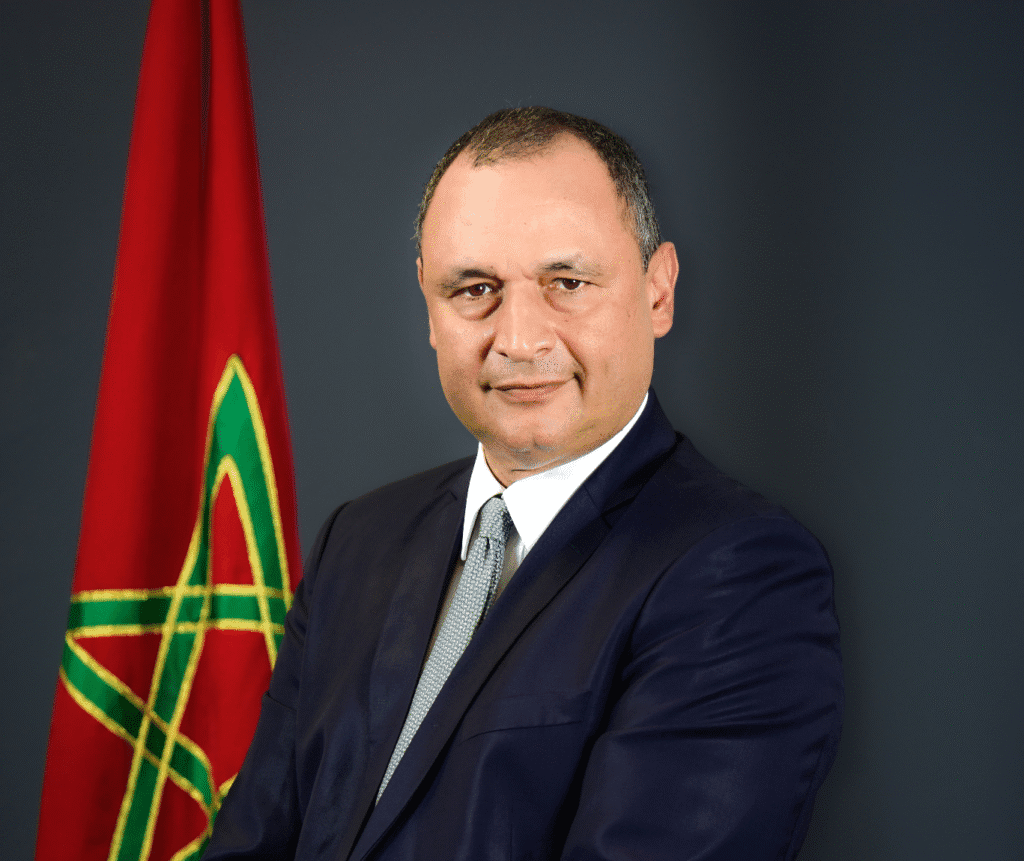
Decarbonization, beyond energy, also involves reducing the non-energy footprint, estimated on Wednesday in Rabat, the Minister of Industry and Trade, Ryad Mezzour.
“It particularly involves the circularity of resources, water efficiency, and the sobriety of raw materials, which are essential levers to strengthen industrial competitiveness,” Mr. Mezzour indicated during the opening panel of the second edition of the REACT – Sustainable Industry Forum Meeting: Rethink Carbon Impact.
According to him, Morocco now has, for the first time, abundant and affordable energy, thus paving the way for a profound transformation, not only for industry but also for food security and water management.
“Currently, the demand is clear: all industrial companies are seeking access to low-cost decarbonized energy, but the main constraint now lies in the network’s capacity to transport it, making infrastructure the main bottleneck on which investment efforts must focus,” he pointed out.
For his part, the interim Secretary General of the Energy Transition Department at the Ministry of Energy Transition and Sustainable Development, Mohamed Ouhmed, stated that the decarbonization of industry is part of the ministry’s policies, in partnership with the Ministry of Industry and Trade, recalling the agreement signed under the presidency of the Head of Government which illustrates the commitment to provide industrial companies with decarbonized and competitive energy.
To this end, Mr. Ouhmed noted that his department identifies several major levers to succeed in the decarbonization of the industrial sector, notably expanding access to renewable energy through investments, improving energy efficiency with a goal of reducing consumption by 20% by 2030, as well as using natural gas as a flexible energy source to support the scaling up of renewables.
In this context, he emphasized that green hydrogen, currently being structured via “Morocco’s offer,” is expected to play a central role in the deep decarbonization of the industrial fabric.
For her part, the founder of REACT and CEO of H2O Hub, Hekmat El Hadri, stated that sustainable transition is built through innovation, but it is rooted in dialogue, trust, cooperation, and collective intelligence, all essential levers to bring forth concrete and shared solutions.
While the transition is already underway, with significant projects and the decarbonization of several sectors, the question that arises is how to go further, to transform ideas into actions, dialogue into solutions, and innovation into concrete impact, she raised.
Held under the theme “Paving the Way: Strategies and Commitments for a Decarbonized Industry,” the panel was notably marked by the participation of the Minister of Economic Inclusion, Small Business, Employment, and Skills, Younes Sekkouri, and the Chairman of the Board of Directors of Crédit Agricole du Maroc, Mohamed Fikrat.
Initiated by H2O Hub and held under the auspices of the Ministry of Industry and Trade and the Ministry of Energy Transition and Sustainable Development, this forum positions itself as a space for dialogue and commitment, bringing together companies, institutions, startups, researchers, and financial actors to collectively reflect, share concrete experiences, and develop sober, circular, and competitive solutions.
MAP