




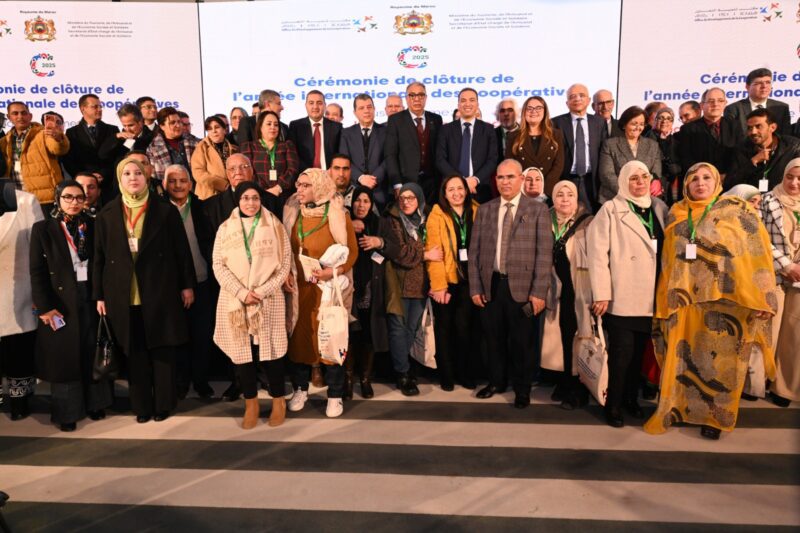
Morocco aims to transition from mobilization to action. In Rabat, the State Secretariat for Craft and Social and Solidarity Economy and the Office for the Development of Cooperation (ODCO) officially marked the closing of the International Year of Cooperatives on Wednesday during an event held at the Fairmont La Marina Rabat-Salé.
Under the theme “And now it’s the cooperatives’ turn,” the meeting was presided over by State Secretary Lahcen Es-saady and is part of a global mobilization over the past year around the cooperative model, promoted by the United Nations as a lever for inclusive and sustainable development.
“Cooperatives are now on the front line”
Beyond its symbolic dimension, the organizers emphasized the goal of consolidating a synergy between institutions, territories, and cooperatives, with the ambition of further embedding the model within the real economy.
In his speech, Lahcen Es-saady noted that the International Year has translated a national vision into concrete results. He highlighted that cooperatives are no longer seen merely as a social component, but are now recognized as full-fledged economic and territorial actors, poised to play an increased role in the Kingdom’s development. The official also assured that public action will continue to place cooperatives at the heart of social and solidarity economy policies, with a focus on inclusion, innovation, and value creation.
An integrated digital ecosystem to support cooperatives
A highlight of the day was the official launch of an integrated cooperative digital ecosystem developed by the ODCO. Structured around three complementary platforms, this initiative aims to support cooperatives throughout their journey, from skills development to market access, including project structuring.
The General Director of the ODCO, Aicha Errifaai, stated that this new tool addresses the desire to move away from fragmented support to provide a continuous and structured path. The stated goal is to strengthen the capacities of cooperatives, facilitate project realization, and improve their sustainable access to markets in a manner that ensures measurable impact and collective performance.
Two panels to amplify the voices of institutions and cooperatives
Discussions were organized around two panels. The first, dedicated to actors in the social and solidarity economy, focused on sector achievements, the role of partnerships, and the impact of public policies. The second panel allowed the cooperatives themselves to share testimonies about their innovation dynamics, development ambitions, and the challenges they face in the coming years.
A rapidly growing sector
According to the figures provided, Morocco had 65,315 cooperatives by the end of 2025, encompassing nearly 789,000 members, including over 272,000 women and 18,000 youths. This momentum has led to the creation of 24,558 jobs in just one year, confirming the cooperative model as a lever for job creation, economic inclusion, and sustainable growth.
By concluding the International Year of Cooperatives, the Rabat event aimed to send a clear message: Moroccan cooperatives now have a strengthened framework to act, innovate, and contribute to the development of a more structured social and solidarity economy.