

More than 78 billion dirhams have been mobilized in Morocco to develop a clean, modern, multimodal, and accessible public transport system by 2029, stated Abdellatif Maâzouz, president of the Casablanca-Settat regional council.
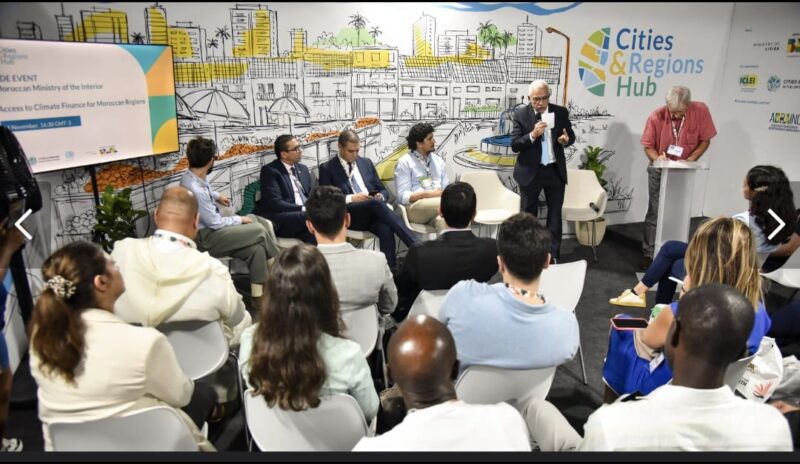
Among these investments, 11 billion dirhams are dedicated to acquiring 3,750 new generation buses, and 67 billion dirhams are allocated for dedicated transport infrastructure, including trams, suburban trains, and regional trains, Mr. Maâzouz clarified during a side event organized on the sidelines of COP30 in Belém, Brazil, by the General Directorate of Local Authorities and the Moroccan Association of Municipal Council Presidents.
Emphasizing the strategic role that regions play in the transition to clean mobility under the advanced regionalization framework, he noted that Casablanca-Settat has committed nearly 25 billion dirhams to urban and rural mobility-related infrastructure and equipment, accounting for almost 40% of its updated Regional Development Plan budget.
According to him, the region is focusing on an integrated model based on the non-polluting Train-Tram system as its backbone, supported by the modernization of the bus network and a multimodal digital platform ensuring intelligent flow management and real-time passenger information.
During this meeting themed “Sustainable Mobility and Electrification of Public Transport: Current State and Perspectives,” Mr. Maâzouz also highlighted that the expansion of the road network—urban, suburban, and rural—has contributed to better traffic flow and reduced emissions, with a notable improvement in air quality observed between 2023 and 2025 in the region, according to monitoring stations installed in the area.
By strengthening these dynamics, he observed, Morocco reaffirms its commitment to enhancing its leadership in sustainable development and sharing its expertise with countries across the continent within the framework of South-South cooperation, particularly among regions and territories.
He concluded that the Kingdom is accelerating the deployment of structured sustainable mobility programs in line with the National Sustainable Mobility Charter 2035 and the National Low Carbon Strategy 2030, aimed at building inclusive, competitive, and resilient territories.