

Close Menu
Greentimes
    Qoui de neuf

    Sustainable Irrigation: The World Bank Establishes the “Moroccan Model” as a Global Reference

    27 March 2026

    Energy: Moroccan Electricity Production Shows Slight Increase at the Beginning of 2026

    27 March 2026

    Bayer Crop Science Implements Its “Invictus” Strategy for North Africa

    27 March 2026
    Facebook X (Twitter) Instagram
    GreentimesGreentimes
    • Home
    • CSR
    • Energy Transition and Renewables
    • Sustainability
    • Climate Change
    • Analyses and Opinions
    • Datas
    • Dates & events
    • Last news
    • FR
    Friday 27 March 2026
    Facebook X (Twitter) Instagram
    Greentimes
    Sustainability

    Bayer Crop Science Implements Its “Invictus” Strategy for North Africa

    27 March 2026No Comments3 Mins Read
    Facebook Twitter Pinterest LinkedIn Tumblr Reddit WhatsApp Email
    Share
    Facebook Twitter LinkedIn Pinterest WhatsApp Email

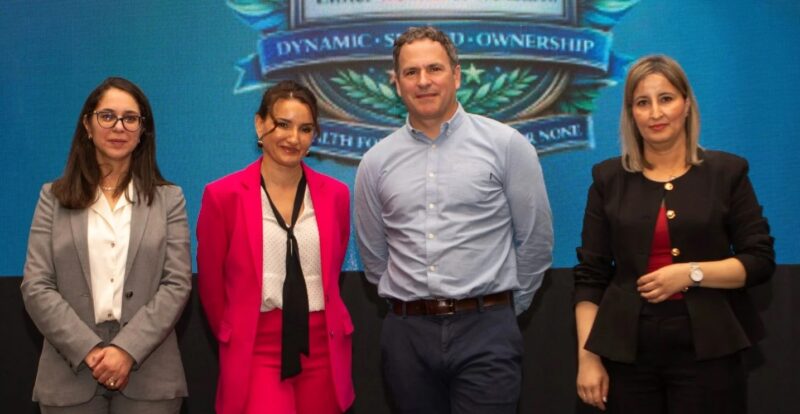
    Gathered in Marrakech for their 2026 annual convention, the teams from Bayer Crop Science North Africa have outlined a roadmap for growth based on regenerative agriculture. With innovations in biological products and resilient seeds, the life sciences giant aims to turn climate challenges into yield opportunities for Maghreb farmers.

    In a farming sector challenged by water stress and increasingly strict regulations, Bayer reaffirms its commitment to North Africa. Under the leadership of Amina L’kima, Managing Director of Bayer Morocco and Country Unit Lead, the group has unveiled a clear vision: transitioning from a traditional protection model to comprehensive value-creating support.

    Innovation: A Blend of Hybrid Solutions

    For Bayer, the future of North African farms no longer rests on a single solution, but rather on a combination of multiple technological levers. The 2026 strategy focuses on a balanced portfolio:

    • Crop Protection: Next-generation products that are more environmentally friendly.
    • Biosolutions and Biostimulants: Natural products designed to enhance plant resistance to thermal shocks.
    • High-Performance Seeds: Engineered to adapt to local soils, particularly for vegetable and berry crops, which are spearheading Moroccan exports.

    Regenerative Agriculture as a Climate Shield

    At the heart of discussions in Marrakech, sustainability is no longer just a marketing concept but an operational necessity. Bayer is now integrating water management and carbon footprint reduction into its core priorities.

    The goal is to support producers towards a regenerative agriculture model: a system that allows for increased production while restoring natural resources. This approach is crucial for the region’s export sectors, which must meet the quality and responsibility standards of international markets.

    A Close Partnership: The “Invictus” Spirit

    The convention’s theme, “Invictus” (invincible from within), reflects the group’s desire to build an agile organization in response to market unpredictability. This strength is rooted in enhanced proximity to the field. Bayer no longer sees itself merely as a supplier but as a partner in the ecosystem, engaging distributors, authorities, and researchers.

    “Our priority is to support farmers with solutions that are tailored to local realities and create long-term value,” emphasized Amina L’kima.

    A Giant Committed to Food Security

    With a global revenue of €45.6 billion in 2025 and a massive investment of €5.8 billion in R&D, Bayer possesses the necessary clout to meet the challenge of its mission: “Health for all, hunger for none.” In North Africa, this ambition translates into transforming operational models to ensure that scientific innovation reaches farmers directly, who are the key to regional food security.

    agriculture: Bayer biosolutions climate adaptation crop protection food security Innovation: North Africa regenerative agriculture sustainability:
    Previous ArticleGreen Finance: KfW Injects 31 Million Euros to Decarbonize Moroccan SMEs
    Next Article Energy: Moroccan Electricity Production Shows Slight Increase at the Beginning of 2026

    Related Posts

    Sustainable Irrigation: The World Bank Establishes the “Moroccan Model” as a Global Reference

    27 March 2026

    Energy: Moroccan Electricity Production Shows Slight Increase at the Beginning of 2026

    27 March 2026

    Forest Management: Morocco Showcases Its Expertise to Finland in the Heart of Maâmora

    27 March 2026
    Leave A Reply Cancel Reply

    Ne ratez pas
    Sustainability

    Sustainable Irrigation: The World Bank Establishes the “Moroccan Model” as a Global Reference

    27 March 20260

    In its latest report on food security, the World Bank cites Morocco as a model…

    Energy: Moroccan Electricity Production Shows Slight Increase at the Beginning of 2026

    27 March 2026

    Bayer Crop Science Implements Its “Invictus” Strategy for North Africa

    27 March 2026

    Green Finance: KfW Injects 31 Million Euros to Decarbonize Moroccan SMEs

    27 March 2026
    Restez connecté
    • Facebook
    • Twitter
    • Pinterest
    • Instagram
    • YouTube
    • Vimeo
    Nos vidéos

    The circular economy at the heart of LabelVie group’s initiatives.

    10 July 2025

    Mounir El Bari: “Our great ecological challenge is access to the resource!”

    10 July 2025

    Driss Nahya: “Control must be strengthened to access the waste deposit.”

    10 July 2025

    Reda Boukallal: “Priority to the valorization of household waste”

    10 July 2025
    Facebook X (Twitter) Instagram Pinterest
     
    © 2026 Green Times.

    Type above and press Enter to search. Press Esc to cancel.