

Close Menu
Greentimes
    Qoui de neuf

    MOGA Festival 2025: A study estimates over 51.5 million MAD in economic benefits for Essaouira

    28 January 2026

    FM6SS and Nareva Services Strengthen Their Partnership with a 1.2 MW Solar Power Plant in Dakhla

    28 January 2026

    Rural Development: Morocco Strengthens Its Role as a Strategic Partner of IFAD

    28 January 2026
    Facebook X (Twitter) Instagram
    GreentimesGreentimes
    • Home
    • CSR
    • Energy Transition and Renewables
    • Sustainability
    • Climate Change
    • Analyses and Opinions
    • Datas
    • Dates & events
    • Last news
    • FR
    Thursday 29 January 2026
    Facebook X (Twitter) Instagram
    Greentimes
    Home » Atlantic Africa Pipeline: Morocco launches work on the Nador-Dakhla section for 6 billion dollars.
    Energy Transition and Renewables

    Atlantic Africa Pipeline: Morocco launches work on the Nador-Dakhla section for 6 billion dollars.

    15 July 2025No Comments3 Mins Read
    Facebook Twitter Pinterest LinkedIn Tumblr Reddit WhatsApp Email
    Share
    Facebook Twitter LinkedIn Pinterest WhatsApp Email

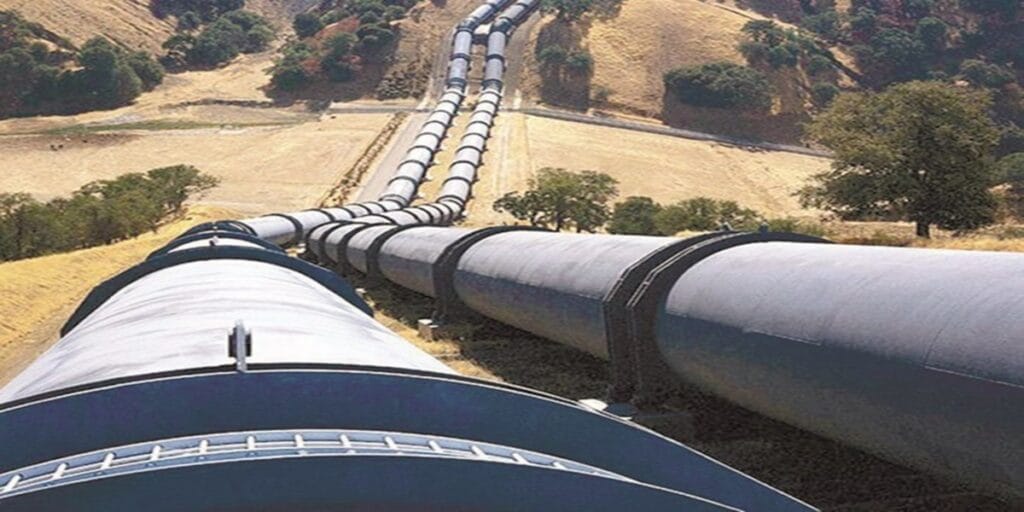
    This is a new decisive step for Morocco’s energy sovereignty and African regional integration: the Kingdom begins the effective construction of the Atlantic Africa pipeline by launching a first section connecting the port of Nador to the city of Dakhla. This section, which will extend along a large part of the Moroccan coastline, officially paves the way for one of the continent’s most ambitious energy projects.

    The announcement was made by Leïla Benali, Minister of Energy Transition and Sustainable Development, in an interview with the Saudi media Asharq. She specified that the official launch of this first phase will take place before the end of July. The project will mobilize an investment of 6 billion dollars, approximately 59 billion dirhams, on a total estimated budget of more than 25 billion dollars.

    A project of continental dimension

    Carried out in partnership between the National Office of Hydrocarbons and Mines (ONHYM) and the Nigerian National Petroleum Company (NNPC), the Atlantic Africa pipeline aims to connect Nigeria to Morocco by crossing about fifteen West African countries. With a length of over 5,000 kilometers, the infrastructure is expected to transport up to 30 billion cubic feet of gas per day, serving both African and European markets, thanks to its connection to the Maghreb gas network and its outlets to Spain.

    This first phase, which will establish a North-South junction between Nador and Dakhla, constitutes the operational foundation of this energy corridor. Ultimately, it will extend towards Mauritania, Senegal, and finally Nigeria, following the entire Atlantic coast of West Africa.

    A strategic and profitable investment

    Beyond its geopolitical significance, the project is already attracting investors. According to Ms. Benali, several specialized funds and international financial institutions have expressed their interest, drawn by an expected return of over 12%, positioning the pipeline among the most attractive infrastructure projects on the continent.

    The Atlantic Africa pipeline fully aligns with the strategic vision of King Mohammed VI, which promotes an African energy regionalization based on South-South cooperation, energy security, and shared development.

    A response to energy and climate challenges

    This megaproject will allow Morocco to strengthen its energy security, while diversifying its supply sources and providing the countries it traverses with stable access to a strategic resource. Implicitly, it also aims to build a new energy balance for West Africa, creating a reliable interconnection axis with high industrial and social potential.

    The start of the Moroccan phase of the pipeline thus marks the shift from a geostrategic idea to an operational reality. Through this project, Morocco confirms its role as a regional energy hub, ready to make energy a lever for solidarity, growth, and continental integration.

    Africa Atlantic launches Morocco Pipeline:
    Previous ArticleDrinking water desalination: OCP commissions the Jorf Lasfar-Khouribga pipeline.
    Next Article Wind energy: Morocco and three Emirati giants in talks for a mega-investment of $10 billion.

    Related Posts

    Natural Gas: How Morocco is Redrawing its Energy Map After the End of Algerian Flows

    28 January 2026

    Morocco’s Renewable Energy Strategy is Expected to Drive Economic Growth by 2026 (Mastercard Economics Institute)

    28 January 2026

    International Day of Clean Energy: Three Questions for the CEO of MASEN

    28 January 2026
    Leave A Reply Cancel Reply

    Ne ratez pas
    CSR

    MOGA Festival 2025: A study estimates over 51.5 million MAD in economic benefits for Essaouira

    28 January 20260

    The MOGA Festival has published the results of a study focused on the socio-economic impact…

    FM6SS and Nareva Services Strengthen Their Partnership with a 1.2 MW Solar Power Plant in Dakhla

    28 January 2026

    Rural Development: Morocco Strengthens Its Role as a Strategic Partner of IFAD

    28 January 2026

    Natural Gas: How Morocco is Redrawing its Energy Map After the End of Algerian Flows

    28 January 2026
    Restez connecté
    • Facebook
    • Twitter
    • Pinterest
    • Instagram
    • YouTube
    • Vimeo
    Nos vidéos

    The circular economy at the heart of LabelVie group’s initiatives.

    10 July 2025

    Mounir El Bari: “Our great ecological challenge is access to the resource!”

    10 July 2025

    Driss Nahya: “Control must be strengthened to access the waste deposit.”

    10 July 2025

    Reda Boukallal: “Priority to the valorization of household waste”

    10 July 2025
    Facebook X (Twitter) Instagram Pinterest
     
    © 2026 Green Times.

    Type above and press Enter to search. Press Esc to cancel.