

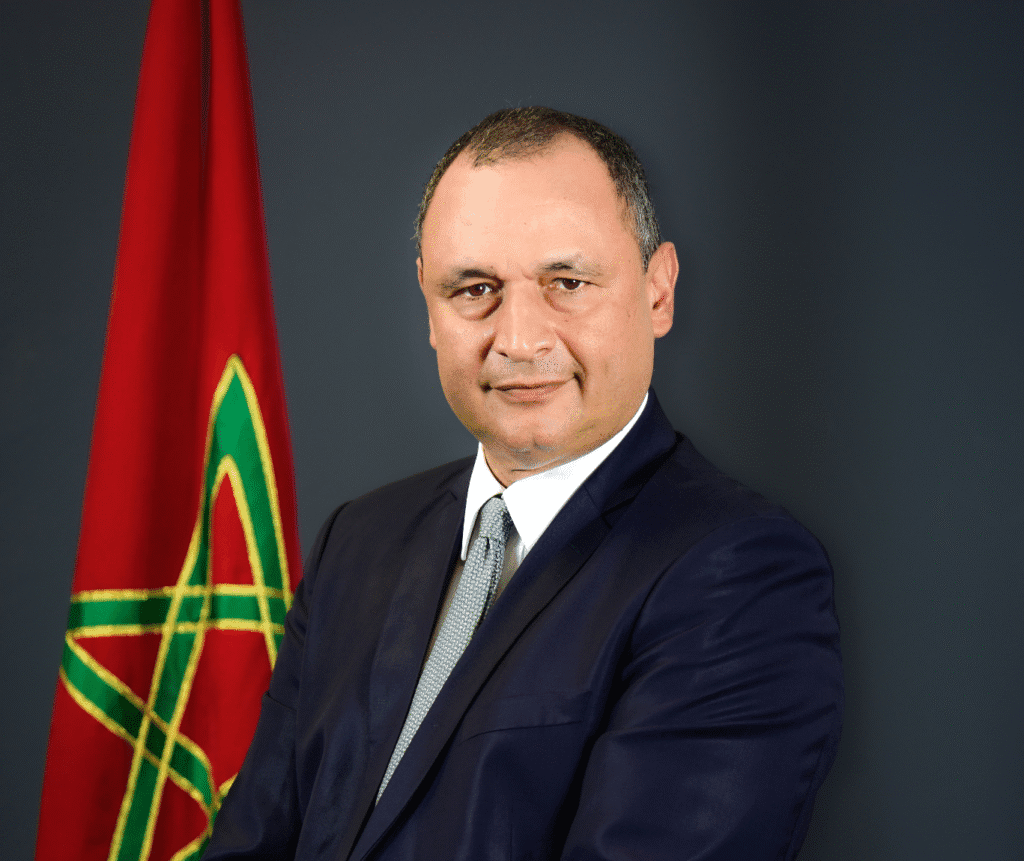
Access to abundant renewable energies (RE) is a transformational factor for Morocco’s industrial future, emphasized the Minister of Industry and Trade, Ryad Mezzour, on Thursday in Casablanca.
Speaking at a conference organized by the International University Averroès of Casablanca under the theme “Future Professions and Investment Opportunities in the Face of New Industrial and Commercial Strategies,” Mr. Mezzour stated that Morocco has a unique opportunity to access abundant, low-cost green energy that can largely meet national needs.
In this regard, the minister highlighted the Kingdom’s advantages in terms of industrial attractiveness, citing political, financial, and fiscal stability as primary factors. He also praised the quality of Moroccan human resources, noting that professionals trained in Morocco excel in the industry at all levels.
Addressing the challenges of the labor market, Mr. Mezzour noted an evolution in the aspirations of young people, who are better trained and seeking more rewarding jobs, as well as a loss of attractiveness in traditional sectors that were once major job providers.
The minister also shed light on the impact of artificial intelligence on the future of professions, questioning the role of humans in the face of rapid technological advancements.
Nevertheless, he expressed optimism about Morocco’s ability to adapt to these transformations, particularly due to the energy abundance that will address water challenges and develop the economy without resorting to foreign currencies.
For his part, the Director of Academic Affairs, Research, and Innovation at UIA Casablanca, Rachid Chakib, emphasized the importance of the role of academic actors in supporting national industrial strategies.
He recalled that Morocco has been engaged for several years in a series of ambitious industrial strategies such as the industrial acceleration plan, the development of renewable energies, and green industrialization.
Mr. Chakib explained the university’s mission to train skills, encourage initiative-taking, and develop academic and applied research in service of businesses, estimating that this collaboration between the academic and industrial worlds is crucial to support the development and industrial and commercial strategies undertaken by Morocco.
The International University Averroès, like other higher education institutions, has a major role to play in training the skills necessary for future professions, he asserted, specifying that this mission is part of a comprehensive approach aimed at developing applied research directly in service of companies and the industrial needs of the Kingdom.
This conference comes at a time when Morocco is establishing itself as an essential industrial destination, particularly in the automotive sector where the country has become a continental leader, as well as in aerospace and other high-tech sectors, confirming the relevance of the industrial strategies deployed since the Emergence plan of 2005.
MAP