

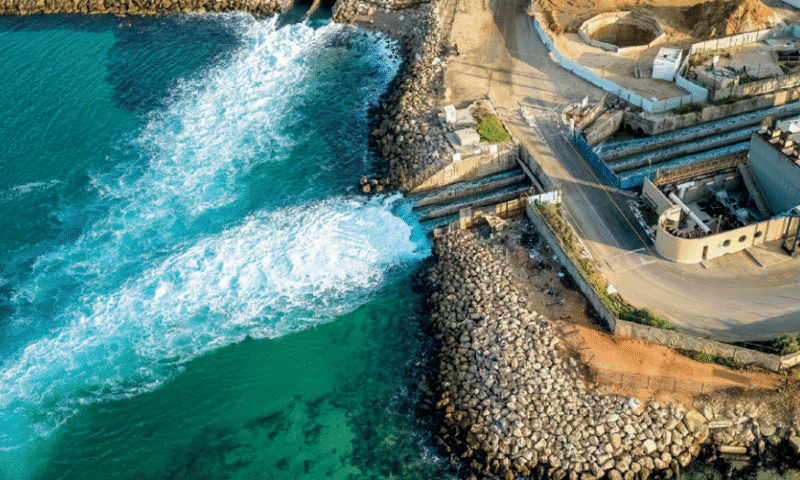
The extensive Moroccan program for seawater desalination, initiated to address increasing water pressure, is attracting growing international interest, becoming a battleground among foreign actors eager to establish a foothold in this strategic market.
Among them, Australia clearly expresses its ambitions. With recognized expertise in water management and facing similar climatic constraints, it seeks to capitalize on these similarities to bolster its presence in Morocco. Diplomatic exchanges have been initiated in this direction, with a clear intention to develop technical and scientific partnerships around water and irrigation projects.
Central to the discussions are several key areas, including the management of groundwater, improving the efficiency of water networks, and enhancing meteorological forecasting and alert systems. This potential cooperation also extends to infrastructure, particularly in designing roads adapted to climate constraints, illustrating a comprehensive approach to water-related issues.
Australia’s interest fits into a broader trend of attraction to the Moroccan model, which is now recognized on the international stage. The strategies implemented, combining desalination with significant use of renewable energies, position the Kingdom as a laboratory for solutions to contemporary water challenges. This recognition is based on an ambitious trajectory aimed at increasing the share of drinking water from desalination to 60% by 2030.
This ascendance relies on a series of structural projects, including several operational units and others under construction. The development of large-capacity plants, particularly along the Atlantic coast, reflects a proactive stance in response to the depletion of conventional resources and climate variability.
In this landscape, the use of public-private partnerships plays a crucial role, mobilizing substantial investments and fostering the integration of advanced technologies. The example of the Jorf Lasfar unit, which supplies both urban areas and industrial sites, illustrates this strategy for securing large-scale water supply.
Other significant projects further enhance this momentum, such as the upcoming El Jadida station, expected to become one of the largest on the continent. Designed to meet the needs of millions of residents, it forms part of the national program for drinking water supply and irrigation, backed by considerable financial resources.
Beyond the technical response to water scarcity, desalination is increasingly seen as a lever for sovereignty and resilience. In a context where natural resources are dwindling and demand continues to rise, the ability to produce water becomes a major strategic issue.
The interest shown by countries like Australia thus confirms Morocco’s shift towards a new positioning as a central player in regional water policies, capable of attracting expertise, investments, and innovations around a challenge that has become global.