

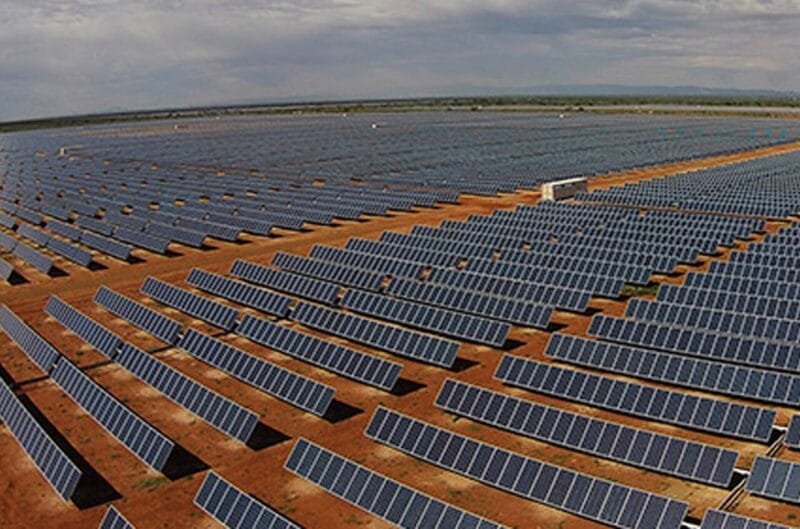
Long delayed by administrative and land procedures, the Noor Taroudant project is now poised to move to the concrete stage: the commencement of construction. Integrated into the Noor PV II program led by the Moroccan Agency for Sustainable Energy (MASEN), the future photovoltaic plant is expected to begin its construction phase in the coming weeks, according to the magazine Challenge.
Initially anticipated for 2024, the project faced delays due to the finalization of certain permits, including the last environmental approvals. Their gradual completion now paves the way for the project to enter its operational phase.
An investment of over 200 million dirhams
Developed by AMEA POWER, an Emirati company selected in 2022 through an international consultation, the Noor Taroudant plant represents an estimated investment of over 200 million dirhams. The realization is planned to occur in a single phase, promising dozens of direct jobs during the construction period and a positive impact on local economic activity.
With a capacity of 36 megawatts-peak, this infrastructure will enhance renewable electricity production and aligns with the national trajectory for energy transition.
A project integrated into the Noor PV II program since 2018
Noor Taroudant is part of the Noor PV II program, launched in 2018 and consisting of nine photovoltaic plants spread across several regions of the Kingdom. In Taroudant, one of the main obstacles has been the land issue: the area required for the project—approximately 400 hectares—required a lengthy acquisition process, undertaken through expropriation for public utility, before allowing the effective release of the land.
AMEA POWER strengthens its presence in Morocco
For AMEA POWER, a subsidiary of the Emirati group NOWAIS, this project is part of a strategy already committed in Morocco. The company had previously been selected by MASEN in 2022 to develop and operate two solar parks, including the one in El Hajeb, in the Fès-Meknès region.
Beyond Taroudant, the Noor PV II program also includes photovoltaic plants in Boujdour, Aïn Beni Mathar, Sidi Bennour, Béjaâd, Guercif, and Kalaat Sraghna, illustrating Morocco’s determination to accelerate the deployment of renewables and solidify its regional leadership in clean energy.