

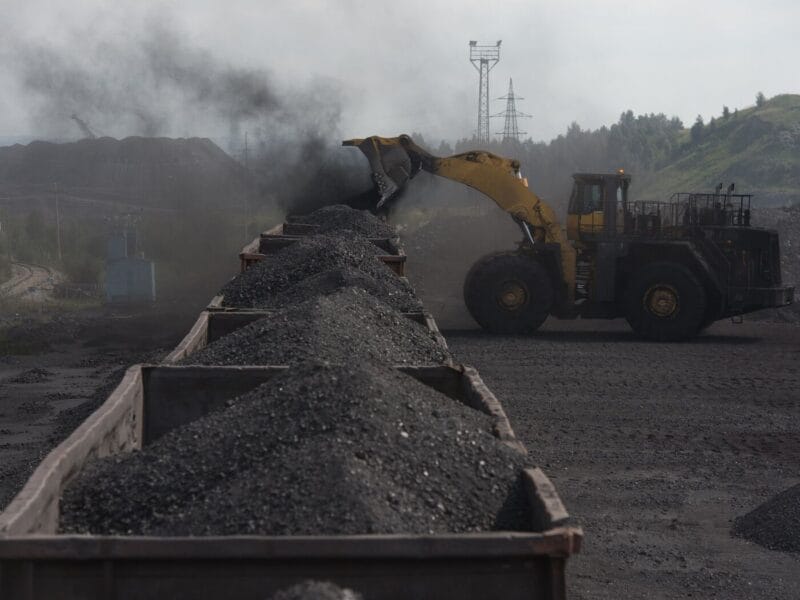
Despite the ongoing energy transition, global coal consumption is expected to reach a record level in 2025, according to the latest annual report from the International Energy Agency (IEA). Demand is projected to increase slightly compared to 2024, already a historic year, reaching 8.85 billion tons, an increase of about 0.5%.
For the IEA, 2025 is on track to establish a new historical peak, although the agency notes that this trend indicates the approach of a plateau. “The era of coal growth is coming to an end,” said Keisuke Sadamori, director of energy markets at the IEA, while emphasizing that any actual decline is not expected until the end of the decade.
Consumption remains primarily driven by electricity production, which accounts for nearly two-thirds of global coal use. However, the IEA anticipates a gradual decline in this usage starting in 2026, influenced by the rise of renewable energy, nuclear power, and the massive arrival of liquefied natural gas on the markets.
The share of coal in global electricity production continues to decrease, dropping from 41% in 2013 to about 34% expected in 2025, marking the lowest level ever recorded by the IEA. This structural trend confirms the slow demotion of coal in the global energy mix, despite still high volumes.
China remains by far the largest global consumer, accounting for 56% of overall demand. In 2025, its coal consumption is expected to remain stable compared to the previous year. In contrast, regional trajectories vary. In India, a key driver of growth in recent years, an early and abundant monsoon has led to an unusual decline in demand.
In the United States, however, consumption has been supported by rising gas prices and fossil-fuel-friendly policies, slowing the closure of coal plants. The country alone accounts for nearly 37 million tons of the global increase observed in a year.
In Europe, the decline has been limited to 3%, following significantly larger decreases in 2023 and 2024. This development can be attributed to lower hydro and wind electricity production in the first half of the year.
In the medium term, the IEA anticipates a stabilization of global demand, followed by a slight decline by 2030, returning to levels close to those of 2023. India is expected to show the largest absolute increase during this period, while Southeast Asia is projected to post the fastest growth.
However, the agency warns about the uncertainties surrounding these forecasts, particularly in China. A slower-than-anticipated deployment of renewable capacities could delay the expected decline of coal and maintain pressure on global CO₂ emissions.