






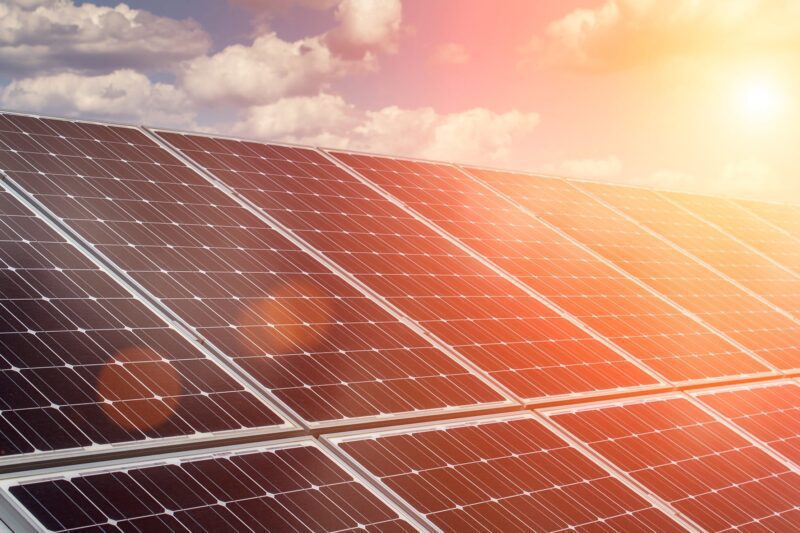
Morocco is emerging as one of the most advanced African countries in off-grid solar development, not due to the recent scale of its capabilities, but because of the stability, reliability, and sustainability of its installations. This is the assessment made by the International Renewable Energy Agency (IRENA), which ranks the Kingdom among the most mature hubs on the continent in this strategic segment.
In a report dedicated to off-grid solar systems, IRENA highlights that Morocco has a solid and well-maintained installed capacity, the result of a long-term energy strategy. Between 2019 and 2024, the capacity of home solar systems over 50 watts remained stable at 10,218 MW, reflecting a focus on the quality of equipment and its longevity rather than rapid volume growth.
Off-grid solar in Morocco also addresses essential uses for local development. Solar pumping, particularly utilized in agriculture and for access to drinking water, has seen steady growth, rising from 0.823 MW in 2015 to 1.574 MW in 2024. Other off-grid photovoltaic systems maintain a capacity of over 11 MW, despite a slight recent decline.
These infrastructures ensure reliable electricity access for thousands of households, as well as schools, health centers, and small economic activities, contributing to the reduction of territorial inequalities and strengthening the local socio-economic fabric.
This performance is part of a comprehensive energy vision. Morocco aims to raise the share of renewable energies to over 52% of its electricity mix by 2030. The National Rural Electrification Program (PERG) has achieved a high electrification rate, reducing the heavy reliance on off-grid solutions as a catch-up measure. In this context, off-grid solar is deployed in a targeted manner, primarily in the most isolated areas.
The Kingdom is simultaneously developing projects for individual solar kits, agricultural solar pumping, and hybrid mini-grids, gradually integrating storage solutions to ensure continuity of electricity supply.
However, challenges remain. Access to financing for the most vulnerable populations, equipment maintenance in remote areas, and the larger-scale deployment of storage technologies present key issues to address in consolidating this model.
Comparing with other African countries highlights the specificity of the Moroccan approach. Countries like Nigeria and Kenya exhibit much faster growth trajectories in off-grid solar, driven by a structural deficit in access to the electrical grid and increased dynamism in the private sector. Nigeria leads the continent with nearly 50 MW of domestic solar systems over 50 watts and about 8 MW of mini-grids in 2024, while Kenya stands out for innovation and diversification of uses.
Conversely, Morocco positions itself more as a model of maturity and sustainability. With its high rural electrification rate, off-grid solar is fully integrated into a planned, coherent energy strategy that complements the national grid.
According to IRENA, this approach could inspire other African countries, particularly in terms of installation quality, the articulation between public policies and private investments, and international cooperation. On a global scale, the Agency further emphasizes that off-grid electricity production from renewable sources is rapidly expanding, playing an increasingly significant role in energy access, local development, and territorial resilience.


