

In light of the volatility in energy markets, geopolitical tensions, and the urgency of climate change, Morocco is profoundly re-evaluating its energy strategy. In this new equation, liquefied natural gas (LNG) emerges as a structural choice: an economic, industrial, and geopolitical gamble aimed at strengthening the Kingdom’s energy sovereignty, securing supply, and facilitating the transition to a more sustainable mix.
In an interview with Challenge magazine, economist Driss Aïssaoui analyzes the motivations behind this direction, emphasizing that it should not be interpreted as an ecological regression, but rather as a reconfiguration of energy security levers.
Energy sovereignty is not limited to local production
According to Driss Aïssaoui, energy sovereignty is not merely about self-sufficiency in resources. It fundamentally relies on a country’s ability to control its supply routes, logistical choices, and strategic decisions.
In this context, LNG represents a tool for Morocco to reclaim control over its energy access chain by diversifying its suppliers and reducing dependence on constrained delivery channels.
A break from past dependencies
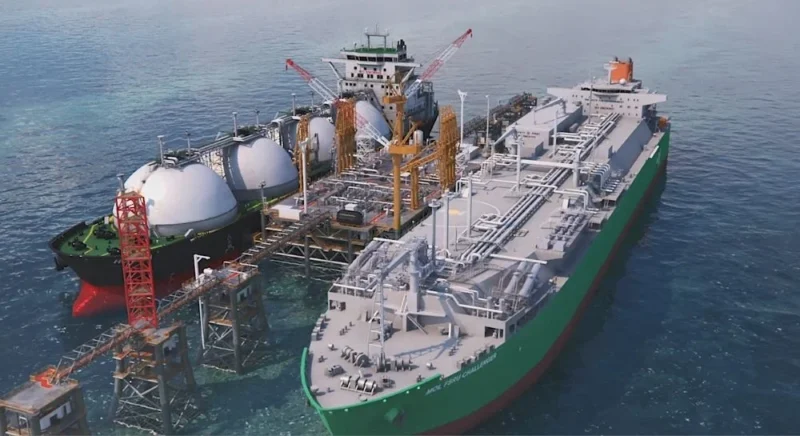
The shift toward LNG marks, according to the economist, a break from a time when Moroccan supply depended on limited routes, notably through the Iberian network. The project to establish a Floating Storage and Regasification Unit (FSRU) at Jorf Lasfar is intended to enable Morocco to access the global LNG market directly.
This infrastructure would provide the Kingdom with greater logistical and decision-making autonomy: the ability to choose its suppliers based on market conditions and strategic imperatives, without being tied to a single energy corridor.
Substantial but foundational investments
The investments being made, valued at several billion dollars, align with a logic of structuring infrastructures. Driss Aïssaoui compares them to investments in ports, highways, or renewable energy: initially heavy projects, but capable of sustainably transforming the country’s competitiveness and economic security.
The launched tenders aim to build a genuine gas backbone, linking ports, industrial zones, and power plants. The expected benefits are manifold:
- improved industrial competitiveness,
- reduced energy bills,
- job creation,
- enhanced attractiveness for investors.
A “transitional” but strategic role in energy transition
From a climatic perspective, the integration of natural gas into Morocco’s energy mix is presented as a transitional solution. Although gas remains a fossil fuel, it is seen as less polluting than coal and, crucially, more flexible, making it a stabilizing tool for the grid.
In a system where wind and solar energy are gaining momentum, Morocco needs dispatchable capacities to ensure a balance between production and consumption. Driss Aïssaoui emphasizes this point: LNG plays a supportive role, ensuring a stable electricity supply without compromising service continuity.
A strategy linked to green hydrogen and the Nigeria-Morocco pipeline
In the medium to long term, this energy trajectory aligns with the Kingdom’s ambitions surrounding green hydrogen and the Nigeria-Morocco pipeline project.
For the economist, the key lies in Morocco’s ability to develop scalable infrastructures. The idea is not to build a fixed system around gas, but to create networks that can accommodate decarbonized molecules in the future.
In this vision, LNG is not an end in itself, but a preparation lever: it allows for the establishment of infrastructures, skills, and an energy architecture that may serve cleaner sources in the future.
Toward a regional energy hub role
By combining access to the global LNG market, local gas potential, and a regional vision, Morocco aspires to position itself as an energy hub linking Africa, Europe, and the Atlantic.
This strategy also aims to limit the risk of stranded assets through a gradual and integrated approach: investing today in gas as a transitional solution while maintaining an open trajectory toward low-carbon energies.
With Challenge