

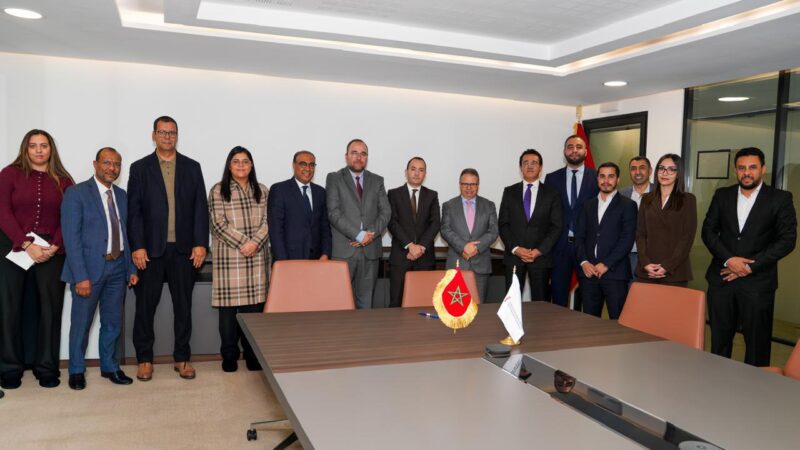
As part of its environmental and social strategy aimed at reducing its carbon footprint and promoting sustainable development, the Mohammed VI Foundation for Science and Health (FM6SS) announces the strengthening of its partnership with Nareva Services, a subsidiary of the Nareva group specializing in renewable energy and water management.
This partnership involves the establishment of a photovoltaic solar power plant with an installed capacity of 1.2 MWp at the future Mohammed VI International Hospital-University Complex in Dakhla. According to the provided data, this infrastructure will enable the Foundation to reduce its energy consumption by 31% and avoid the emission of approximately 1,356 tons of CO₂ annually, thus contributing to its decarbonization objective by 2030.
Covering an area of 1.2 hectares, the installation will include 1,892 photovoltaic solar panels, deployed in accordance with current technical and environmental regulations. The project also aims to reduce the site’s energy bills while enhancing FM6SS’s environmental commitments.
On this occasion, Professor Youns Bjijou, Deputy Director of FM6SS, stated: “This partnership with Nareva Services is fully aligned with our environmental and social strategy. The installation of a solar power plant at the future Mohammed VI International Hospital-University Complex in Dakhla represents a significant step in our commitment to reducing ecological impact and sustainably modernizing our infrastructures, in accordance with national guidelines on sustainable development.”
For his part, Norddine MoukhliSse, General Deputy Director of Nareva Services, affirmed: “We are proud to establish this partnership with the Mohammed VI Foundation for Science and Health for the setup and operation of a state-of-the-art photovoltaic solar power plant. This project embodies our shared commitment to innovative, efficient, and environmentally friendly energy solutions that serve a greener and more responsible economy.”
This project is part of the development of the Dakhla Health City, envisioned as a new generation hospital-university complex that integrates a comprehensive environmental approach from the design phase. The project aims for HQE – High Environmental Quality certification, following standards covering the various components of the program. The hospital section aims for the Excellent level of the “Environmental Performance of Health Buildings” reference, while the educational and residential sectors target the Exceptional level according to dedicated standards.
Beyond certification, the Foundation indicates that it has adopted an integrated approach aimed at constructing energy-efficient, low-carbon-emission, and sustainable buildings, with a focus on environmental and health quality. Through the Dakhla Health City, FM6SS aims to make this project a reference model in Africa for sustainable hospital-university construction, leveraging the natural advantages of the area and integrating green energies into its infrastructures.