

Close Menu
Greentimes
    Qoui de neuf

    MOGA Festival 2025: A study estimates over 51.5 million MAD in economic benefits for Essaouira

    28 January 2026

    FM6SS and Nareva Services Strengthen Their Partnership with a 1.2 MW Solar Power Plant in Dakhla

    28 January 2026

    Rural Development: Morocco Strengthens Its Role as a Strategic Partner of IFAD

    28 January 2026
    Facebook X (Twitter) Instagram
    GreentimesGreentimes
    • Home
    • CSR
    • Energy Transition and Renewables
    • Sustainability
    • Climate Change
    • Analyses and Opinions
    • Datas
    • Dates & events
    • Last news
    • FR
    Thursday 29 January 2026
    Facebook X (Twitter) Instagram
    Greentimes
    Home » Energy efficiency: the thermal insulation of old buildings poses a serious challenge.
    Sustainability

    Energy efficiency: the thermal insulation of old buildings poses a serious challenge.

    15 October 2024No Comments2 Mins Read
    Facebook Twitter Pinterest LinkedIn Tumblr Reddit WhatsApp Email
    Share
    Facebook Twitter LinkedIn Pinterest WhatsApp Email

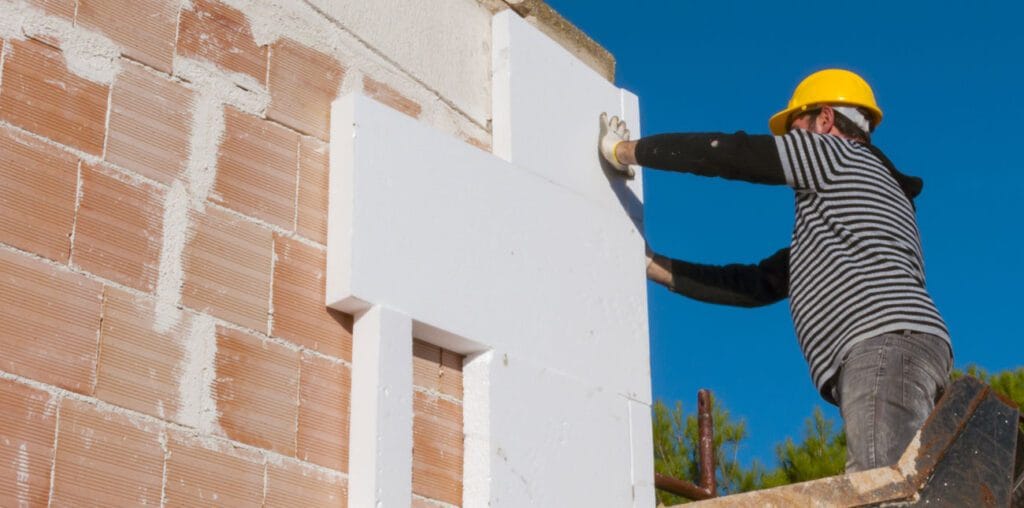
    France has recently decided to ban the rental of poorly insulated housing starting in January 2025, an initiative aimed at improving energy efficiency and reducing energy poverty. This measure raises the question of whether Morocco could also benefit from such an approach by addressing the renovation of existing buildings, often referred to as “thermal sieves.”

    According to the Moroccan Agency for Energy Efficiency (AMEE), the building sector in Morocco is one of the most energy-intensive, accounting for about 33% of the country’s total energy consumption. This consumption is divided between 7% for tertiary buildings and 26% for residential buildings. The increase in population, the construction of new cities, and the increased use of air conditioning and heating systems intensify this energy consumption.

    Morocco has already made progress in energy efficiency with the adoption of law 47-09 in 2009 and the establishment of a Thermal Regulation for Construction in Morocco (RTCM) in 2015. This regulation applies to new constructions and is supported by the “Binayate” software, which allows for checking the compliance of buildings with energy standards. However, unlike France, Morocco does not yet have an energy classification system for buildings similar to the Energy Performance Diagnosis (DPE).

    Although climate requirements differ in Morocco, rising temperatures have led to an increase in the use of air conditioners, an energy-intensive system similar to heating in Europe. This reinforces the interest in examining the energy efficiency of existing buildings, particularly those that are poorly insulated. However, renovating these buildings would pose significant financial challenges for the households involved, making state incentives necessary.

    Investing in the renovation of existing buildings could prove to be cost-effective in the long term. It would allow for substantial energy savings, estimated between 39% and 64% for residential buildings, and 40% to 59% for tertiary buildings. Furthermore, these renovations would contribute to the reduction of greenhouse gas emissions, a key objective of Morocco’s climate commitments.

    Thus, while Morocco is currently focusing on new constructions, it is relevant to consider the opportunity to extend energy efficiency efforts to already existing buildings. This would improve energy use and address the economic and environmental challenges related to the energy transition.

    buildings Efficiency: Energy insulation thermal
    Previous ArticleEnergy-intensive industries: sustainable solutions are progressing well.
    Next Article Essaouira: Commissioning of the Jbel Lahdid wind farm of 270 MW

    Related Posts

    Rural Development: Morocco Strengthens Its Role as a Strategic Partner of IFAD

    28 January 2026

    Natural Gas: How Morocco is Redrawing its Energy Map After the End of Algerian Flows

    28 January 2026

    OCP: Washington Reopens the Issue of Taxes on Moroccan Fertilizers

    27 January 2026
    Leave A Reply Cancel Reply

    Ne ratez pas
    CSR

    MOGA Festival 2025: A study estimates over 51.5 million MAD in economic benefits for Essaouira

    28 January 20260

    The MOGA Festival has published the results of a study focused on the socio-economic impact…

    FM6SS and Nareva Services Strengthen Their Partnership with a 1.2 MW Solar Power Plant in Dakhla

    28 January 2026

    Rural Development: Morocco Strengthens Its Role as a Strategic Partner of IFAD

    28 January 2026

    Natural Gas: How Morocco is Redrawing its Energy Map After the End of Algerian Flows

    28 January 2026
    Restez connecté
    • Facebook
    • Twitter
    • Pinterest
    • Instagram
    • YouTube
    • Vimeo
    Nos vidéos

    The circular economy at the heart of LabelVie group’s initiatives.

    10 July 2025

    Mounir El Bari: “Our great ecological challenge is access to the resource!”

    10 July 2025

    Driss Nahya: “Control must be strengthened to access the waste deposit.”

    10 July 2025

    Reda Boukallal: “Priority to the valorization of household waste”

    10 July 2025
    Facebook X (Twitter) Instagram Pinterest
     
    © 2026 Green Times.

    Type above and press Enter to search. Press Esc to cancel.