Electric vehicles are establishing their presence in the Moroccan automotive landscape. Dealers are expanding their catalogs, buyers are becoming interested, and the government is increasing tax incentives to make the transition more attractive. The path appears set for cleaner mobility. However, behind this reassuring façade, a major obstacle hinders progress: the charging infrastructure remains insufficient and poorly structured to support a genuine takeoff.
The contrast is striking. On one side, the offering is plentiful: showrooms showcase a range of models from budget options like the Dacia Spring to high-end vehicles such as the Tesla Model Y. The market is experiencing strong dynamics, with 2,417 electric registrations in the first half of 2025, a 132% increase compared to 2024. For the Intersectoral Professional Association for Electric Mobility (APIME), this reflects a significant shift in mindsets. “Moroccans are becoming increasingly familiar with these new mobility solutions,” notes its Director General, Mehdi El Guermai.
The fiscal environment supports this movement. Exemptions from the annual tax, reductions in customs duties, and acquisition bonuses of up to 100,000 dirhams for professional fleets are all levers that narrow the price gap between thermal and electric vehicles, which has shrunk from 45% to about 15-20% in three years. “The Kingdom is even ahead of several countries in the region,” El Guermai reminds us.
However, for APIME, this progress remains fragile as long as the foundational support—charging stations—does not keep pace. Currently, Morocco has 632 publicly accessible charging points, including 142 fast chargers. Authorities plan to add around a hundred more installations by the end of 2026, with powers up to 350 kW. For Omar El Harti, president of the association, this is still too modest: “The vehicles are here, but the infrastructure is not. It’s the crux of the matter.”
The problem is not only quantitative; financing is a hurdle. Neither private operators nor public institutions are currently investing the necessary capital. Worse, the regulatory framework makes the situation precarious. “Today, only public utilities have the right to sell electricity. Other players lack a clear status. They bypass this by charging for minutes of charging instead of kilowatt-hours. It’s inconsistent,” laments El Harti. Law 82-21 on low voltage has yet to resolve these structural barriers, leaving operators in a grey area.
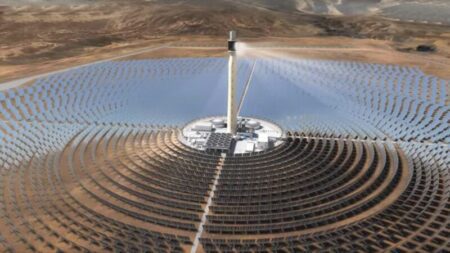
Additionally, there is a paradox: while Morocco aims to leverage its solar potential to position itself as a leader in renewable energy, electric mobility remains largely disconnected from this resource. “True sustainability will come when we drive with energy sourced directly from solar. But today, that’s not yet the case,” acknowledges the president of APIME.
Aware of these blockages, the association has developed a roadmap. It outlines a Moroccan model for deploying charging infrastructure, incorporating elements of standardization, professionalization, and communication. Part of it remains confidential, but the main point is clear: electric mobility can only become mainstream if users are assured they can travel without fearing a lack of charging stations.
The national ambitions are indeed high: 150,000 electric vehicles on the roads by 2030, and by 2026, one in five new vehicles sold is projected to be electric according to the Ministry of Energy. But these goals require strong decisions: securing financing, clarifying the legal framework, and accelerating the territorial network.
“Green mobility is still poorly understood. It is seen as a project for tomorrow, whereas it should be visible today,” summarizes El Harti. In other words, the transition is underway, but the pace is held back by an infrastructure that is slow to find its model.