




By Dr. BOITI Mohamed
Doctor in Sustainable Finance & Socially Responsible Investment
University Professor & Expert Consultant in CSR and Decarbonization
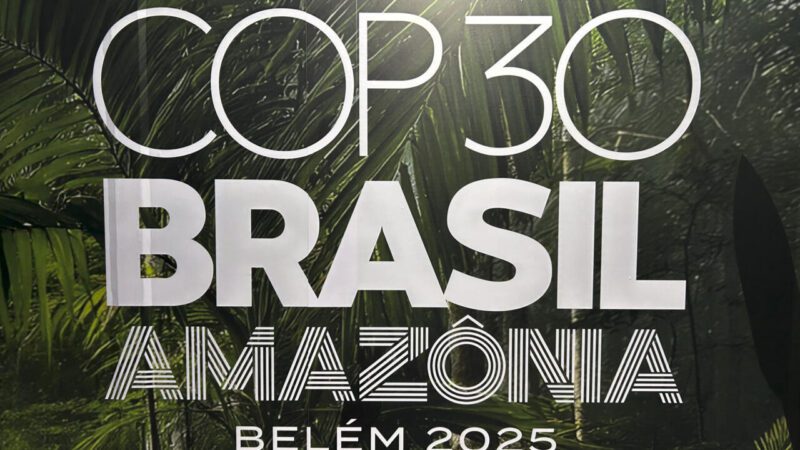
COP30 has just concluded in Belém, in the heart of the Brazilian Amazon. Beyond the speeches and commitments, this conference marks a concrete turning point: climate action is no longer solely dependent on the goodwill of states; it has become an accessible, measurable, and financed economic lever.
For Morocco, which presented its third Nationally Determined Contribution (NDC 3.0), praised for its credibility and transparency, the question is no longer “Should we act?” but “How do we turn these commitments into strategic opportunities for our businesses?” As COP30 demonstrates: it is profitable to be responsible.
I. FIRST LESSON: GREEN FINANCE OPENS UP TO MOROCCAN SMEs
The Green Checker: A Passport to International Finance
On the sidelines of COP30, the European Investment Bank (EIB) announced the extension of its “Green Checker” tool to Morocco. Free and easy to use, this tool allows Moroccan micro, small, and medium-sized enterprises (MSMEs) and cooperatives to verify whether their projects align with the European green taxonomy and thus qualify for international funding.
Specifically, a Casablanca-based SME specializing in plastic waste recycling or an agricultural cooperative in Souss-Massa developing regenerative agriculture can now self-assess its project, obtain a compliance score, and present a credible file to European funders.
What this changes for Morocco:
Until now, access to international green finance was reserved for large groups with structured CSR departments. With the Green Checker, ecological transition is democratized. SMEs, which represent 95% of the Moroccan economic fabric, can finally demonstrate their climate performance without hiring expensive consultants.
Socially Responsible Investment (SRI): The Missing Link Between Ambition and Funding
However, taxonomic alignment is not enough. For these projects to materialize, capital is needed. This is where Socially Responsible Investment (SRI) comes into play.
SRI funds, which incorporate environmental, social, and governance (ESG) criteria into their allocation decisions, currently account for over $35 trillion in assets under management globally. With its ambitious NDC 3.0 and a developing regulatory framework (AMMC Circular 03/19 on ESG reporting for listed companies), Morocco is gradually becoming eligible for these flows.
Concrete Opportunity:
A Moroccan SME certified as a “Green Checker” can now attract not only green loans from the EIB but also European institutional investors (pension funds, insurers) seeking ESG assets in emerging markets. Provided that they speak their language: quantified data, transparent reporting, measurable decarbonization trajectory.
II. SECOND LESSON: CLIMATE PARTNERSHIPS BECOME STRATEGIC ALLIANCES
No Longer Aid, but Win-Win Cooperation
In Belém, Morocco’s Minister for Energy Transition, Leïla Benali, reinforced the strategic partnership with the Netherlands around three pillars: green hydrogen, renewable energies, and technological innovation.
This partnership illustrates a paradigm shift: climate cooperation is no longer a donor-beneficiary relationship but an exchange based on complementarity. The Netherlands brings technological expertise and capital; Morocco offers its exceptional solar and wind potential, strategic geographical location (gateway to Europe and Africa), world-class port and energy infrastructures (Tangier Med, Noor Ouarzazate), a skilled and competitive workforce, and a growing domestic market.
Green Hydrogen: From Ambition to Industrial Reality
Morocco aims for a green hydrogen production capacity of 10 GW by 2030. This is no longer a distant project: international consortiums (Siemens, TotalEnergies, Envision) have already signed memorandums of understanding to develop mega-projects in Dakhla and Tan-Tan.
What this changes for Moroccan companies:
Green hydrogen will not only benefit industrial giants. The entire value chain is involved: decarbonized maritime transport, chemical industries (green ammonia for OCP fertilizers), port logistics, infrastructure maintenance, technician training.
The Role of SRI Here:
Green hydrogen projects require colossal investments (several billion dollars). SRI funds, particularly green bonds, are preferred instruments to raise this capital. Morocco successfully issued €1 billion in green bonds in 2021. COP30 confirms that this pathway must be amplified.
III. THIRD LESSON: NATURE IS NO LONGER A BACKDROP, BUT A STRATEGIC INFRASTRUCTURE
Belém: A Symbolic and Strategic Choice
By hosting COP30 in the heart of the Amazon, Brazil delivered a powerful message: living ecosystems are not “spaces to be protected out of kindness,” but critical infrastructures for climate resilience, food security, and the economy.
For Morocco, this lesson resonates particularly strongly. As His Majesty King Mohammed VI regularly reminds: “The coastline is not just a resource to exploit; it is a common good to regenerate.”
The Blue Economy: An Underexplored Resource
Morocco boasts 3,500 km of coastline, an Exclusive Economic Zone (EEZ) among the richest in marine biodiversity in the Mediterranean and Atlantic, and a unique geopolitical position. Yet, Morocco’s blue economy remains largely underexplored.
Concrete Opportunities Post-COP30:
- Sustainable aquaculture: development of ASC-certified marine farms eligible for green financing.
- Regenerative coastal tourism: ecotourism, sustainable diving, rehabilitation of coastal ecosystems (mangroves, seagrasses) funded by blue carbon credits.
- Renewable marine energies: offshore wind, wave energy, with pilot projects capable of attracting SRI investors specializing in sustainable infrastructures.
The Coastline as a Financial Asset
COP30 also highlighted innovative nature-based financing mechanisms: blue carbon credits, blue bonds, payments for ecosystem services.
Example: a mangrove restoration project on Morocco’s Atlantic coast could generate carbon credits sold on international voluntary markets, while protecting coastal areas from erosion and creating nurseries for fish. Such a project could be funded by impact SRI funds seeking measurable environmental and social co-benefits.
IV. SRI: THE FINANCIAL FUEL FOR MOROCCO’S TRANSITION
Why SRI is Essential
The three lessons from COP30 converge on a single imperative: the climate transition requires massive, patient capital aligned with extra-financial criteria. This is precisely what SRI entails.
Morocco needs to mobilize $40 billion by 2030 to meet its climate goals (according to NDC 3.0). Public budgets alone will not suffice. The private sector must be the driving force, and SRI is the fuel.
How to Attract SRI Investors to Morocco?
- Enhance ESG Transparency: The AMMC needs to go beyond Circular 03/19: requiring the publication of ESG reports for all large companies (listed or not), with international standards (GRI, SASB).
- Create a Moroccan SRI label: Similar to the French SRI label or the Nordic Swan, Morocco could establish an official label certifying investment funds and projects that meet national ESG criteria. This would reassure foreign investors and stimulate local savings.
- Develop the green bond market: The success of the 2021 issuance must be replicated. Morocco could issue green bonds specifically dedicated to certain sectors: renewable energies, blue economy, sustainable agriculture, smart cities.
- Train local asset managers: Moroccan banks and insurers need to integrate ESG analysis into their investment decisions. This requires a significant upskilling of financial teams.
MOROCCO’S HISTORIC OPPORTUNITY
COP30 in Belém confirms a paradigm shift: climate action is no longer reserved for states or large corporations. It is becoming operational, inclusive, and financed, provided we speak the language of data, transparency, and cooperation.
Morocco is not lagging behind. It stands on the brink of a historic opportunity: turning its commitments into concrete, bankable, local projects. With the Green Checker, our SMEs can access green finance. With green hydrogen, our industries can decarbonize while creating value. With the blue economy, our coastline can become a strategic, inclusive, and profitable asset.
But this transformation will not happen by decree. It requires mobilizing the private sector, aligning financial flows through SRI, and widespread upskilling on ESG issues.
For in the end, COP30 reminds us of a simple yet powerful truth: it is profitable to be responsible. Moroccan companies that grasp this today will be tomorrow’s champions. The others will watch the green finance train leave without them.
The countdown has begun. 2030 is just five years away.