
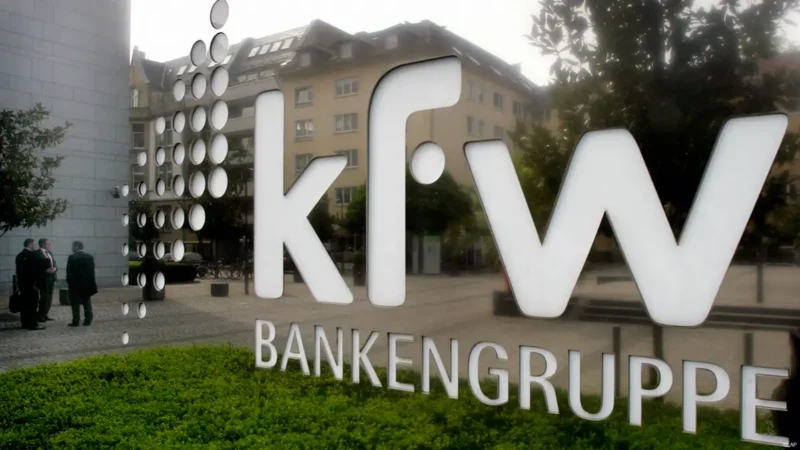
The financial arm of German development, KfW, is set to unlock a significant line of credit for Tamwilcom. This financing of 31 million euros (approximately 340 million dirhams) will boost the “Green Invest” initiative, providing much-needed support for small businesses engaged in ecological transition.
Morocco’s entrepreneurial fabric is on the brink of a crucial green shift. While very small, small, and medium enterprises (TPMEs) account for 93% of businesses in the Kingdom and employ nearly half of the active population, their access to climate financing remains the main bottleneck in the national strategy. By partnering with Tamwilcom, the German development bank KfW offers a concrete response to an estimated green financing deficit of 78 billion dollars at the national level.
“Green Invest”: The Co-Financing Lever
The mechanism is designed to maximize impact. KfW’s line of credit will allow Tamwilcom to co-finance, in collaboration with local banks, projects that have a significant environmental impact. The idea is to share the risks to encourage the private banking sector to lend more to sustainable projects.
Priority Sectors Targeted by This Financing:
- Renewable Energy: Small solar and photovoltaic installations.
- Energy Efficiency: Modernizing industrial processes to reduce consumption.
- Circular Economy: Recycling projects and optimized waste management.
- Water Resources: Water treatment facilities and desalination units.
Inclusive and Responsible Finance
Beyond the purely monetary aspect, this partnership introduces high governance standards. Tamwilcom will need to implement an environmental and social management system aligned with World Bank standards.
The program also highlights a strong social dimension: special attention will be given to women-led businesses to break the glass ceiling that often restricts their access to climate financing.
Training Banks on the “Green Reflex”
One of the major challenges of this line of credit is enhancing the skills of the Moroccan financial sector. The project outlines training sessions for bank executives to strengthen their ability to assess the viability and real impact of ecological projects.
Classified with a “moderate” environmental risk (FI/B), this program positions itself as a structured transition tool, ensuring that every dirham invested genuinely contributes to reducing Morocco’s greenhouse gas emissions. For Moroccan TPMEs, the low-carbon transition is no longer just a moral imperative; it is, thanks to Tamwilcom and KfW, an accessible modernization opportunity.