

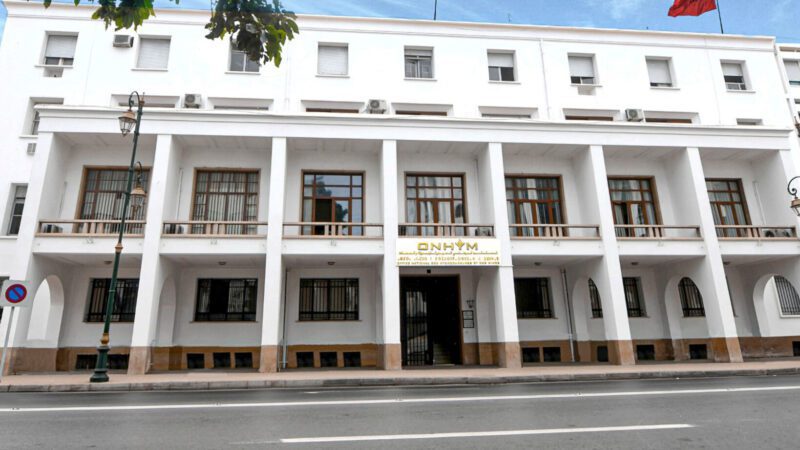
The House of Representatives approved on Tuesday Bill No. 56.24, which transforms the National Office of Hydrocarbons and Mines (ONHYM) into a public limited company. The draft was approved by a majority vote during a legislative session, with 82 votes in favor and 36 against, marking a significant step in reforming the governance of public institutions operating in the strategic sectors of energy and natural resources.
Presenting the project to the deputies, the Minister of Energy Transition and Sustainable Development, Leïla Benali, explained that this transformation aims to make ONHYM a strategic lever capable of facing international competition. According to her, the change in status should allow the Office to better reposition itself within the national economy, strengthen its place in the value chain of its activities, improve its governance and performance, while diversifying its funding sources to support its project portfolio.
The minister noted that the chosen approach is based on asset valuation and resource development of the Office, before gradually opening up the capital of the future company to the private sector. However, she clarified that the state would remain the main investor, in order to preserve the strategic direction of the institution in a sensitive sector.
Leïla Benali also emphasized that this text represents the first institutional reform of this kind since 2020, in a context marked by the creation of the National Agency for Strategic Management of State Holdings (ANGSPE) and the performance monitoring of public institutions and companies. The bill thus provides for the transition of ONHYM from a public establishment to a public limited company, in a logic of modernization and strengthening of efficiency.
Among the main provisions of the draft are the opening of capital in accordance with current legislation, the establishment of a geoscientific information system, and the conducting of research and exploration work based on mining licenses. The text also foresees improving governance structures, the option to create subsidiaries or hold shares in public or private companies, and the transfer of assets, rights, and obligations from the Office to the new company.
During the discussions, majority groups asserted that this project places the energy sector at the heart of international transformations and supports national economic and social dynamics. They highlighted promising prospects in the fields of hydrocarbons and natural hydrogen, stressing the need to enhance Morocco’s attractiveness for national and foreign investments, in line with the new Investment Charter.
They also recalled that the reform takes place in an international and regional context marked by market volatility in energy, rising issues related to energy security, and the acceleration of energy transition and carbon neutrality. For them, these developments necessitate an adaptation of governance models, increased flexibility, and better mobilization of national resources.
On the other hand, opposition groups viewed the transformation of ONHYM into a public limited company as a tool for reform, not an end in itself. They believe that this evolution can help enhance the Office’s performance and open its capital to the private sector while preserving the strategic sovereignty of the state. The opposition stressed the need to mobilize the required expertise and ensure the financial independence of the institution so that the reform delivers concrete results.
Thus, the transformation of ONHYM into a public limited company is presented as a lever aimed at strengthening governance and increasing the effectiveness of a player expected to have a more significant role in the energy and mining sectors, in a context where economic, industrial, and climate challenges are intensifying.