

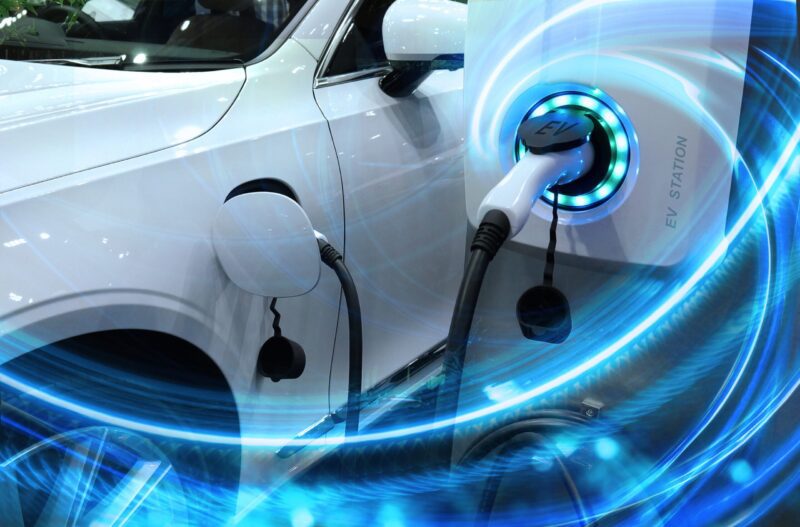
The Chinese electric vehicle market is gaining a strategic lead over Western markets. While many European and North American manufacturers are still betting on extended-range electric vehicles (EREVs) to facilitate the transition, China appears to have already moved past this intermediary technology in favor of 100% electric vehicles.
Recent sales data confirms this shift. In November 2025, pure electric vehicles accounted for 73% of electrified vehicle sales in China, compared to 57% a year earlier. This rapid increase reflects a profound change in consumer preferences, who are now less swayed by the arguments in favor of range extenders.
This evolution is primarily based on two key factors: the rise of charging infrastructure and advancements in battery technology.
### A Decisive Charging Infrastructure
Today, China boasts over 19 million active charging stations, a 52% increase compared to 2024. This dense network corresponds to about two chargers for every five electric vehicles on the road, significantly reducing range anxiety.
Simultaneously, charging performance has reached unprecedented levels. Some public charging stations provide up to one megawatt of power, enabling recent models to regain significant range in just a few minutes. This rapid charging undermines the central argument for EREVs, designed initially to overcome the limitations of both the network and batteries.
### Ever-Improving Batteries
Technological advancements in energy storage reinforce this trend. The electric vehicles available on the market now commonly offer ranges exceeding 480 kilometers, with some models nearing 640 kilometers. Ongoing research into solid-state batteries promises even greater performance, both in terms of range and charging times.
The gradual decline in production costs for batteries is also enhancing the competitiveness of 100% electric vehicles, making hybrid solutions increasingly less attractive, both economically and technically.
### A Gradual Waning of EREVs
Sales figures clearly illustrate this slowdown. Following a spectacular rise in EREVs in China from 2021 to 2023, their growth is now slowing down. By 2025, market dynamics predominantly benefit pure electric vehicles, while plug-in hybrids have experienced several consecutive months of decline.
Overall, sales of electrified vehicles surpassed 12.26 million units by November 2025, marking an annual increase of 18%. Electric vehicles now represent nearly 59% of passenger car sales, compared to 52% the previous year.
### The West Hesitates
In contrast, Western manufacturers continue to favor transitional technologies. Several automotive groups are betting on EREVs to reassure consumers regarding travel distances and the still uneven charging infrastructure. BMW, Ford, and Jeep are exploring or marketing models that combine high-capacity batteries with combustion engines, despite notable compromises in terms of efficiency and weight.
This divergence reflects differing market realities. In Europe and North America, the density of the charging network, mobility habits, and geographical constraints still hinder the widespread adoption of fully electric vehicles.
### Two Trajectories, Possible Convergence
The comparison highlights two distinct strategies. China is accelerating towards full electrification, while the West is adopting a more gradual approach. Europe, for its part, seems to be positioning itself between the two, temporarily favoring plug-in hybrids before slowly phasing out these intermediary solutions.
For many observers, the Chinese trajectory could foreshadow future developments in other markets as charging infrastructure becomes denser and electric vehicles reach a level of performance and affordability sufficient to make technological compromises obsolete.