

Close Menu
Greentimes
    Qoui de neuf

    Transformation of ONHYM: Green Light from the House of Representatives

    5 February 2026

    Secoex Renovables Prepares for Its Launch in the Moroccan Solar Self-Consumption Market

    5 February 2026

    Afforestation: The Court of Auditors Highlights a Waste of 92 Million Dirhams in the Waters and Forests Sector

    5 February 2026
    Facebook X (Twitter) Instagram
    GreentimesGreentimes
    • Home
    • CSR
    • Energy Transition and Renewables
    • Sustainability
    • Climate Change
    • Analyses and Opinions
    • Datas
    • Dates & events
    • Last news
    • FR
    Thursday 5 February 2026
    Facebook X (Twitter) Instagram
    Greentimes
    Home » Renewable Energies: Morocco, the Arab Engine of the Energy Transition
    Energy Transition and Renewables

    Renewable Energies: Morocco, the Arab Engine of the Energy Transition

    20 November 2025No Comments2 Mins Read
    Facebook Twitter Pinterest LinkedIn Tumblr Reddit WhatsApp Email
    Share
    Facebook Twitter LinkedIn Pinterest WhatsApp Email

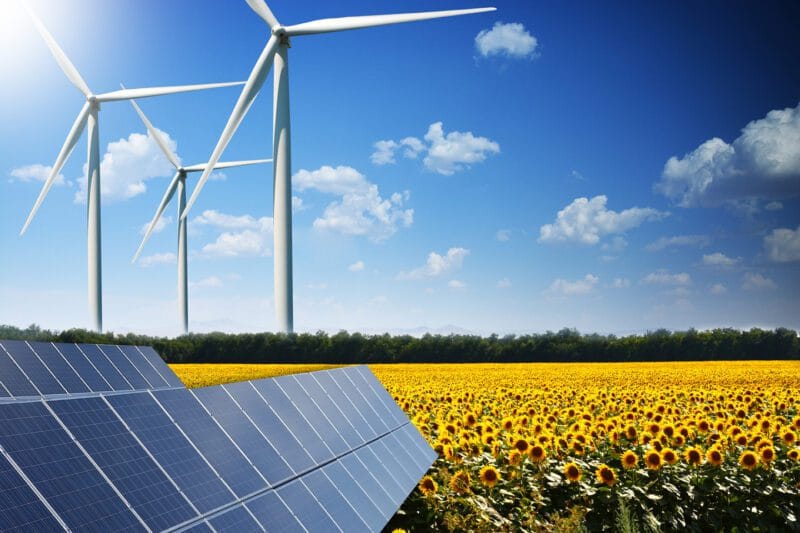
    Morocco is establishing itself as a central player in the energy transition within the Arab world. According to the 2025 Sector Report published by the Arab Company for the Guarantee of Investments and Export Credit (Daman), the Kingdom stands out for its growing strength in renewable energies, attraction of green investments, and regional electricity trade.

    Between 2003 and 2024, Morocco attracted $38.1 billion in foreign direct investments in renewable energies, representing 11% of the total Arab investments, placing it behind Egypt. These investments have facilitated the launch of 55 projects, generating 12,267 jobs, which accounts for 15% of jobs created in the sector regionally. The solar and wind sectors continue to attract investors, thanks to a stable and favorable framework for the energy transition.

    In wind energy, Morocco dominates the region: with a production of 9.2 TWh, it accounts for 42% of the total Arab production. Daman experts emphasize the maturity of Morocco’s wind farm and its key role in the gradual decarbonization of the national energy mix. By 2025, total electricity production is expected to reach 43 TWh, comprising 28.7 TWh from thermal sources, 9.2 TWh from wind, 3.7 TWh from solar, and 1.2 TWh from hydropower, confirming the rise of renewables.

    Morocco also stands out in regional electricity trade and electrical equipment. By 2024, its total value reached $3.32 billion, placing the Kingdom in third place among Arab countries. It is the top electricity importer with $413.7 million, accounting for 33.6% of total regional imports, and the fourth exporter, primarily due to electricity production equipment. These flows make Morocco a strategic player in cross-border exchanges and regional energy integration.

    On the social front, the Kingdom reports an exemplary record: 100% of households have access to electricity, joining 12 other Arab countries that have achieved total coverage. Individual consumption remains moderate, at 1,100 kWh per capita, well below the Arab average and high Gulf levels.

    Through these performances in investments, renewable capacities, exports, and regional integration, Morocco positions itself as an Arab model for energy transition. Daman’s report highlights a country “undergoing technological and strategic transformation,” where a clear energy vision and massive investments make the Kingdom an indispensable pillar of the Arab energy landscape by 2025.

    electricity_trade energy_transition foreign_investment job_creation regional_integration renewable_energy solar_energy sustainable_development transition_energy wind_power
    Previous ArticleKhalladi: The Private Wind Farm that Revived the Moroccan Electricity Market
    Next Article Dakhla Transforms into an African Hub for AI and Clean Energy

    Related Posts

    Transformation of ONHYM: Green Light from the House of Representatives

    5 February 2026

    Secoex Renovables Prepares for Its Launch in the Moroccan Solar Self-Consumption Market

    5 February 2026

    LNG: Why Morocco is Betting on Liquefied Gas to Secure Its Energy Supply and Accelerate Its Transition

    4 February 2026
    Leave A Reply Cancel Reply

    Ne ratez pas
    Energy Transition and Renewables

    Transformation of ONHYM: Green Light from the House of Representatives

    5 February 20260

    The House of Representatives adopted by majority on Tuesday in Rabat the bill No. 56.24…

    Secoex Renovables Prepares for Its Launch in the Moroccan Solar Self-Consumption Market

    5 February 2026

    Afforestation: The Court of Auditors Highlights a Waste of 92 Million Dirhams in the Waters and Forests Sector

    5 February 2026

    AMIFA (Groupe BCP) crowned “Champion of African Financial Inclusion” at the Financial Afrik Awards 2026

    4 February 2026
    Restez connecté
    • Facebook
    • Twitter
    • Pinterest
    • Instagram
    • YouTube
    • Vimeo
    Nos vidéos

    The circular economy at the heart of LabelVie group’s initiatives.

    10 July 2025

    Mounir El Bari: “Our great ecological challenge is access to the resource!”

    10 July 2025

    Driss Nahya: “Control must be strengthened to access the waste deposit.”

    10 July 2025

    Reda Boukallal: “Priority to the valorization of household waste”

    10 July 2025
    Facebook X (Twitter) Instagram Pinterest
     
    © 2026 Green Times.

    Type above and press Enter to search. Press Esc to cancel.