

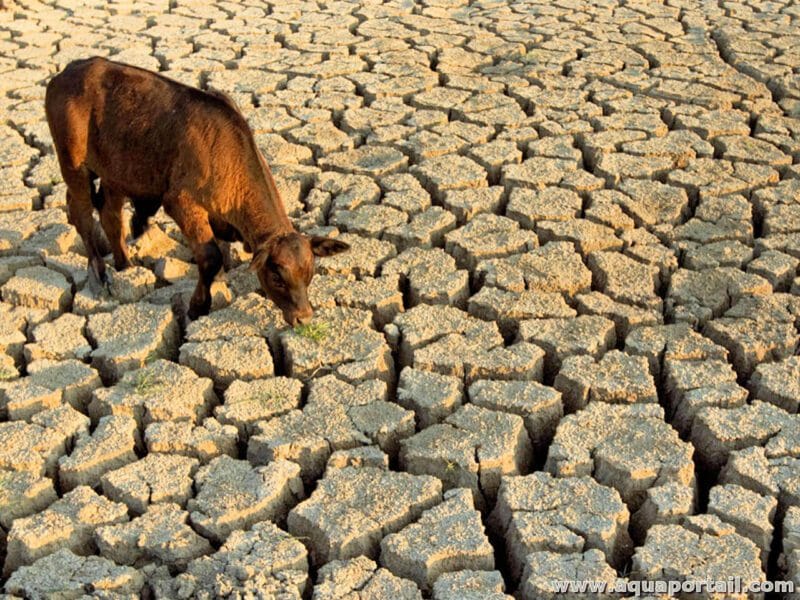
Climate change does not spare Morocco, and its effects are particularly felt in rural areas. According to a study by the Friedrich Naumann Foundation, the worsening droughts, decreasing rainfall, and pressure on water resources are creating an increasingly deep divide between modernized large agricultural operations and small, rain-dependent farmers.
While agriculture still represents 13 to 14% of GDP and employs nearly 40% of the workforce, it remains the primary source of income for over 60% of rural inhabitants, the Foundation notes. It is a vital sector, yet today it is caught between the climate crisis and the limitations of public policies.
A climate changing faster than agriculture
The observation is undeniable: the Moroccan climate is evolving faster than the agricultural system’s ability to adapt. Temperatures have already increased by nearly two degrees over the past century, and rainfall is becoming both scarcer and more intense. The result is a seesaw in harvests. Wheat, the country’s staple food, dropped from 11.5 million tons in 2015 to just 3.3 million in 2016, as illustrated in the report.
Each drought reinforces Morocco’s dependence on cereal imports, which now account for nearly 20% of export revenues—four times the global average, according to the FAO. For the Foundation, this trend is not only economic: it directly threatens national food security.
The Moroccan Green Plan under scrutiny
The study delves deeply into the Moroccan Green Plan (PMV), launched in 2008 to modernize the sector. It is a two-speed plan, according to the Foundation: while it has boosted exports and productivity, it has primarily benefited large irrigated and capitalized farms, leaving small family farmers on the sidelines, often lacking land titles and investment resources.
Assistance programs, too centralized and administratively cumbersome, have excluded a large portion of the rural population. This reality was already highlighted by the United Nations Special Rapporteur on the Right to Food in 2015, who criticized the lack of local participation and the sidelining of traditional knowledge.
In certain regions like Souss-Massa, the shift towards water-intensive crops—avocados, citrus fruits, watermelons—has exacerbated the overexploitation of groundwater. This strategy is seen as paradoxical: profitable in the short term for exports, but unsustainable in the long term in a country facing water stress.
A model to rethink, a rurality to preserve
“Moroccan agriculture is growing, but without equity,” summarizes the Foundation. While large exporting operations thrive, small farmers, the backbone of rural Morocco, are struggling alone against climatic uncertainties. This imbalance is not merely economic: it also threatens the transmission of knowledge, social cohesion, and biodiversity.
The Foundation calls for reinventing a fairer and more sustainable agricultural model capable of combining modernization and inclusion. Family farms, it emphasizes, “are not a relic of the past, but a pillar of the future”: they embody the memory, continuity, and collective resilience of the country.
The choice of Morocco, the report concludes, will determine much more than its food self-sufficiency: it will condition the preservation of its rural fabric and national identity.
With Barlamane