
In an international context marked by overconsumption and mass waste, the planet faces a major challenge: transforming the waste issue into a lever for economic and social development that respects the environment.
With rapid population growth and rampant urbanization, waste production has significantly increased in recent years, leading to major challenges, particularly in terms of collection, treatment, and recycling.
According to the “Global Waste Management Outlook 2024” report published by the United Nations Environment Programme (UNEP), global municipal solid waste production is expected to rise from 2.1 billion tons in 2023 to 3.8 billion tons by 2050.
This considerable increase will lead to a surge in waste management costs, which could reach $640.3 billion by 2050, up from $361 billion in 2020, if no corrective measures are adopted.
In the face of this alarming situation, International Zero Waste Day, which coincides with March 30, provides an ideal opportunity to raise awareness about the importance of rethinking our consumption model and shedding light on new waste management strategies and innovative recycling solutions.
“We must act to avoid the worst-case scenario,” warns UNEP Executive Director Inger Andersen, highlighting the key role of public and private stakeholders in drastically reducing waste by investing more in the circular economy.
Indeed, establishing a circular economy, where waste is repurposed rather than discarded, represents an opportunity for all countries to contribute to sustainability goals while stimulating innovation and job creation.
In this vein, the UN emphasizes the importance of adopting better waste treatment methods to limit net annual costs to $270.2 billion by 2050, or even generate a net gain of $108.5 billion per year. Aware of the major issues related to solid waste management, Morocco has for several years placed the valorization and recycling of waste at the center of its public policies, with the ambition of reducing pressure on natural resources and mitigating the harmful effects of pollution on health and the environment.
Thus, initiatives such as the National Household Waste Management Program (PNDM) have made it possible to achieve numerous objectives, including increasing the household waste collection rate to 96%, compared to just 44% in 2008.
As part of this program, landfill and valorization centers (CEV) have also been established, along with the rehabilitation or closure of illegal dumpsites, and the modernization of the waste sector through the professionalization of the industry.
Similarly, a protocol on the valorization of household waste was recently signed by the ministries of the Interior, Energy Transition and Sustainable Development, Industry and Trade, and Economy and Finance, aiming to raise the valorization rate to 25% by 2030 and reduce the amount of waste sent to landfills by 45%.
This momentum has also been reflected at the regional level, notably with the signing, during the last National Assizes on advanced regionalization, of a framework agreement costing a total of 27 billion dirhams between the government and the twelve regional councils, concerning the management of the household waste sector over the period 2025-2034.
To support this virtuous dynamic initiated by the Kingdom, the World Bank approved in 2024 the Household Waste Management Support Program (GDMA), amounting to $250 million.
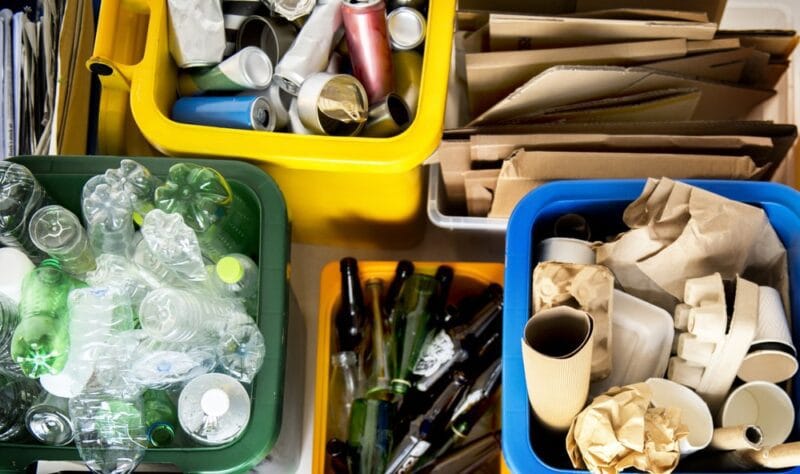
However, no matter how ambitious the investments and public policies deployed to ensure better waste management, their real impact remains dependent on the daily commitment of citizens through the adoption of simple actions such as sorting, reducing waste, and reusing.
By rethinking our consumption patterns and promoting recycling and the circular economy, we can limit our environmental impact and build a healthier world for future generations.
With MAP